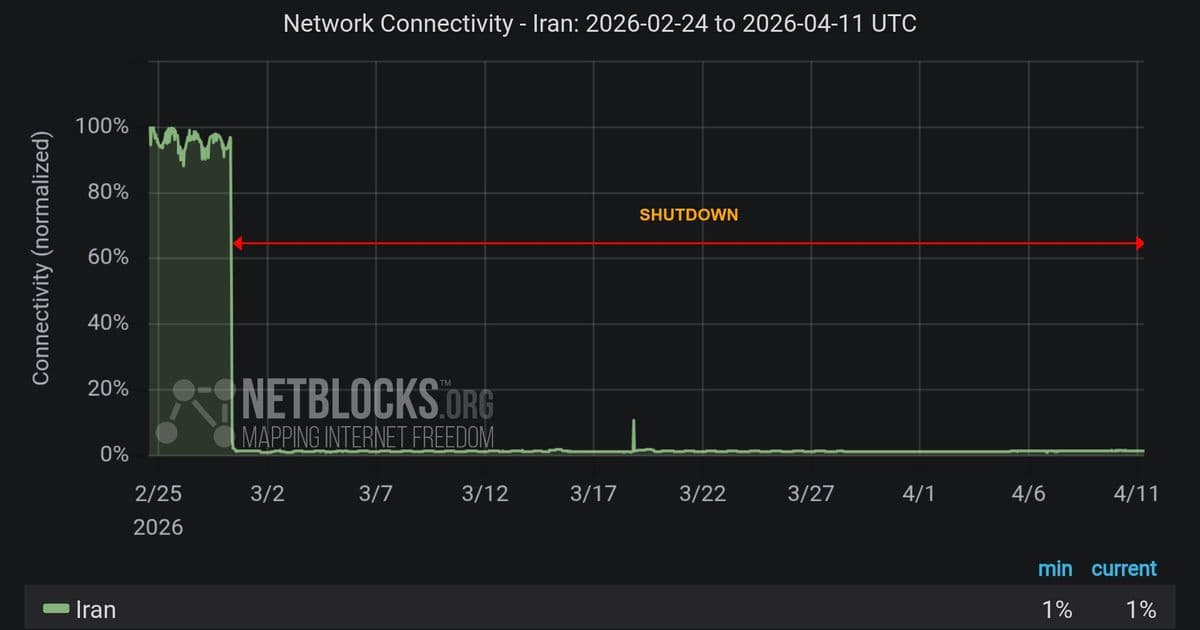
Six weeks after Iran imposed a nationwide internet blackout, the regime's censorship measure remains in place, severely impacting citizens' digital rights and livelihoods.
Exactly six weeks ago on Saturday 28 February, #Iran fell victim to a regime-imposed internet blackout that remains in place after 1008 hours, now entering day 43. The censorship measure's harms grow daily, damaging livelihoods and violating Iranians' digital and human rights.
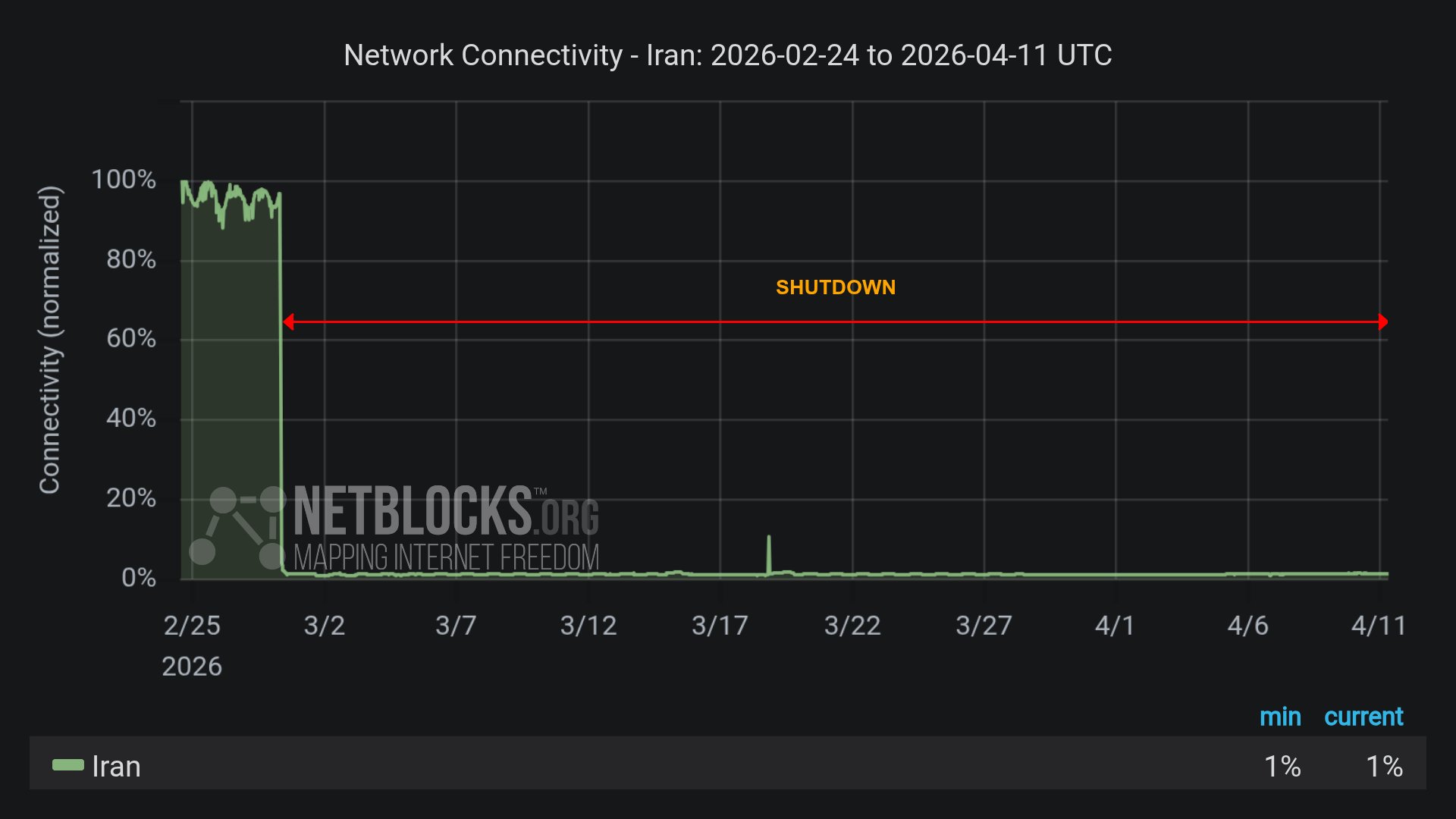
According to monitoring by NetBlocks, the internet blackout in Iran has now persisted for over 1,000 hours, marking one of the longest sustained internet shutdowns in recent history. The blackout, which began on February 28, 2026, has entered its 43rd day with no clear end in sight.
The ongoing censorship has severe implications for Iranian citizens. Beyond the immediate disruption to communication and access to information, the blackout is causing significant economic damage. Businesses that rely on internet connectivity for operations, e-commerce, and digital services are facing mounting losses. Remote workers, freelancers, and those in the digital economy are particularly affected, with many unable to earn their livelihoods.
Digital rights advocates have condemned the blackout as a violation of fundamental human rights. The United Nations has repeatedly affirmed that internet access is a human right, and prolonged shutdowns like this one represent a serious infringement on freedom of expression, access to information, and the right to participate in the digital economy.
NetBlocks' monitoring shows that while some connectivity remains, it is severely restricted and heavily monitored. Users report intermittent connectivity and state-run VPN/proxy services that appear to be controlled by government entities. This suggests the regime is implementing a sophisticated system of selective access rather than a complete shutdown, allowing them to monitor and control information flow while maintaining some level of operational infrastructure.
The international community has largely remained silent on the ongoing crisis, despite the clear human rights implications. Digital rights organizations continue to call for pressure on the Iranian government to restore full internet access and respect citizens' digital rights.
As the blackout enters its second month, the question remains: how long will the Iranian regime maintain this digital siege, and at what cost to its citizens' rights and economic well-being?
Comments
Please log in or register to join the discussion