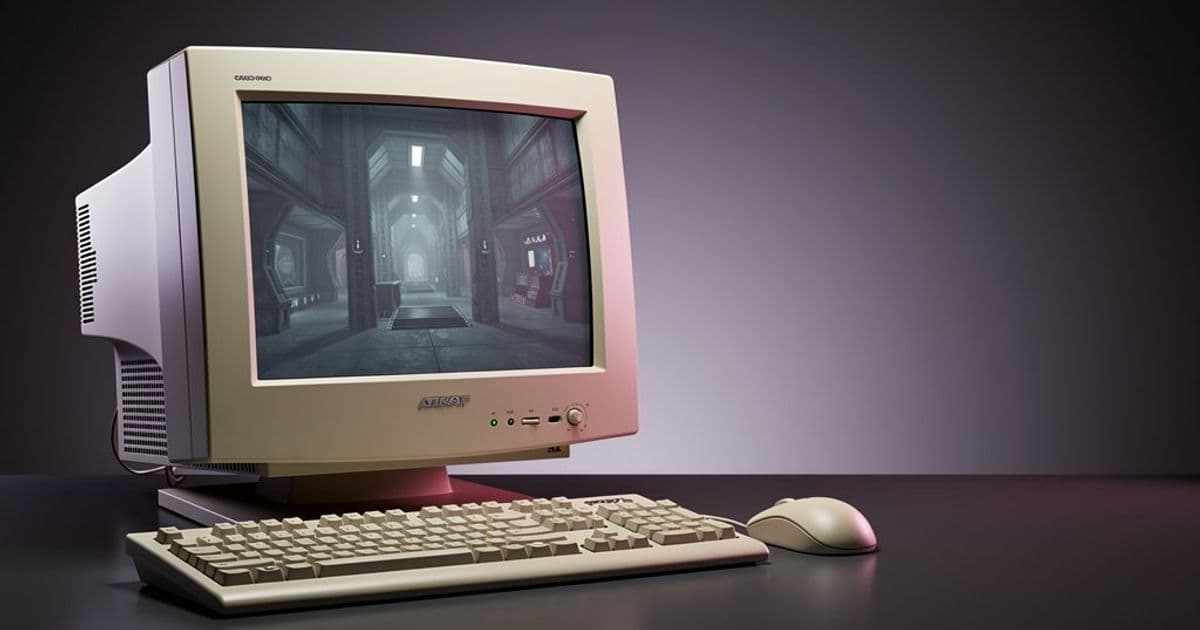
A computing historian resurrects a 233MHz relic to experience QuakeWorld for the first time, discovering that the game's infrastructure—and the community's love for it—has endured for over thirty years.
The Internet was a luxury in France until 1999. For a young Fabien Sanglard, that meant missing one of the defining multiplayer experiences of the 1990s: QuakeWorld. Thirty years later, with a newly built Quake PC powered by a 233MHz Pentium MMX, he finally had his chance. The question wasn't just whether the game would run, but whether the entire ecosystem—servers, master servers, and the legendary QSpy client—could still function in 2026. The answer would reveal a profound truth about software longevity.
The QuakeWorld Ecosystem
QuakeWorld, id Software's dedicated multiplayer client for Quake, was a landmark release in 1996. Unlike the original game, which required all players to have the same map files locally, QuakeWorld introduced a critical innovation: map downloading. When joining a server, the client could fetch the necessary BSP map file directly, dramatically lowering the barrier to entry for new players.
But QuakeWorld's architecture was more complex than a simple client. It operated on a decentralized model:
- QuakeWorld Servers: Dedicated machines running the server software, registering themselves with a master server.
- QuakeWorld Master Server: A central directory (like a phone book) that maintained a list of all active servers. The protocol was simple and text-based, documented in 1997.
- QuakeWorld Client: The player's executable, which needed to know which master servers to query to find a game.
There was no integrated server browser. Players had to manually connect to servers via command-line parameters (e.g., -connect 192.168.0.1). This is where QSpy entered the story.
QSpy: The Official Front End
In August 1996, id Software's co-founder John Carmack reached out to a developer named Nicholas Maher with a direct question: "Qspy is cool. Want to be the official front end for the QuakeWorld project?"[^1] The email reveals id's philosophy: instead of building their own tool, they endorsed an existing community solution that was already popular. Carmack even offered to share details about new features to ensure QSpy could integrate seamlessly.
QSpy was a Windows application that solved the core usability problem. It maintained a list of master servers, polled them for active game servers, and presented a graphical list. With a double-click, it would launch the QuakeWorld client with the correct -connect parameter. It was bundled with the official QuakeWorld installer (qw1022.exe), cementing its status as the canonical tool.
The 2026 Experiment
Installing QuakeWorld on a vintage Windows 98 machine was a nostalgic ritual. The installer still offered skin color selection (though it failed to function). Launching GameSpy 3D (QSpy's later name) revealed the first challenge: the default master server list was empty. Gamespy.com had merged with IGN in 2004 and shut down in 2013, but the website surprisingly still rendered in Internet Explorer 4.
A search led to quakeservers.net, a community-maintained archive of master server addresses. Adding these to QSpy's list and hitting "Refresh" was a moment of suspense. Then, thousands of servers appeared. Decades after its commercial decline, the QuakeWorld ecosystem was still alive, populated by players and maintained by enthusiasts.
Selecting a server triggered the client. QuakeWorld began downloading the map—a feature that still worked perfectly. The excitement peaked, then crashed. The game failed after displaying only six frames, with a cryptic error: Z_Malloc: failed on allocation of 40 bytes.
Debugging a 30-Year-Old Game
The error was baffling. A 233MHz machine with 340MB of RAM should handle QuakeWorld with ease. The failure on a tiny 40-byte allocation suggested a deeper issue. The server was running v2.40 of the QuakeWorld protocol, while the client on the vintage machine was v2.34 (the last version compatible with Windows 9X). Could packet incompatibility be the cause?
A search through old forums and archives revealed the answer. The problem wasn't incompatibility; it was the game's memory allocation for small strings and structures (the "zone" allocator). The default zone size was too small for modern server data. The solution was a command-line parameter: -zone 1024. Adding this to the QSpy launcher increased the zone memory allocation, and the game launched flawlessly.
The Enduring Legacy
For hours, the machine ran QuakeWorld. The first frag was achieved with a grenade launcher, not from skill but from the sheer joy of discovery. The in-game messages were juvenile—"fragged by shaft," "fragged by pineapple"—and utterly delightful. The resolution was a mere 320x200, yet the game's mechanics were so tight, so perfectly balanced, that it remained utterly compelling.
This experience underscores why QSpy is still "cool." It's not just a relic; it's a functional bridge to a living community. The master servers at quakeservers.net are maintained by volunteers. The game clients are archived and updated by fans. The servers are hosted by enthusiasts who still love the game.
The infrastructure has survived because the game's design was fundamentally sound. QuakeWorld's netcode was revolutionary for its time, and its gameplay loop—fast, precise, and brutally competitive—has aged gracefully. The community's dedication is the ultimate testament to its quality.
What This Means for Software History
QuakeWorld's longevity offers a lesson for modern software. A product's life isn't defined by its corporate support but by its community's passion. The open, documented protocols (like the master server API) allowed third-party tools like QSpy to thrive. The game's moddability and the availability of its source code (released in 1999) ensured it could be ported and maintained on modern systems.
Today, you can play QuakeWorld on a 233MHz Pentium or a modern gaming rig using ports like EZQuake, which offer high-resolution rendering and enhanced features while preserving the original feel. The Quake Official Archive by Jason Brownlee remains an invaluable resource for historical versions and documentation.
QSpy, now a historical artifact, paved the way for modern server browsers. Its spirit lives on in every game launcher that connects players to servers with a single click. The fact that it still works—after three decades, through mergers, shutdowns, and the rise and fall of companies—is a story of resilience.
So, is QSpy still cool? Absolutely. It's a time machine, a testament to community, and a reminder that great software, when built with care and openness, can outlive its creators.
[^1]: The email from John Carmack to Nicholas Maher is archived and referenced in various Quake community histories, including QuakeWorld documentation.
Comments
Please log in or register to join the discussion