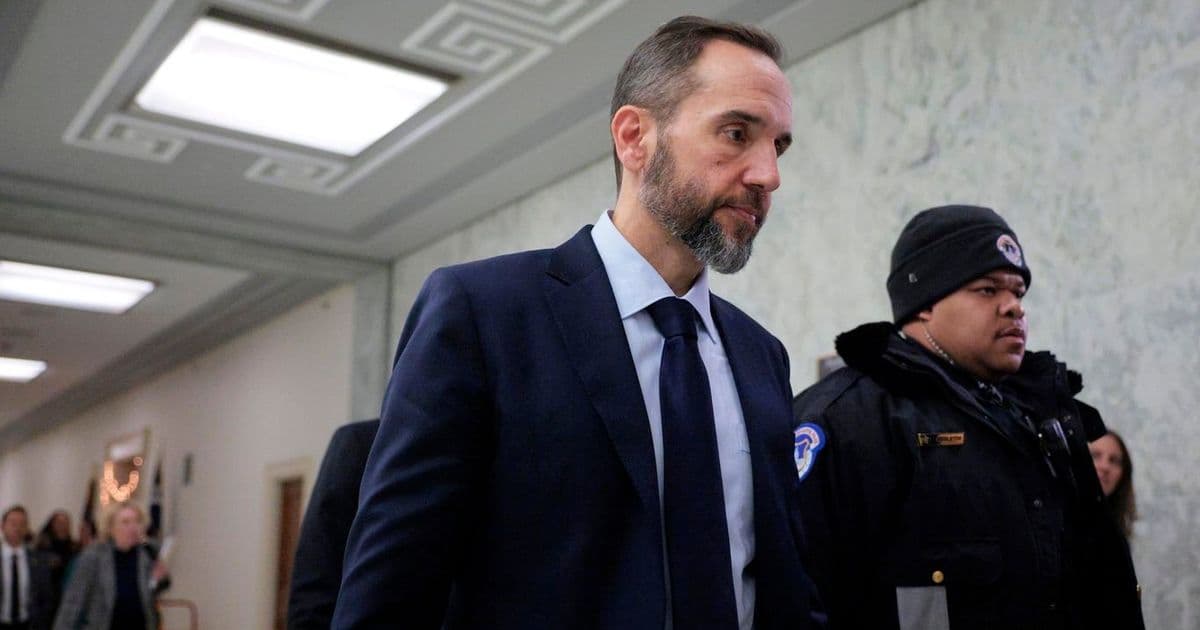
Former special counsel Jack Smith delivered his first public remarks defending the federal indictments against former President Donald Trump, framing the charges as a necessary application of the rule of law and addressing the political firestorm surrounding the cases.
Former special counsel Jack Smith broke his long public silence on January 21, 2026, delivering a carefully worded defense of the federal indictments he brought against former President Donald Trump. Speaking at a conference hosted by the American Bar Association's Standing Committee on the Federal Judiciary, Smith argued that the charges—encompassing alleged mishandling of classified documents and efforts to overturn the 2020 election results—were rooted in evidence and legal precedent, not political motivation.
The remarks represent Smith's first public commentary since leaving the Department of Justice in late 2025. His appearance comes amid sustained criticism from Trump and his allies, who have labeled the cases a "witch hunt" and a weaponization of the justice system. Smith's comments were calibrated to address these accusations directly while avoiding inflammatory language.
"The Department of Justice operates under a set of principles that guide every decision, regardless of the individual involved," Smith stated, according to prepared remarks obtained by Axios. "The charges filed were the result of a thorough, evidence-based investigation. The rule of law requires that no person is above the law, and that the law applies equally to all."
The federal cases against Trump have proceeded on parallel tracks. The classified documents case, filed in June 2023, charges Trump with 40 felony counts related to the retention of national defense information and obstruction of justice. The election interference case, filed in August 2023, alleges a conspiracy to defraud the United States and to obstruct an official proceeding. Both cases have faced significant procedural delays, with the documents case currently on hold pending a Supreme Court review of presidential immunity claims, and the election interference case navigating pretrial motions in Washington, D.C.
Smith's defense focused on the procedural rigor of the investigations. He emphasized that the charges were approved by career prosecutors and followed established DOJ guidelines. "The process is designed to be insulated from political pressure," he noted. "The evidence was presented to grand juries, which are composed of citizens, who independently determined there was probable cause to believe crimes were committed."
The timing of Smith's remarks is notable. With the 2026 midterm elections approaching and Trump remaining the leading candidate for the Republican nomination, the legal cases have become a central issue in the political landscape. Smith's comments are likely to be cited by both supporters and critics of the former president. Legal analysts suggest his appearance could serve to bolster public confidence in the judicial process, though it may also fuel accusations of partisanship.
The broader implications extend beyond the immediate cases. Smith's defense touches on fundamental questions about the independence of the justice system, the treatment of former presidents, and the balance between accountability and political stability. His argument that the law must apply equally, regardless of status, strikes at the core of democratic governance. However, the political reception of these cases highlights the deep polarization surrounding Trump and the institutions that investigate him.
For the legal system, the cases present a test of how to handle unprecedented situations involving a former president. The charges themselves are serious, carrying potential prison sentences, but the legal and political ramifications of the proceedings are equally significant. Smith's public defense underscores the high stakes involved and the Justice Department's commitment to seeing the cases through, despite the political firestorm.
As the cases move forward, the focus will remain on the evidence presented in court and the legal arguments made by both sides. Smith's remarks serve as a reminder that the indictments were not born of political animus but of a methodical legal process. Whether the public accepts that framing may ultimately depend on the outcomes of the trials and the broader political climate. For now, the former special counsel has made his position clear: the charges stand on the merits of the law, not the whims of politics.
Comments
Please log in or register to join the discussion