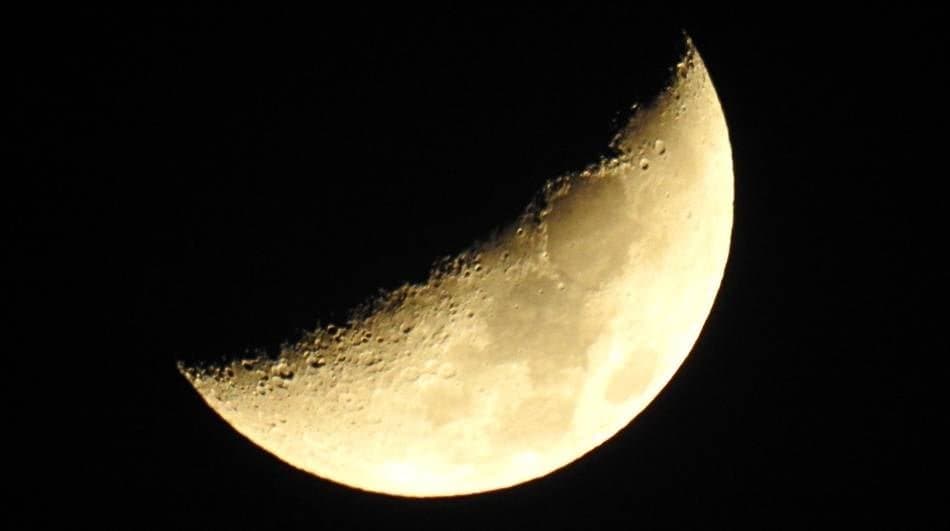
NASA has selected ULA's Centaur V upper stage for Artemis IV and V missions, abandoning the delayed Exploration Upper Stage in favor of a proven alternative that can meet critical launch schedules.
NASA has selected United Launch Alliance's Centaur V upper stage for the Artemis missions that aim to return astronauts to the lunar surface for the first time since 1972. The space agency will use the Centaur V, currently flying as the upper stage of ULA's Vulcan rocket, for Artemis IV and V, both slated for 2028. A flight spare is also being ordered.
The Interim Cryogenic Propulsion System (ICPS) currently used by Artemis is a modified Delta IV cryogenic second stage, always intended as a stopgap. NASA had planned to replace it with the more powerful Exploration Upper Stage (EUS) but that program is running behind schedule and over budget. When new administrator Jared Isaacman signalled plans to increase SLS flight cadence, the writing was on the wall leaving Centaur V to fill the gap.
ULA is not the only upper stage option, and NASA's intention to issue a sole-source contract might surprise some. However, the agency noted that alternatives, such as Blue Origin's New Glenn Upper Stage (NGUS), require "significant modifications" to Mobile Launcher 1, and ULA was already familiar with the steps needed to modify an upper stage for SLS. In addition, the Centaur V is a variant of the Atlas Centaur, used under the Commercial Crew Program, meaning that qualifying the stage for a human crew should not cause too many concerns.
And then there's time. According to NASA's justification for the decision: "The NASA Kennedy Space Center (KSC) need date for processing is projected to be nine months prior to a launch. Award to another source would cause unacceptable delays to current launch schedules."
Isaacman announced a shake-up of the delay-plagued, cost-bloated NASA's Artemis program at the end of February. Under the revised plan, Artemis III becomes an Apollo 8-style shakedown of the human landing system in Low Earth Orbit in 2027, pushing the first lunar landing attempt back to Artemis IV in 2028.
One casualty of the reshuffle was the EUS. Industry watchers had widely expected Centaur V to step into the breach, not least because NASA had, perhaps inadvertently, rather given the game away by including imagery of the stage in materials released at the time.
However, swapping upper stages solves only part of Artemis's problems. The bigger challenge remains the Human Landing System as NASA still needs a version ready for a Low Earth Orbit checkout next year, with an actual lunar landing to follow in 2028. Sorting out the SLS's upper stage is all well and good, but it does nothing to address the elephant that may or may not end up on the Moon.
The decision to sole-source the Centaur V contract to ULA represents a pragmatic choice given the compressed timeline. With Artemis IV and V targeting 2028 launches, NASA cannot afford the delays that would come from qualifying alternative upper stages or modifying launch infrastructure for other providers.
This move also highlights the growing pains of NASA's Space Launch System, which has faced criticism for its high costs and development delays. The ICPS was always meant as a temporary solution, but the EUS's continued delays have forced NASA to look elsewhere for a more capable upper stage.
For ULA, this contract represents a significant win as the company transitions from its Atlas V and Delta IV heritage vehicles to the Vulcan rocket system. The Centaur V's selection for Artemis missions provides a bridge between ULA's legacy capabilities and its future as a key NASA partner.
The Centaur V offers several advantages over the EUS that NASA had originally planned to use. It's already flying as part of the Vulcan rocket, meaning it has proven flight heritage. The stage also benefits from ULA's extensive experience with cryogenic upper stages dating back to the Atlas program.
From a technical perspective, the Centaur V provides more lift capacity than the ICPS, though less than the planned EUS. This should still meet the requirements for Artemis IV and V missions, which involve sending the Orion spacecraft and its crew to lunar orbit for rendezvous with a lunar lander.
The decision also reflects the reality of NASA's current capabilities and timelines. With the Artemis program already facing delays and cost overruns, the agency needed a solution that could be implemented quickly without requiring extensive modifications to existing infrastructure or processes.
Looking ahead, the success of this approach could influence how NASA approaches future exploration missions. The ability to leverage existing, proven hardware rather than developing new systems from scratch may become an increasingly attractive option as the agency balances exploration ambitions with budget constraints and schedule pressures.
For the Artemis program, this change represents another adaptation to the challenges of returning humans to the Moon. While it solves one immediate problem, the larger issues of lander development and overall program sustainability remain to be addressed as NASA continues its push toward establishing a sustainable lunar presence.
Comments
Please log in or register to join the discussion