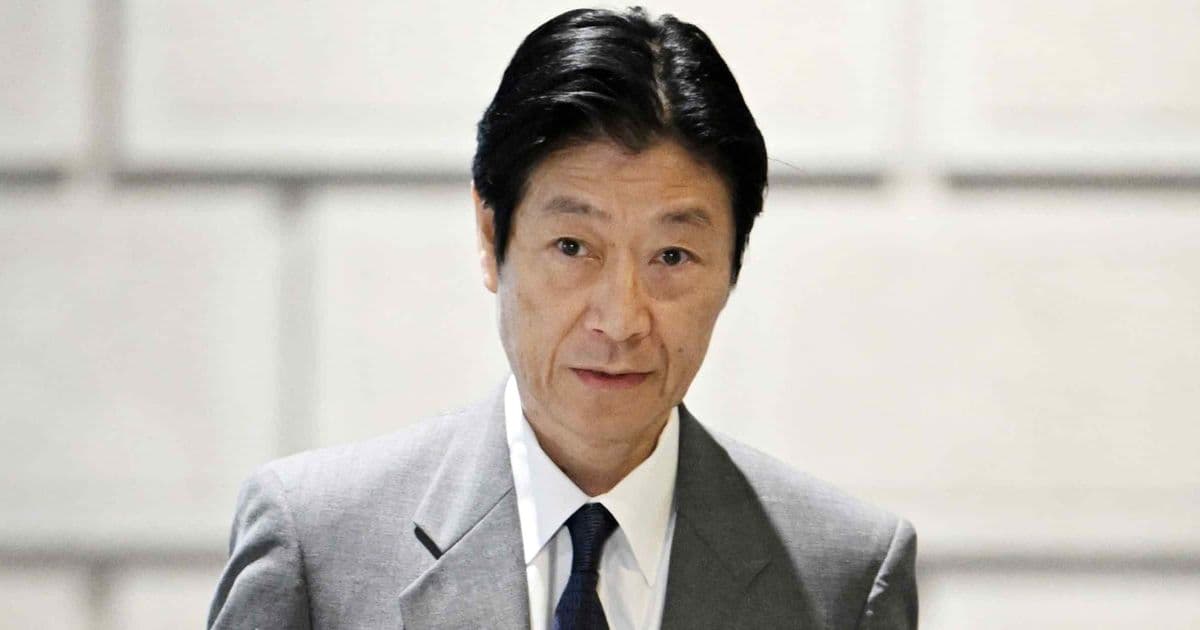
Bank of Japan Deputy Gov. Shinichi Uchida will lead a pivotal post-meeting press conference as Gov. Kazuo Ueda recovers from hospitalization, placing unprecedented responsibility on his shoulders ahead of an expected rate hike that would bring borrowing costs to three-decade highs.

Bank of Japan Deputy Gov. Shinichi Uchida will conduct the post-meeting news conference on June 16 in place of Gov. Kazuo Ueda, who is hospitalized ahead of a policy meeting where the central bank is expected to raise rates to levels not seen in three decades. The development thrusts Uchida into the role of public face for one of the most consequential rate decisions in recent Japanese monetary history.
The Timing Could Not Be More Awkward
The BOJ's June 16 policy board meeting arrives at a critical juncture for Japanese monetary policy. Markets have priced in a rate hike, with the central bank widely expected to lift its key interest rate to 1%, a threshold that would mark the highest borrowing costs in Japan since the early 1990s. Ueda had signaled the meeting would "discuss" a rate hike despite lingering uncertainties, suggesting the decision was already well-telegraphed internally.
Now Uchida must execute that communication without the governor who has guided the BOJ through its historic shift away from negative interest rates. Ueda, who took office in 2023 and oversaw the end of yield curve control and the first rate increases in over a decade, is absent at the moment when the BOJ needs to project unity and clarity most.
The hospitalization details remain sparse, but the optics are significant. A central bank governor missing a rate decision press conference, particularly one of this magnitude, invites speculation about institutional stability and succession planning. Uchida, as deputy governor, is the natural stand-in, but the circumstances place him in an unenviable position: delivering a message that carries enormous market implications while unable to defer to his superior.
What Uchida Inherits
The policy backdrop is complex. The BOJ faces a currency market that has shown volatility, with the yen touching 160 against the dollar and erasing recent intervention gains. Japan's Ministry of Finance confirmed a record 73 billion yen intervention in April and May, underscoring the pressure on policymakers to address the currency's weakness through monetary tightening rather than direct market operations alone.
A rate hike to 1% would represent the BOJ's most aggressive step in its normalization campaign. The central bank ended negative interest rates in March 2024, then raised rates again later that year, but the move to 1% would take monetary conditions to territory that many market participants have not traded through in their careers.
Uchida must also navigate questions about whether rate hikes are actually pushing up long-term rates, a topic the BOJ flagged as a "vexing question" in recent communications. The transmission mechanism of monetary policy in Japan remains debated, with the relationship between short-term rate increases and long-term borrowing costs for corporations and households not as straightforward as in other developed economies.
Political Dimensions
The leadership vacuum coincides with political developments in Japan. Prime Minister Fumio Kishida has reportedly stepped back from public commentary on BOJ rate hike decisions, a move that could reflect either respect for central bank independence or a desire to avoid being associated with policies that may slow economic growth. The BOJ's credibility and independence face scrutiny from multiple directions, including from voices aligned with U.S. Federal Reserve Chair Jerome Warsh, who has questioned whether central banks worldwide are maintaining sufficient independence from political pressure.
For Uchida, the political environment adds another layer of complexity. He must deliver a policy message that satisfies market expectations for tightening while avoiding language that could be interpreted as either too hawkish (suggesting more aggressive hikes ahead) or too dovish (undermining the credibility of the rate decision).
The Market Stakes
Financial markets will parse every word of Uchida's June 16 press conference for signals about the pace of future tightening. A 1% rate is the immediate question, but the forward guidance matters more. Markets want to know whether the BOJ sees additional hikes in 2026 or whether this represents a pause point in the tightening cycle.
The yen's trajectory is a key variable. If Uchida signals confidence that the rate hike will support the currency, the yen could strengthen modestly. If his comments suggest uncertainty about the policy's effectiveness, the currency could weaken further, potentially triggering additional intervention from the Ministry of Finance.
Bond markets will also be watching. Japanese government bond yields have been trending higher as the BOJ normalizes policy, but the move to 1% could accelerate that trend, with implications for government debt servicing costs and the broader financial system.
Uchida's Track Record
Uchida is not an unfamiliar figure to markets. As deputy governor, he has participated in policy discussions and public communications throughout the normalization process. His views on monetary policy transmission, the neutral rate, and the appropriate pace of tightening are well-documented from previous speeches and press appearances.
However, delivering a solo press conference after a major rate decision is a different task than participating in joint appearances. Uchida will face questions about Ueda's health and return timeline, about internal policy board dynamics, and about the BOJ's reaction function to various economic scenarios. How he handles these questions will set the tone for his credibility as the public face of BOJ policy, at least temporarily.
Broader Implications
The situation highlights the concentration of authority and institutional knowledge in central bank leadership. The BOJ's rate-setting process involves the full policy board, but the governor's press conference is where policy is explained, contextualized, and sold to markets. That communication function cannot easily be delegated without some loss of authority and nuance.
For international investors and policymakers, the episode raises questions about central bank succession planning and institutional resilience. The BOJ, like many central banks, has undergone significant policy shifts in recent years. Having a single point of failure in the communication chain, even temporarily, introduces uncertainty into a system that prizes predictability above all else.
Uchida's performance on June 16 will likely determine whether the BOJ navigates this leadership disruption smoothly or whether it becomes an additional source of market volatility in an already uncertain environment.
Comments
Please log in or register to join the discussion