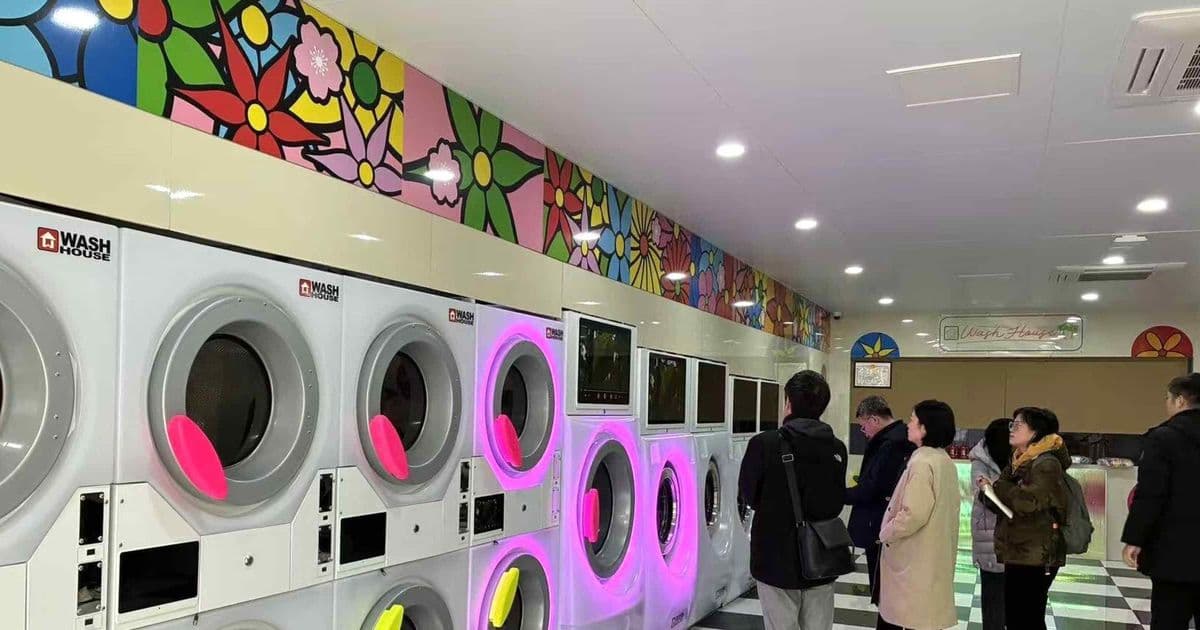
Japan's Washhouse launches first overseas outlet in Qingdao, China, betting on growing hygiene awareness and cashless payment adoption in a market where self-service laundries remain rare.
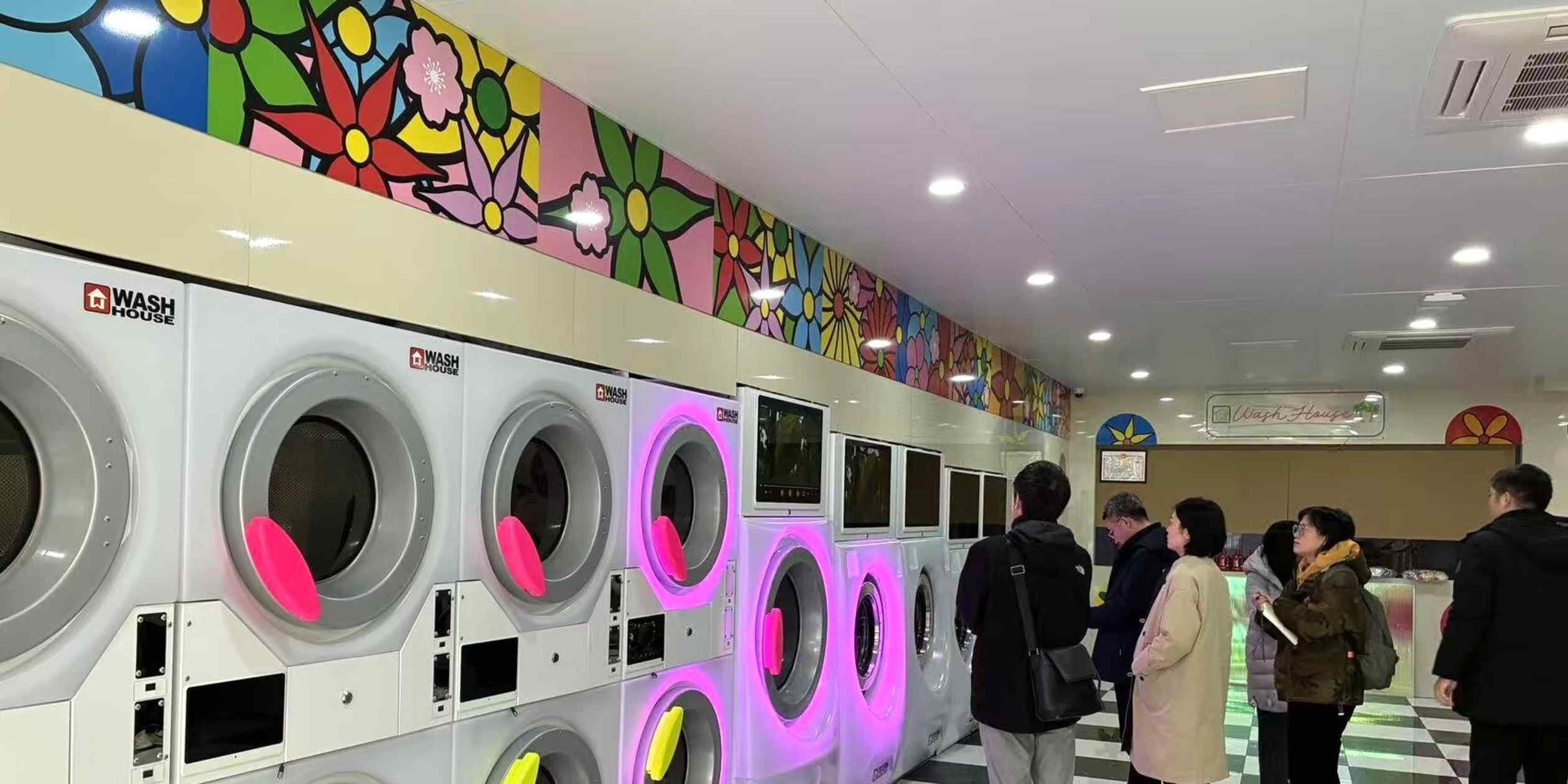
Japanese laundromat operator Washhouse has opened its first international location in Qingdao, China, marking a strategic expansion into a market where self-service laundry facilities are virtually nonexistent. The December 2025 launch comes as the company identifies shifting consumer behaviors in China that align with its core business model.
China's laundry market differs significantly from Japan's established industry. While Japan hosts approximately 15,000 coin-operated laundromats serving urban populations with limited home appliance access, China's market remains underdeveloped. Washhouse's expansion strategy leverages two emerging trends: heightened hygiene consciousness following global health events and China's rapid transition to cashless transactions, with mobile payment penetration exceeding 80% in major cities.
The Qingdao outlet serves as a testing ground for Washhouse's international business model. Company executives will monitor customer adoption patterns and operational challenges before committing to broader expansion. Success metrics include machine utilization rates, revenue per customer, and maintenance costs in the new market.
Industry analysts note several strategic advantages: China's dense urban populations create natural demand for laundry services, while rising disposable incomes increase willingness to outsource household chores. However, challenges include real estate costs in premium locations and potential cultural resistance to shared laundry facilities.
Washhouse's move represents a rare case of Japanese service businesses expanding directly into China rather than Southeast Asia. If successful, the company plans to replicate the model in other Chinese cities and potentially other Asian markets lacking established laundry infrastructure. Competitors will be watching Qingdao performance data closely as an indicator of whether Japan's mature laundromat model can translate to China's evolving consumer landscape.
Comments
Please log in or register to join the discussion