
JR Central is rolling out premium private suites on select Shinkansen bullet trains featuring 5G-enabled windows and personalized sound zones, promising faster, more stable internet and quieter travel for passengers.
Japan's high-speed rail network is about to get a major tech upgrade. JR Central, the operator of the famous Shinkansen bullet trains, has announced it will begin deploying private suites equipped with 5G-enabled windows and personalized noise-cancelling technology on select trains starting in October.
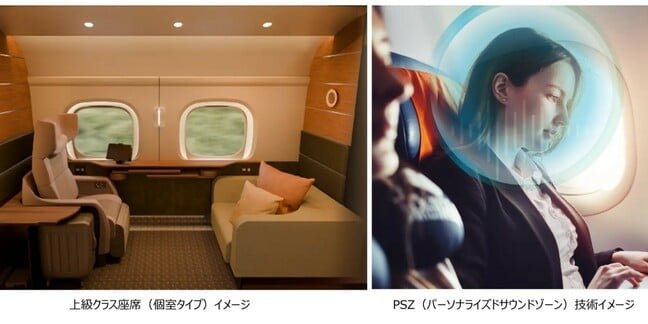
The most eye-catching innovation is the 5G windows developed by AGC, a Japanese glass manufacturer. These aren't ordinary windows—they contain microscopic wires woven directly into the glass that function as antennas. This design maintains a direct line of sight to 5G base stations, which is crucial when trains are hurtling along at speeds up to 285 km/h (177 mph). At those velocities, trains pass cellular towers so quickly that maintaining a stable connection becomes challenging.
Traditional approaches rely on 5G signals entering the train and bouncing around before reaching onboard Wi-Fi routers. AGC's embedded antenna technology promises stronger signal strength and more stable, faster internet connections by eliminating that intermediary step. The company already produces similar products for building windows but developed a specialized version for the unique demands of high-speed rail.
Complementing the connectivity upgrade is NTT's Personalized Sound Zone (PSZ) technology. This system applies the same principle used in noise-cancelling headphones but on a larger scale. By analyzing ambient sound waveforms and projecting inverted versions, PSZ creates quiet zones within the train cabins. JR Central is implementing this specifically for passengers in premium suites who want to watch videos on laptops or have conversations without the constant background noise of a moving train.
The initial rollout is modest—just a couple of these premium suites will be available on six trains. This phased approach allows JR Central to test the technology before potentially expanding it across more services. The railway operator typically opens bookings one month before services operate, so pricing details weren't available at announcement.
This technological leap represents Japan's continued commitment to pushing the boundaries of rail travel. While other countries grapple with basic connectivity on trains, Japan is implementing sophisticated solutions that could set new standards for passenger experience on high-speed rail networks worldwide. The combination of ultra-fast internet and personalized quiet zones addresses two of the most common complaints from rail travelers: unreliable connectivity and excessive noise.
The timing is notable as Japan's rail industry faces increasing competition from other transportation modes and the ongoing challenge of maintaining its reputation for technological excellence. These upgrades to the Shinkansen—already famous for punctuality and efficiency—demonstrate how traditional infrastructure can be enhanced with cutting-edge technology to create a superior passenger experience.
For business travelers and tech enthusiasts, these premium suites could become a compelling reason to choose rail over air travel for certain routes, especially given the convenience of city-center to city-center service that high-speed rail provides. The ability to work productively with reliable internet and minimal distractions during a journey could tip the scales for many passengers when choosing between transportation options.
As these trains begin service in October, they'll likely attract significant attention from both passengers and industry observers eager to see how well the technology performs in real-world conditions. Success could pave the way for similar implementations on other high-speed rail networks around the world, potentially transforming the passenger experience on trains globally.
Comments
Please log in or register to join the discussion