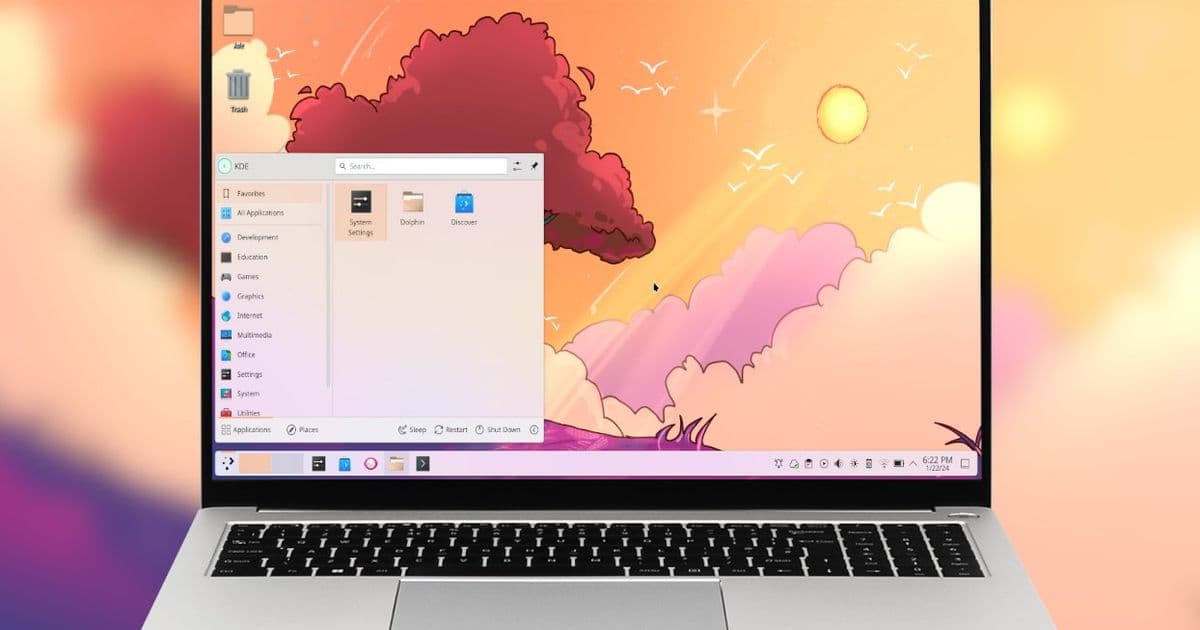
KDE celebrates three decades of free‑software development. The anniversary brings new merchandise, fundraising drives, and a push for KDE Linux, but the core of the effort remains the same: maintaining a cross‑platform desktop, a growing ecosystem of Qt‑based applications, and a volunteer‑driven infrastructure.
KDE at 30 – What the Milestone Means for the Community and Its Software
KDE turned 30 this year, a fact that triggers a flurry of announcements, merch drops, and calls for donations. The headline claim is simple: three decades of community‑driven software that puts control, privacy and freedom in users’ hands. The reality is a mixed picture of technical progress, sustainable‑funding challenges, and a strategic pivot toward a unified operating system.
What’s being advertised
- A new line of anniversary merchandise (t‑shirts, stickers, mugs).
- A “Become a Supporting Member” program that promises regular cash flow for the foundation.
- The launch of KDE Linux, a distro that bundles the full KDE stack as a first‑class OS.
- A series of community challenges (planting trees, up‑cycling hardware) under the banner 30 for 30.
- A map of local celebrations where anyone can add an event via the KDE wiki.
These items are presented as ways to “keep KDE in business” and to “help us thrive for the next 30 years.”
What’s actually new
1. KDE Linux – a distribution, not a desktop theme
KDE Linux is the first attempt to ship a complete, opinionated operating system that defaults to Plasma 6, Qt 6 and the latest KDE Frameworks. It is built on top of the Arch‑based base image, using the Calamares installer, and provides a curated set of applications (Krita, Dolphin, Kate, etc.). The project is hosted on GitLab at https://invent.kde.org/kde/kde-linux and follows the same release cadence as the rest of the KDE stack.
Why it matters: Historically KDE has been a desktop environment that could be installed on any distro. By offering a full OS, the community hopes to lower the barrier for newcomers who want a “just works” experience and to showcase the stability of Plasma 6 on a supported platform.
2. Funding model – supporting members vs one‑off donations
The KDE e.V. foundation reports that ~70 % of its income still comes from individual donors. The new “Supporting Member” tier adds a recurring‑payment option (monthly, quarterly, yearly) that feeds directly into the Infrastructure Fund. This fund pays for:
- Build‑farm servers (Git, CI, package repositories).
- Legal counsel for licensing issues.
- Travel grants for contributors attending Akademy, FOSDEM, etc.
The foundation’s 2023‑2024 financial report (https://ev.kde.org/annual-report-2024.pdf) shows a modest increase in recurring income, but the overall budget remains under €2 M, far below the needs of a project that ships a full OS and a dozen major applications.
3. Technical upgrades – Plasma 6 and Wayland migration
Plasma 6, released in early 2024, brings two major under‑the‑hood changes:
- Qt 6.7 as the application framework, which deprecates many Qt 5 APIs and forces developers to port their code.
- Wayland‑only default on most distributions, dropping X11 support for new releases (though a compatibility layer remains for legacy apps).
Benchmarks from the KDE community (see the Plasma 6 Performance page) show a 15‑20 % reduction in memory usage compared to Plasma 5 on the same hardware, and smoother compositing on GPUs that support Vulkan.
Limitations and open challenges
Funding volatility
Even with the new membership tier, the foundation’s cash flow is still unpredictable. Large‑scale initiatives—such as a dedicated KDE Linux release cycle or a full‑time developer team—require stable multi‑year budgets that the current model does not guarantee.
Migration pain points
The shift to Qt 6 and Wayland has left several KDE applications (e.g., KMail, Konqueror) in a maintenance backlog. Some plugins for KDE 4/5 still depend on deprecated Qt 5 modules, meaning contributors must either rewrite large code sections or drop support for older platforms.
Community fatigue
The “30 for 30” environmental challenges are well‑intentioned, but they add another layer of volunteer coordination on top of the already heavy workload of code reviews, bug triage, and documentation. Past attempts at large‑scale community actions (e.g., the 2018 “KDE Summer of Code” sprint) saw participation drop after the initial hype.
What to watch in the next year
- KDE Linux 1.0: The first stable ISO is slated for Q4 2025. Early adopters should test the installer and report bugs on the GitLab issue tracker.
- Plasma 6 LTS: A long‑term support branch is planned for early 2025, targeting enterprise deployments that cannot move to Wayland quickly.
- Funding milestones: The foundation aims to reach €1 M in recurring donations by the end of 2025. Watch the quarterly financial statements for progress.
- International events: Akademy 2025 in Lisbon will feature a dedicated “KDE Linux” track, providing a venue for developers to coordinate migration efforts.
Quick links
- Official KDE 30 anniversary page: https://kde.org/anniversary
- KDE Linux repository: https://invent.kde.org/kde/kde-linux
- Plasma 6 release notes: https://kde.org/plasma6
- KDE e.V. financial reports: https://ev.kde.org/annual-reports
- Contribute an event to the map: https://community.kde.org/Events
The KDE community has built a robust ecosystem over three decades, but the next 30 years will depend on sustainable funding, smooth migration to modern toolchains, and a clear focus on delivering a cohesive operating system.
Comments
Please log in or register to join the discussion