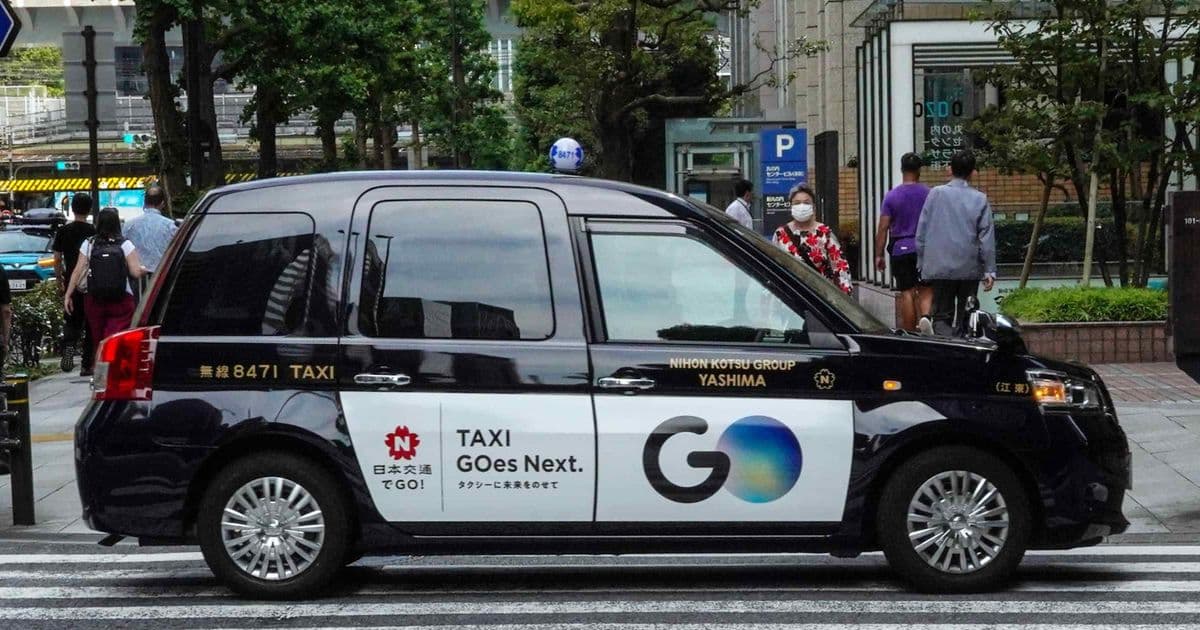
BlackRock’s commitment to buy a 15% share of Go, Japan’s leading taxi‑hailing platform, signals strong foreign confidence in the country’s ride‑share market and could set a pricing benchmark for the June 16 listing.
BlackRock’s stake in Go: what the numbers say
BlackRock announced it will purchase a 15% share of Go, the Tokyo‑based taxi‑hailing app that is set to list on the Tokyo Stock Exchange (TSE) on June 16, 2026. The investment translates to roughly ¥120 billion (US$770 million) based on the prospectus‑price range of ¥8,000–¥10,000 per share. At the midpoint, Go’s implied market capitalisation would be about ¥800 billion ($5.1 billion), making it the largest domestic IPO in Japan this year and the biggest tech‑focused listing since the SoftBank‑Vision Fund IPO in 2020.
Market context: ride‑hailing in Japan
Japan’s ride‑hailing sector has lagged behind the United States and Europe, largely because of strict regulations that limit the use of non‑licensed drivers. Go’s model sidesteps these rules by partnering with licensed taxi operators and providing a digital dispatch layer, a strategy that has attracted more than 3.2 million registered users and 1.1 million active drivers as of the end of 2025.
The company reported ¥45 billion in revenue for FY2025, a 38% year‑over‑year increase, driven by a 55% jump in ride volume after the launch of its “Go Premium” subscription in October 2025. EBITDA margin expanded to 12.4%, up from 9.1% the previous year, reflecting higher utilization rates and lower customer‑acquisition costs.
Why BlackRock is buying in now
- Diversification into Asian mobility – BlackRock’s Global Allocation Fund has increased its exposure to Asian consumer tech from 2.3% to 3.7% of assets under management, reflecting a view that mobility platforms will benefit from rising urbanisation and the government’s push for greener transport.
- Favourable pricing – The prospectus price range is 10%‑15% below comparable valuations for ride‑hailing firms in South Korea and Singapore, offering a margin of safety for a passive‑style investor.
- Strategic partnerships – Go recently signed a partnership with Sony Mobility to integrate in‑car infotainment and with Uber to share cross‑border data, positioning the platform for future expansion into regional tourism markets.
Implications for the IPO and the broader sector
- Pricing pressure on other listings – With a blue‑chip asset manager anchoring the deal, other Japanese tech IPOs, such as the AI‑driven logistics startup LogiX and the autonomous‑vehicle software firm AstraDrive, may need to tighten their price bands to attract comparable institutional demand.
- Potential for secondary offerings – BlackRock’s 15% stake leaves room for Go to raise additional capital through a secondary offering later in 2026, especially if the company pursues a rollout of autonomous minibuses in Osaka and Fukuoka.
- Regulatory signal – The Japanese Financial Services Agency (FSA) has been monitoring foreign investment in mobility platforms. BlackRock’s involvement could accelerate the FSA’s pending amendment to the Taxi Business Act, which would allow limited driver‑less operations in designated zones.
What investors should watch
| Metric | Current | Target (12‑month) |
|---|---|---|
| Daily active users (DAU) | 1.4 million | 2.0 million |
| Revenue per ride | ¥1,200 | ¥1,350 |
| EBITDA margin | 12.4% | 15% |
| Share price (post‑IPO) | ¥9,200 (mid‑range) | ¥10,500‑¥11,000 |
Analysts at Nomura note that a 10%‑12% post‑IPO price appreciation is plausible if Go can sustain its subscription growth and secure the pending autonomous‑vehicle pilot. Conversely, any delay in regulatory approval for driver‑less zones could compress margins and pressure the stock.
Bottom line
BlackRock’s 15% purchase is more than a capital infusion; it is a vote of confidence in Japan’s evolving mobility ecosystem. The deal sets a pricing benchmark for the June 16 listing, nudges the FSA toward a more permissive regulatory stance, and could catalyze a wave of secondary offerings from Japanese tech firms seeking similar institutional backing. For investors, Go presents a high‑growth, moderately valued play that bridges traditional taxi services with next‑generation mobility technology.
Comments
Please log in or register to join the discussion