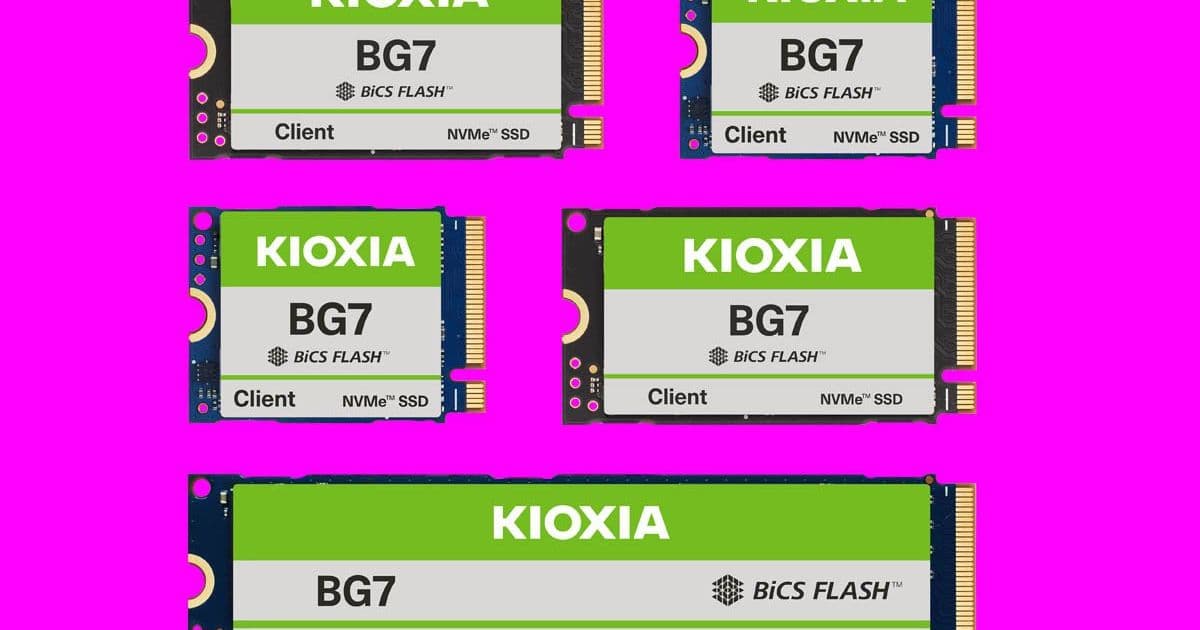
Kioxia's new BG7 M.2 NVMe SSDs target cost-sensitive OEM systems with PCIe 4.0 performance, BiCS FLASH Gen8 NAND, and DRAM-less architecture across 256GB-2TB capacities.
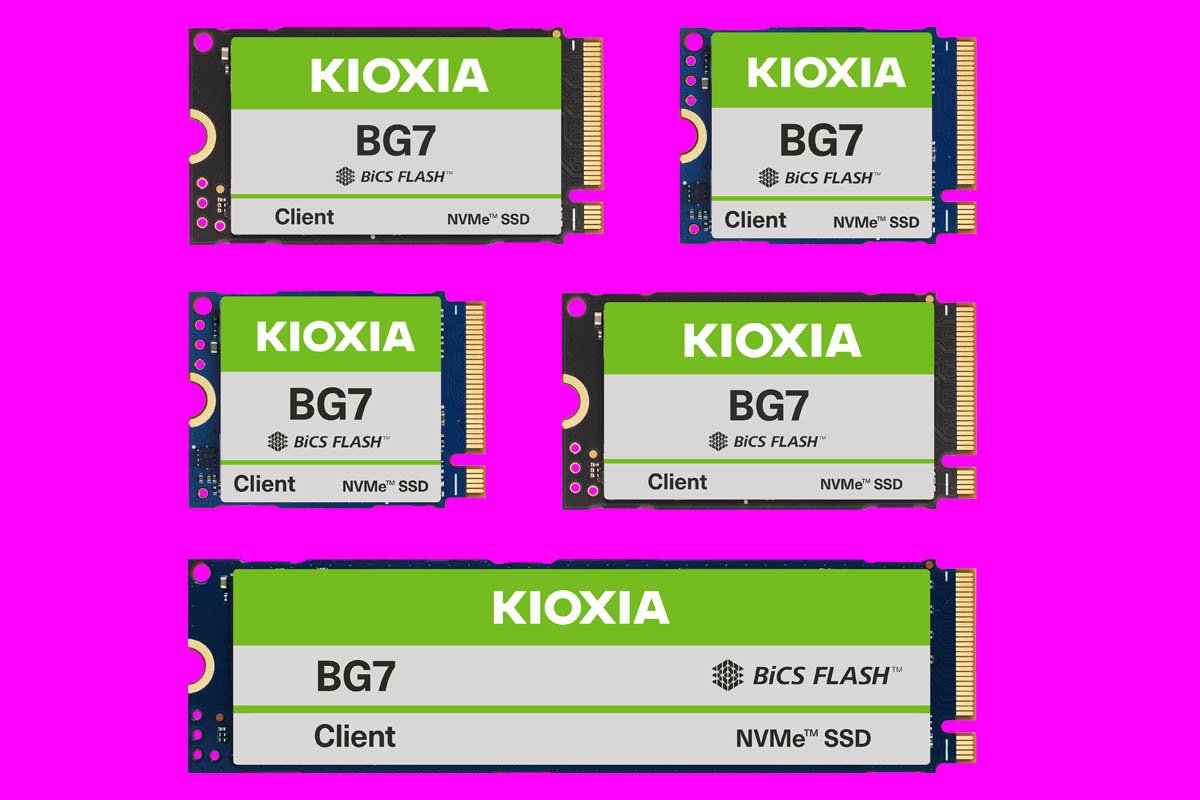
Kioxia has officially launched the BG7 series, its latest generation of value-oriented M.2 NVMe SSDs targeting OEM PC manufacturers and embedded systems. As the successor to the BG6 lineup introduced over two years ago, these drives prioritize cost efficiency while implementing several technical advancements.
The BG7 utilizes Kioxia's eighth-generation BiCS FLASH 3D TLC NAND with CMOS directly Bonded to Array (CBA) technology. This architectural approach increases bit density by vertically stacking peripheral logic circuits beneath the memory cell array, reducing die size while maintaining performance characteristics. 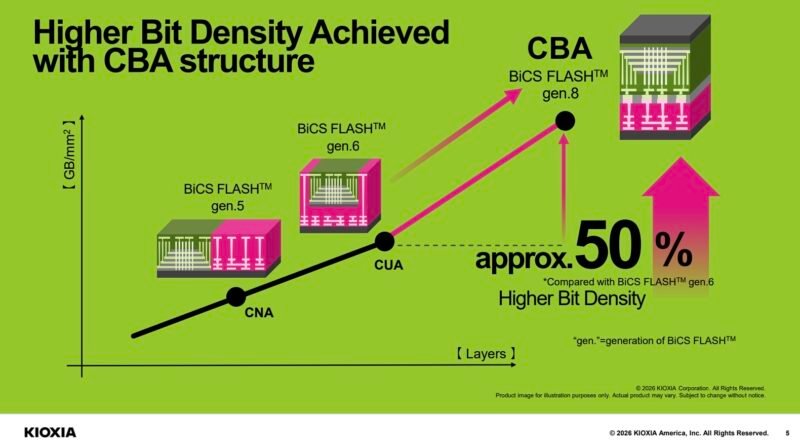
Notably, the series introduces support for the M.2 2242 form factor (42mm length) alongside standard M.2 2280 modules. This compact sizing makes the BG7 suitable for space-constrained devices like industrial PCs, embedded systems, and specialized hardware such as Xsight Labs' E1 DPU servers. Unlike premium SSDs targeting high-performance computing, the BG7 employs a DRAM-less controller design, eliminating dedicated memory buffers to reduce component costs.
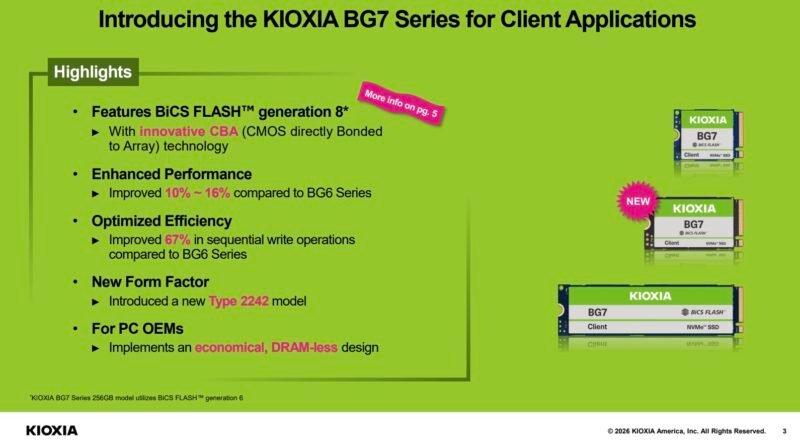
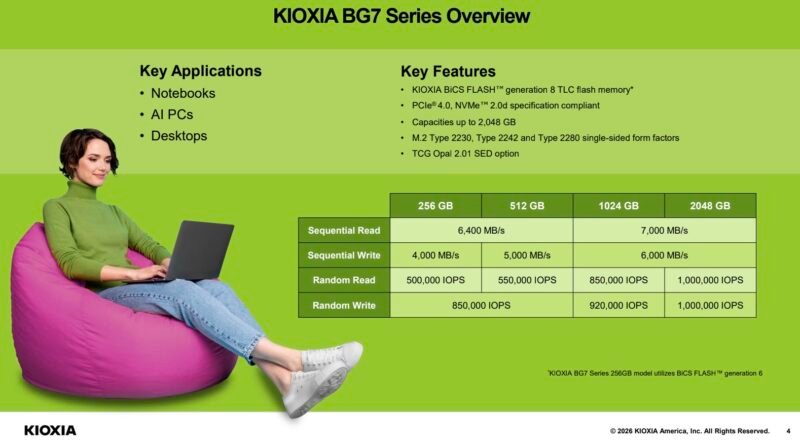
Performance specifications align with PCIe 4.0 x4 interfaces, with sequential read speeds reaching 5,000 MB/s and write speeds up to 4,500 MB/s on higher-capacity models. The series spans four capacity points:
- 256GB: 3,500 MB/s read, 1,700 MB/s write
- 512GB: 4,500 MB/s read, 3,000 MB/s write
- 1TB: 5,000 MB/s read, 4,000 MB/s write
- 2TB: 5,000 MB/s read, 4,500 MB/s write
The absence of a 4TB model reflects Kioxia's strategic positioning in the budget segment, where higher capacities typically demand performance tiers that conflict with DRAM-less architectures. This design decision highlights the trade-off between density and cost optimization in value-focused SSDs.
Current DRAM market conditions significantly influence this product category. As DRAM prices remain volatile, DRAM-less controllers provide OEMs a predictable cost structure while maintaining acceptable performance for mainstream applications. The BG7 exemplifies this trend, offering a solution for manufacturers needing to balance specifications against component expenses.
Kioxia's BG7 enters mass production immediately, though retail availability remains unlikely given its OEM-focused distribution model. Third-party benchmarking will be essential to validate real-world performance characteristics across different workload scenarios.
Comments
Please log in or register to join the discussion