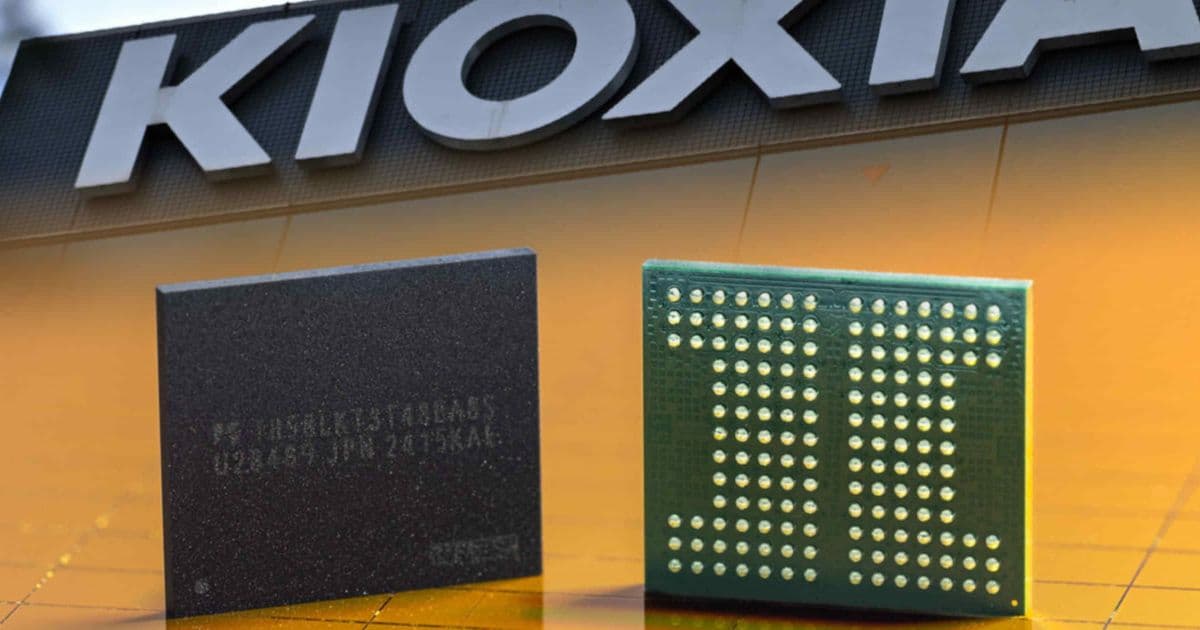
Kioxia’s surge from troubled listing candidate to Japan’s most valuable company marks a sharp market rotation toward memory, where AI demand is turning storage and bandwidth into strategic infrastructure.
Business news
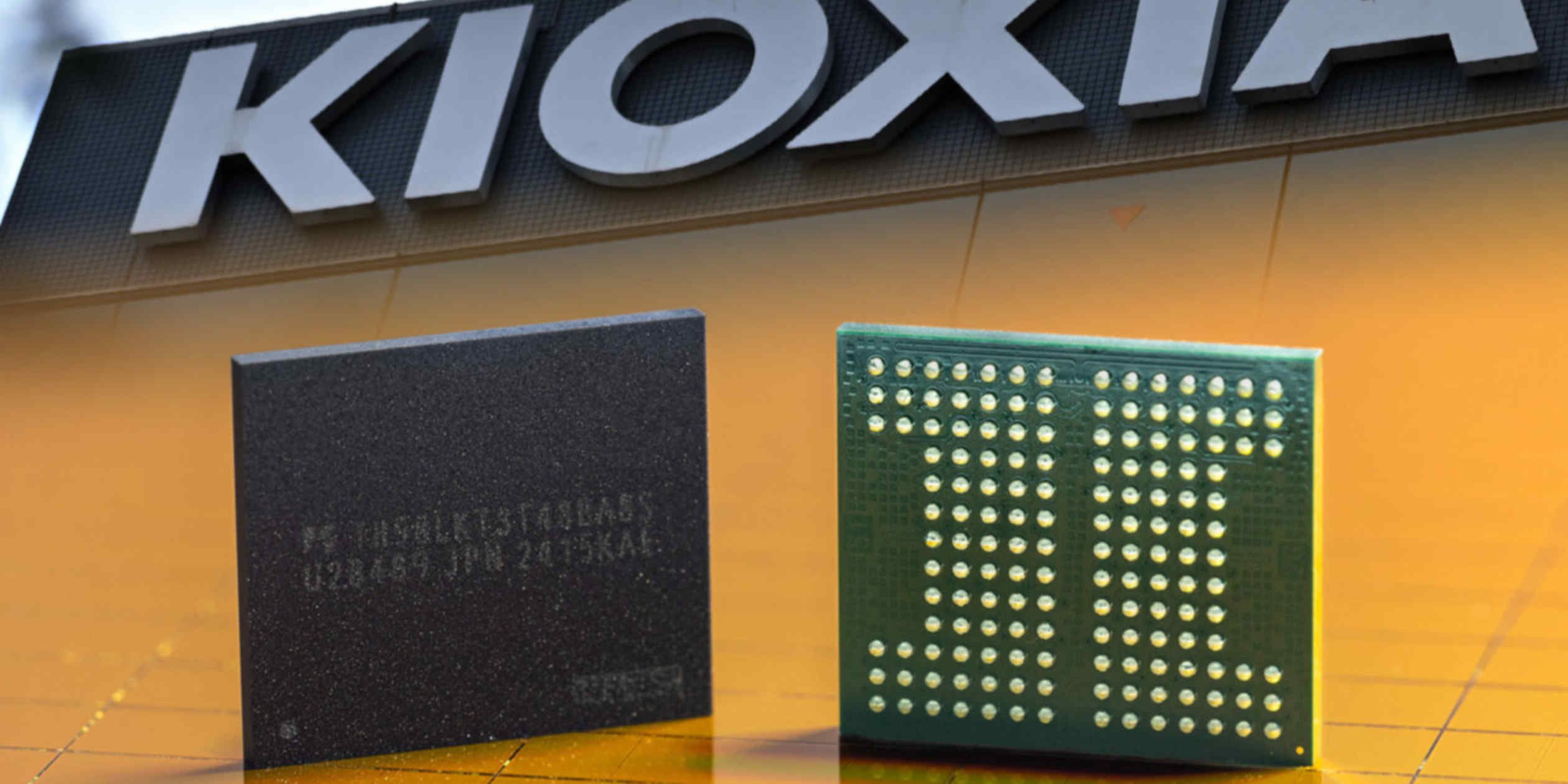
Kioxia Holdings has become Japan’s most valuable listed company by market capitalization, according to Nikkei Asia, reaching 44 trillion yen, about $275 billion, roughly 18 months after listing. The scale of the move is the story: the memory maker’s stock price has climbed 56-fold since its market debut, transforming a company long associated with delayed IPO plans, ownership complexity, and the cyclicality of NAND flash into the clearest Japanese equity proxy for the AI infrastructure buildout.
That valuation implies a dramatic reset in investor expectations. A 56-fold stock move, if share count changes are ignored for a rough comparison, suggests the market was valuing Kioxia at less than 800 billion yen near the start of the listing period. At 44 trillion yen, investors are no longer pricing Kioxia like a volatile storage supplier waiting for the next memory downturn. They are pricing it as a strategic supplier to the AI compute economy, where memory capacity, bandwidth, and proximity to processors increasingly shape system performance.
The company’s core business sits in flash memory and solid-state drives, areas detailed on Kioxia’s product site and corporate pages at Kioxia Holdings. Kioxia traces its roots to Toshiba’s memory business, a lineage that matters because Toshiba engineers were central to the invention of flash memory. The current market is now rewarding that heritage in a very different context: not consumer gadgets or PC storage cycles, but AI data centers that need faster access to larger volumes of model weights, embeddings, training data, logs, and inference context.
The timing is striking. Kioxia spent years under a cloud of uncertainty, including postponed listing efforts and shifting industry conditions. Memory companies are historically punished for capital intensity and price swings. NAND flash, in particular, has often been viewed as less strategically scarce than high-bandwidth DRAM used directly beside AI accelerators. Kioxia’s new valuation says public markets are broadening the AI trade beyond GPUs and HBM suppliers. Investors are now assigning premium value to companies that can reduce the data movement bottlenecks surrounding AI systems.
Market context
The AI infrastructure cycle started with an obvious constraint: not enough accelerators. That made Nvidia the first major beneficiary. The next constraint was high-bandwidth memory, which lifted SK Hynix, Samsung Electronics, and Micron because large AI accelerators need fast stacked DRAM to keep compute units fed. Kioxia’s rise points to the next layer of scarcity, the storage and memory hierarchy around those accelerators.
AI workloads are not limited by raw math throughput alone. A model has to move data from storage to memory, from memory to processors, and between processors over networks. If the GPU waits for data, expensive silicon sits idle. That is why the economics of AI data centers increasingly depend on the full stack: accelerators, HBM, NAND flash, SSD controllers, networking, packaging, power delivery, and software scheduling. Kioxia does not need to become Nvidia to matter. It needs to own enough of the data path to become critical to keeping AI systems utilized.
The distinction between memory types is central. HBM is extremely fast and sits close to AI processors, but it is expensive and capacity constrained. NAND flash is slower, but much denser and cheaper per bit. The opportunity for Kioxia is to push flash closer to the compute layer, reducing the performance penalty between storage and working memory. That does not replace HBM. It changes the architecture of the data center by giving systems a larger, faster tier for data that cannot economically live in DRAM.
This is where technologies such as 3D NAND, advanced controllers, wafer bonding, and storage-class memory approaches become financially relevant. Kioxia’s BiCS FLASH architecture stacks memory cells vertically, increasing density without relying only on shrinking features in two dimensions. Its enterprise and data center SSD portfolio targets systems where latency, endurance, power efficiency, and throughput matter directly to total cost of ownership.
The market is also reacting to Japan’s changing role in semiconductors. For decades, Japanese equity leadership was defined by autos, industrial automation, consumer electronics, and precision manufacturing. Kioxia’s ascent suggests a rotation toward chip infrastructure, especially where Japan retains technical depth. Tokyo has also pushed for domestic semiconductor capacity as supply-chain security became a national industrial priority. Kioxia’s value now gives Japan a large public-market champion in a sector where geopolitical control, customer concentration, and capex discipline all matter.
There is a risk embedded in the rally. Memory markets can move violently. When demand outruns supply, earnings can expand fast because incremental pricing power drops through to margins. When supply catches up, prices can fall quickly. The Nikkei Asia excerpt notes that Kioxia has forecast a 48-fold quarterly profit jump on AI demand, a figure that helps explain why investors have chased the stock. But that kind of profit expansion also raises the bar. A company priced at 44 trillion yen has little room for execution mistakes, overbuilding, or a sudden pause in hyperscaler spending.
The valuation also creates a competitive signal. SK Hynix has become the dominant name in HBM for AI accelerators, while Samsung and Micron are investing heavily to narrow gaps in next-generation memory. Kioxia’s primary strength is NAND flash, not HBM. Its strategic question is whether AI infrastructure spending will keep expanding the value of flash-adjacent technology, or whether most of the profit pool remains concentrated in HBM, GPUs, and advanced packaging. The stock move indicates investors believe the profit pool is widening.
What it means
Kioxia’s rise changes the way the market reads the AI supply chain. The first phase of AI investing rewarded the most visible compute choke points. The current phase is more selective and more technical. Investors are asking which companies control bottlenecks that are hard to solve with more money alone. Memory qualifies because scaling AI is partly a physics and systems-design problem: data has to be stored, retrieved, moved, and processed within strict limits on power, latency, and space.
For Kioxia, the strategic implication is clear. The company must prove that it can turn AI-driven demand into durable earnings, not just peak-cycle profits. That means disciplined capital spending, tight customer alignment with cloud and server OEMs, and continued progress in advanced NAND manufacturing. A 56-fold stock increase gives Kioxia access to cheaper equity capital and a stronger acquisition currency, but it also puts management under pressure to explain how the company will defend margins through the next cycle.
The customer side of the equation is equally important. Hyperscalers are under pressure to improve AI infrastructure efficiency because GPU clusters are expensive to buy and expensive to operate. If faster SSDs or higher-density flash systems reduce idle accelerator time, improve retrieval-augmented generation performance, or lower the cost of serving larger models, storage moves from a procurement line item to a performance lever. That shift supports higher-value products and longer design-in relationships for suppliers such as Kioxia.
There is also a broader lesson for Japan Inc. Kioxia’s market-cap leap shows that investors are willing to pay global technology multiples for Japanese companies when they sit in the path of a structural spending cycle. That is a break from the old discount applied to many Japanese hardware names, which were often viewed as mature, cyclical, or too dependent on legacy customer bases. The AI buildout has given the market a new framework: companies that solve capacity, bandwidth, power, and manufacturing constraints can be valued as infrastructure platforms, even if their products are components.
The caution is that component leadership is never permanent. NAND producers compete on density, yield, endurance, controller design, and cost per bit. Customers are sophisticated and often multi-source supply to avoid dependence on one vendor. If AI demand softens or if rivals add capacity aggressively, Kioxia’s earnings momentum could reverse. The same operating leverage that magnifies profit in an upcycle can compress margins in a downturn.
Still, the milestone is meaningful. Kioxia becoming Japan’s most valuable company is not just a stock-market curiosity. It is a signal that AI has changed the hierarchy of strategic assets in technology. Compute remains central, but the market is now paying closer attention to the memory and storage layers that make compute useful. Kioxia’s 44 trillion yen valuation says investors believe the AI economy will be measured not only in GPUs shipped, but in how efficiently data moves through the machines built around them.
Comments
Please log in or register to join the discussion