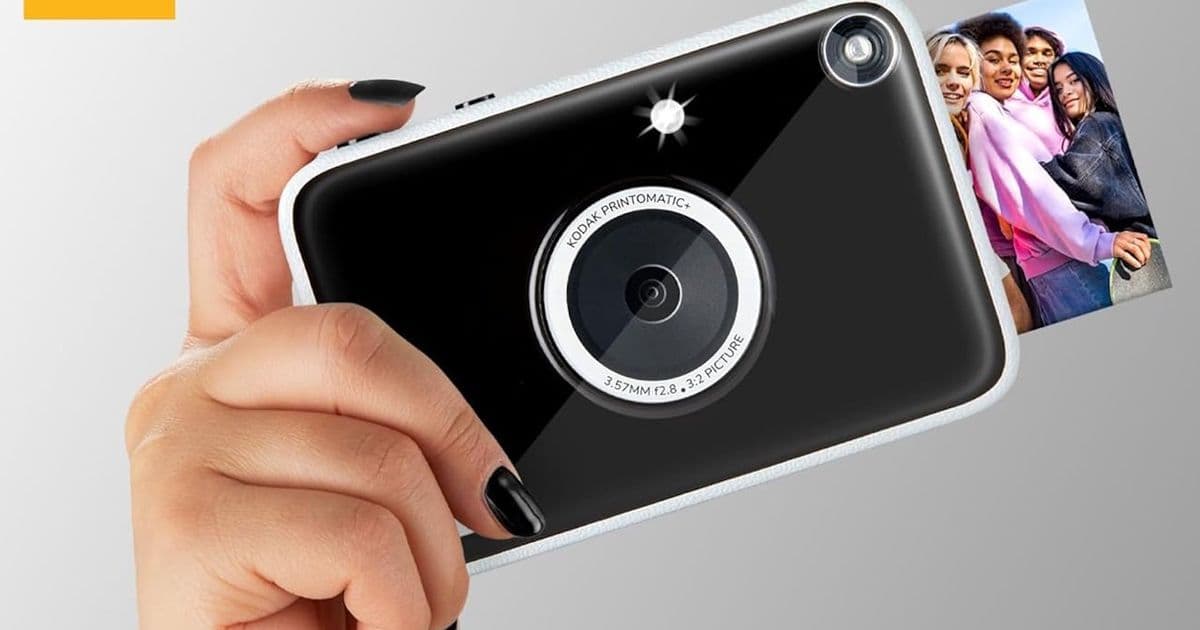
Kodak's new Printomatic+ point-and-shoot camera combines a 10-megapixel sensor with a zero-ink printer, delivering physical prints in seconds. We examine the specs, print quality, and total cost of ownership compared to traditional instant cameras.
Kodak has officially launched the Printomatic+, a hybrid instant camera that captures 10-megapixel digital images and prints them immediately using Zink (Zero Ink) technology. Unlike traditional instant cameras that rely on chemical development processes, the Printomatic+ uses thermal pulses to activate color layers in special paper, producing a 2 x 3-inch print in a single pass. This approach eliminates the need for ink cartridges while delivering prints that are smudge-, tear-, and water-resistant.

What's New: The Printomatic+ Specifications
The Printomatic+ builds on Kodak's earlier instant camera designs with a few key upgrades. At its core is a 10 MP sensor paired with a fixed-focus 3.57 mm f/2.8 lens. The fixed-focus design means users won't be adjusting focus rings or dealing with autofocus hunting—it's a point-and-shoot in the truest sense. The camera relies on an automatic flash for low-light situations, which is typical for this category.
The integrated printer is the star of the show. It uses Zink photo paper, which contains embedded dye crystals that change color when heated. The printer applies precise temperature pulses to activate these layers, creating a full-color image without any ink cartridges. Each 2 x 3-inch print emerges from the camera in roughly 30 to 60 seconds, depending on ambient temperature and battery level.
Kodak includes a multicolor LED light around the shutter button to communicate camera status—whether it's ready to shoot, printing, or low on battery. The camera also supports microSD card storage, allowing users to retain digital copies of their photos even if they choose not to print every shot.
How It Compares: Zink vs. Traditional Instant Photography
The Printomatic+ enters a crowded instant camera market dominated by Fujifilm's Instax line and Polaroid's analog offerings. The primary difference lies in the printing mechanism. Fujifilm's Instax cameras use instant film packs that rely on chemical development after exposure. This produces the distinctive white borders and slightly softer images that many instant photography fans love, but each shot costs between $0.75 and $1.20 depending on film type.
Zink technology, by contrast, is purely thermal. The paper itself contains the colorants, and no ink is required. This makes the printer mechanism simpler and more reliable over time, with fewer moving parts that can jam or fail. The downside is that Zink prints historically have had less dynamic range and color saturation compared to chemical film. However, the technology has improved, and the 2 x 3-inch format is well-suited for casual snapshots, stickers, and scrapbooking.
In terms of cost, the Printomatic+ offers a lower per-print price. Zink paper for the Printomatic+ costs approximately $0.49 per sheet when purchased in bulk packs on Amazon. That's roughly half the cost of Instax Mini film. Over 100 prints, the savings add up to $30 to $70 depending on which film you're comparing.
The camera's 10 MP sensor also provides a digital backup, which traditional instant cameras lack. Users can shoot without printing, or print the same image multiple times. This flexibility is useful for events where you might want to give multiple copies of a photo to different people.
Who It's For: Practical Buyer Guidance
The Printomatic+ makes sense for several user profiles:
Event hosts and party planners will appreciate the ability to print on-demand. The camera's simple operation means guests can use it without instruction, and the lower per-print cost is attractive when you expect to produce dozens of photos.
Scrapbookers and sticker enthusiasts benefit from the 2 x 3-inch format and adhesive-backed paper options (sold separately). The prints are durable and can be handled frequently without smudging.
Travelers and casual photographers who want physical souvenirs without carrying a separate printer will find the all-in-one design convenient. The camera is compact enough to fit in a jacket pocket, though it's bulkier than a smartphone.
However, serious photographers should temper expectations regarding image quality. The fixed-focus lens and small sensor won't compete with smartphone cameras or dedicated digital cameras in challenging lighting. The prints are fun and nostalgic, but they're not archival-quality or suitable for framing in bright light, as thermal prints can fade over time with prolonged UV exposure.
Pricing and Availability
The Kodak Printomatic+ is available now for $79.99 on Amazon in black, blue, pink, or yellow. The package includes a USB charging cable, a starter pack of five Zink photo papers, and a quick start guide.
Replacement Zink paper is sold in packs of 20, 50, or 100 sheets. A 50-pack costs around $24.50, bringing the per-sheet cost to $0.49. The paper is available from Amazon and other retailers, though Kodak's official store often runs bundle deals that include extra paper.
Battery life is rated for approximately 20 to 25 prints per charge, depending on how many prints are interrupted by the flash. The USB charging cable means you can top up from a power bank, which is essential for day-long events.
The Bottom Line
The Printomatic+ represents a pragmatic approach to instant photography. It trades the chemical romance of traditional instant film for the convenience and economy of thermal printing. For users who prioritize cost, durability, and digital backup over film-like aesthetics, it's a solid choice. The 10 MP sensor ensures that even if the print quality isn't gallery-worthy, the digital files are sharp enough for social media or small digital frames.
If you're considering the Printomatic+, ask yourself whether you value the tactile experience of chemical film or the practicality of an all-in-one digital printer. For the former, Fujifilm's Instax line remains the gold standard. For the latter, the Printomatic+ delivers a compelling mix of price, performance, and portability.
For more details, visit the Kodak Printomatic product page or check current pricing on Amazon.
Comments
Please log in or register to join the discussion