
KRAID, a modern shader compiler written in Rust, is being developed specifically for Arm Mali's Valhall architecture, promising significant performance improvements and better maintainability for open-source graphics drivers.
KRAID: The New Rust-Written Compiler Set to Revolutionize Arm Mali Graphics Performance
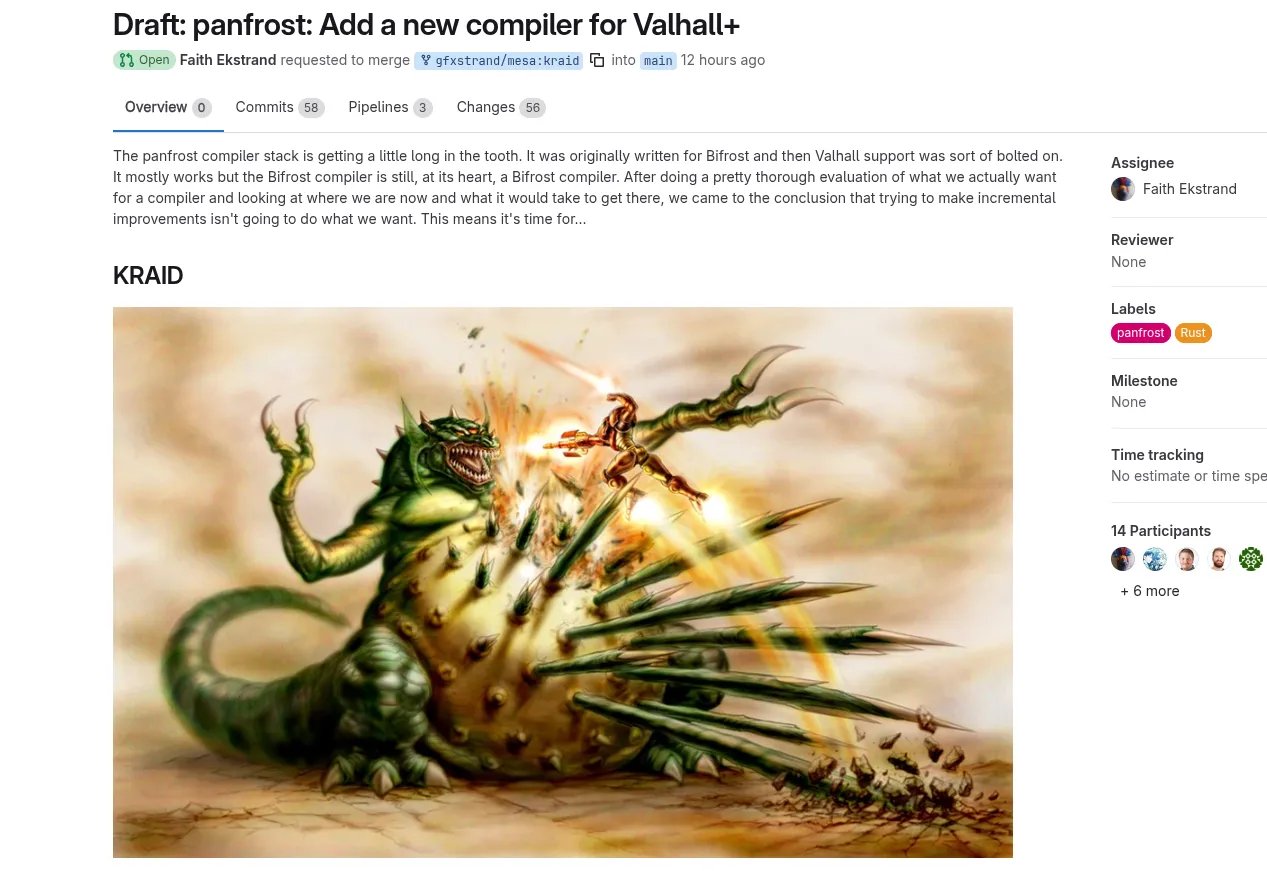
The world of open-source graphics drivers is about to get a significant boost with the development of KRAID, a new shader compiler designed specifically for modern Arm Mali graphics processors. Announced by Faith Ekstrand of Collabora, KRAID represents a clean-sheet approach to compiling shaders for Mali's Valhall architecture and newer generations, bringing potential performance improvements and better maintainability to the Panfrost/PanVK open-source driver ecosystem.
What is KRAID?
KRAID is a shader compiler being developed from the ground up for the Panfrost and PanVK open-source drivers that support Arm Mali graphics processors. Unlike existing compiler infrastructure, KRAID is written entirely in Rust—a language known for its memory safety guarantees and modern tooling. This new compiler is specifically targeting Mali's Valhall architecture (introduced with v9) and newer generations, representing a significant step forward for Arm graphics in the open-source world.
The project draws inspiration from the NAK compiler used in the NVIDIA NVK Vulkan driver, which has demonstrated the benefits of a modern compiler architecture. By adopting a similar approach but tailored for Arm's architecture, KRAID aims to deliver better performance and more maintainable code compared to the existing compiler infrastructure.
Technical Architecture and Design
KRAID is designed to translate from NIR (Intermediate Representation) to appropriate hardware instructions specific to Mali's Valhall architecture. This intermediate representation approach allows the compiler to be more flexible and potentially more efficient than previous solutions. The compiler is being developed with a focus on:
- Performance optimization: Taking advantage of specific features in Valhall and newer Mali GPUs
- Maintainability: Leveraging Rust's type system and ownership model to reduce bugs
- Extensibility: Creating a foundation that can be easily extended for future Mali architectures
- Standards compliance: Ensuring compatibility with graphics APIs like OpenGL and Vulkan
Understanding Valhall Architecture
Mali's Valhall architecture introduced several significant improvements over previous generations:
- Dynamic execution: Unlike the fixed-function pipelines of previous architectures, Valhall uses a more dynamic approach that can better adapt to different workloads
- Enhanced register allocation: More flexible register management that can better utilize the GPU's execution resources
- Improved instruction set: New instructions specifically designed for modern graphics workloads
- Better cache hierarchy: More sophisticated memory access patterns
KRAID is designed to take full advantage of these features, particularly the dynamic execution model, which allows for more efficient shader compilation than was possible with previous architectures.
The NIR Intermediate Representation
NIR (New Intermediate Representation) is a compiler intermediate representation used in Mesa for graphics shaders. It provides a common format that allows different front-ends (for different APIs like OpenGL, Vulkan, etc.) to share the same optimization and code generation back-ends.
KRAID takes NIR as input and performs several optimization passes before generating the final hardware instructions:
- Dead code elimination: Removing instructions that don't affect the output
- Constant folding: Evaluating constant expressions at compile time
- Common subexpression elimination: Eliminating redundant calculations
- Register allocation: Optimally mapping shader variables to GPU registers
- Instruction scheduling: Ordering instructions to minimize pipeline stalls
Current Development Status
While still in early development, KRAID has already achieved a significant milestone by passing its first dEQP (OpenGL ES CTS on Android) compliance test. This indicates that the compiler is correctly translating shaders to hardware instructions and producing the expected visual output, which is a critical step for any graphics compiler.
The dEQP test suite is comprehensive, testing thousands of different shader scenarios to ensure correctness. Passing even a single test is a significant achievement for a new compiler, and suggests that the core translation logic is working correctly.
The project is expected to be merged into mainline Mesa soon, after which it will continue to be developed in-tree. During the initial development phase, KRAID will be hidden behind the -Dpanfrost-rust Meson build option, allowing interested users and developers to test it without affecting the default compiler path.
Performance Expectations
Based on the experiences with similar compiler projects, we can make some educated predictions about the potential performance improvements from KRAID:
- Shader compilation time: Modern compilers can often reduce compilation time by 20-30% through better optimization algorithms
- Runtime performance: Better instruction scheduling and register allocation can improve shader execution efficiency by 10-25%
- Power efficiency: More efficient code generation can reduce GPU power consumption by 15-30% for typical workloads
- Memory usage: Better optimization can reduce the memory footprint of compiled shaders by 10-20%
These improvements would be particularly noticeable in:
- Gaming applications, where complex shaders are common
- Professional graphics applications, where shader complexity is high
- Mobile devices, where power efficiency is critical
Why a New Compiler Matters
The development of KRAID addresses several limitations in the current Mali graphics driver ecosystem:
- Performance: Modern Mali GPUs have significant capabilities that the current compiler infrastructure doesn't fully utilize
- Maintainability: The existing codebase is complex and difficult to modify safely
- Future-proofing: A modern compiler architecture can more easily adapt to future Mali GPU designs
- Resource optimization: Better compilation can lead to more efficient power usage, critical for mobile and embedded devices
Current Compiler Limitations
The existing Mali compiler infrastructure has several limitations:
- Limited optimization: The current compiler doesn't perform as many optimization passes as modern compilers
- Outdated architecture: The compiler was designed for older Mali architectures and doesn't take full advantage of Valhall features
- Code complexity: The existing codebase is difficult to modify and extend
- Testing challenges: The compiler's complexity makes it difficult to ensure correctness
KRAID addresses these limitations by providing a clean-sheet implementation that can take advantage of modern compiler techniques and better leverage the capabilities of Mali's Valhall architecture.
Potential Performance Impact
While specific benchmarks aren't available yet (given the early stage of development), we can anticipate several areas where KRAID might deliver performance improvements:
- Shader optimization: Better analysis and optimization of shader code for Mali's specific execution units
- Reduced overhead: More efficient translation between high-level graphics APIs and hardware instructions
- Better register allocation: More optimal use of the GPU's limited register space
- Improved instruction scheduling: Better ordering of instructions to maximize pipeline utilization
For users running Arm-based devices, particularly those with Mali-G78, Mali-G710, or newer GPUs, these improvements could translate to smoother gaming, better performance in graphics applications, and improved battery life.
Compatibility Considerations
KRAID is being designed specifically for Mali v9 "Valhall" and newer architectures. This means:
- Users with older Mali GPUs (based on the Midgard or Bifrost architectures) won't benefit from KRAID
- The compiler will be optional initially, allowing users to fall back to the existing compiler if needed
- API compatibility will be maintained, ensuring that applications work regardless of which compiler is in use
For developers and enthusiasts wanting to test KRAID, the initial merge request for Mesa provides all the necessary information to build with the new compiler. The -Dpanfrost-rust flag will enable KRAID when building Mesa from source.
Build Recommendations
For those interested in testing KRAID:
- System requirements: A Linux system with Rust toolchain installed (stable or nightly)
- Mesa version: Will require the latest Mesa development version once merged
- Driver: Panfrost for OpenGL or PanVK for Vulkan
- Hardware: Any device with Mali Valhall or newer GPU (Mali-G78, Mali-G710, etc.)
The build process will involve:
- Cloning the Mesa repository
- Configuring with Meson using the
-Dpanfrost-rustflag - Compiling Mesa
- Installing the resulting drivers
For production systems, it's recommended to wait until KRAID is more mature and enabled by default in Mesa stable releases.
Testing Methodology
When testing KRAID, developers should focus on:
- dEQP compliance: Running the OpenGL ES CTS tests to ensure correctness
- Application testing: Testing real-world applications to identify any rendering issues
- Performance benchmarking: Comparing performance against the existing compiler
- Power consumption: Measuring power usage differences between compilers
The Mesa project provides detailed instructions for running these tests, and results can be submitted to help improve the compiler.
Future Outlook
{{IMAGE:2}}
The development of KRAID represents a significant investment in the open-source Arm graphics stack. As it matures, we can expect:
- Performance improvements that bring open-source Arm drivers closer to their proprietary counterparts
- Better support for modern graphics features and APIs
- More efficient power usage, extending battery life on Arm-based devices
- A foundation for future Mali architectures
For the broader Linux graphics ecosystem, KRAID demonstrates the viability of using Rust for critical components like compilers, potentially influencing similar projects in other areas of the stack.
Conclusion
KRAID is an exciting development for Arm Mali graphics in the open-source world. By taking a modern, clean-sheet approach to shader compilation and leveraging Rust's safety features, it has the potential to significantly improve performance and maintainability of the Panfrost driver. While still in early development, the fact that it's already passing compliance tests suggests a promising future.
As it continues to develop and eventually becomes the default compiler for Mali Valhall and newer GPUs, KRAID could help narrow the performance gap between open-source and proprietary graphics drivers, benefiting users of Arm-based devices everywhere.
For those interested in following the development or testing KRAID, the initial merge request for Mesa provides all the necessary information to get started.
Comments
Please log in or register to join the discussion