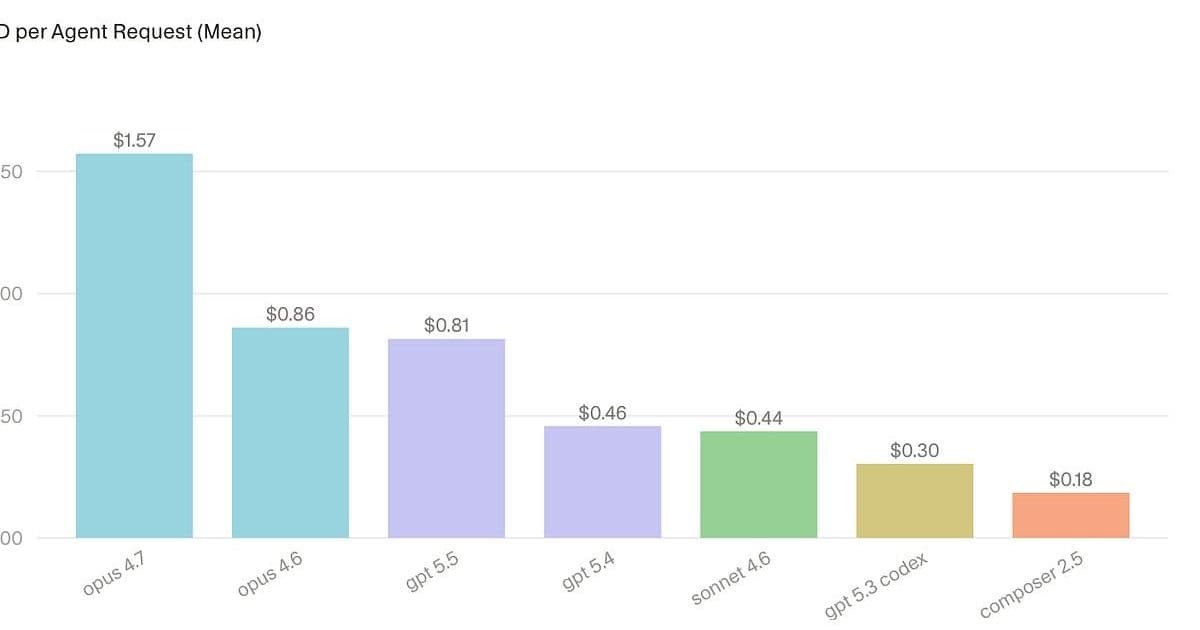
As AI adoption accelerates, engineering leaders are implementing cost controls and questioning ROI, with notable developments including per-engineer spending limits, surprising usage statistics, and cloud provider suspensions.
The landscape of AI adoption in engineering departments is undergoing a significant shift. After years of rapid experimentation and implementation, organizations are now implementing more disciplined approaches to AI spending, driven by a combination of financial constraints and a clearer-eyed view of ROI.
What's New: The Emerging Spending Discipline
Recent conversations with engineering leaders at mid-sized and large companies reveal a notable trend: the implementation of per-engineer monthly caps on AI tool usage. This represents a departure from the earlier "build it and they will come" approach to AI adoption, moving instead toward a more measured, cost-conscious methodology.
One Fortune 500 tech company I spoke with recently implemented a $100 per engineer per month limit on AI coding assistants. "We saw our AI tool expenses grow 300% in six months with no corresponding increase in productivity metrics," explained their VP of Engineering. "We needed to bring some financial discipline to the experiment."
This trend isn't isolated. Across multiple organizations, the pattern is similar: initial enthusiasm followed by budget reality checks. The result is a more structured approach to AI tool evaluation and deployment, with clearer metrics for success.
Why It Matters: From Hype to Practical Value
The shift in AI spending patterns reflects a maturation of how organizations approach AI tools. Early adopters often treated AI coding assistants as a panacea, expecting immediate and dramatic productivity improvements. As the initial excitement has worn off, leaders are demanding more concrete evidence of value.
The economic context cannot be ignored. With venture funding becoming more scarce and public markets rewarding profitability over growth, companies are under increasing pressure to demonstrate clear ROI on their technology investments. AI tools, which can be expensive at scale, are now facing closer scrutiny.
Consider the economics: a team of 50 engineers using premium AI coding assistants at $50/user/month costs $2,500 monthly. At enterprise scales with thousands of engineers, these costs can quickly reach six figures annually. When the productivity gains don't match the expense, the business case weakens significantly.
How to Use It: Implementing Sustainable AI Adoption
For engineering leaders navigating this new reality, several strategies are emerging to implement AI tools more sustainably:
Tiered Access Models: Implement different levels of AI tool access based on role and project needs. Not every engineer requires the same level of AI assistance, and tailoring access can significantly reduce costs.
Usage Analytics: Implement systems to track AI tool usage patterns. This data helps identify which tools provide the most value and which are underutilized, enabling more informed purchasing decisions.
Phased Rollouts: Rather than company-wide deployments, consider pilot programs with clear success metrics before expanding AI tool access.
Alternative Solutions: Explore open-source alternatives or freemium versions of popular AI tools before committing to expensive enterprise licenses.
The Data Perspective: Cursor's Usage Statistics
Recent data from Cursor, an AI coding assistant, provides interesting insights into actual AI tool usage patterns that contradict some initial assumptions:
- 70% of AI-generated code is modified by developers before use
- The average "time saved" per developer is estimated at 15-20% rather than the 30-50% initially claimed
- The most valuable features are code completion and bug detection, rather than complex code generation
These statistics suggest that while AI tools provide value, it's more nuanced than early proponents claimed. The 15-20% productivity improvement, while significant, may not justify the expense for all organizations, particularly when accounting for the need to review and modify AI-generated code.
Cloud Provider Caution: The GCP Case
The recent case of Google Cloud Platform suspending a customer spending $2M/month without warning serves as a cautionary tale about over-reliance on cloud provider services. While the specific circumstances remain unclear, the incident highlights the risks of unchecked cloud spending, especially when AI services are involved.
This case underscores the importance of:
- Regular financial reviews of cloud and AI service usage
- Diversification of AI service providers to avoid dependency
- Contractual clarity regarding usage policies and suspension conditions
For organizations heavily invested in cloud-based AI services, this incident should prompt a review of their vendor relationships and contingency plans.
The Path Forward: Balanced AI Adoption
The current trend toward more disciplined AI spending doesn't signal a rejection of AI tools but rather a move toward more sustainable adoption. Organizations are learning to balance innovation with financial responsibility, seeking the sweet spot where AI tools provide clear value without breaking the bank.
Engineering leaders who embrace this balanced approach—implementing cost controls while still experimenting with new AI capabilities—are likely to find more sustainable success than those who swing between extremes of unfettered adoption and complete rejection.
As one CTO I interviewed put it: "We're not backing away from AI; we're getting smarter about how we use it. The goal isn't to eliminate AI tools but to maximize their value per dollar spent."
This measured approach may ultimately prove more beneficial in the long run, fostering a culture of thoughtful innovation rather than technological excess.
Comments
Please log in or register to join the discussion