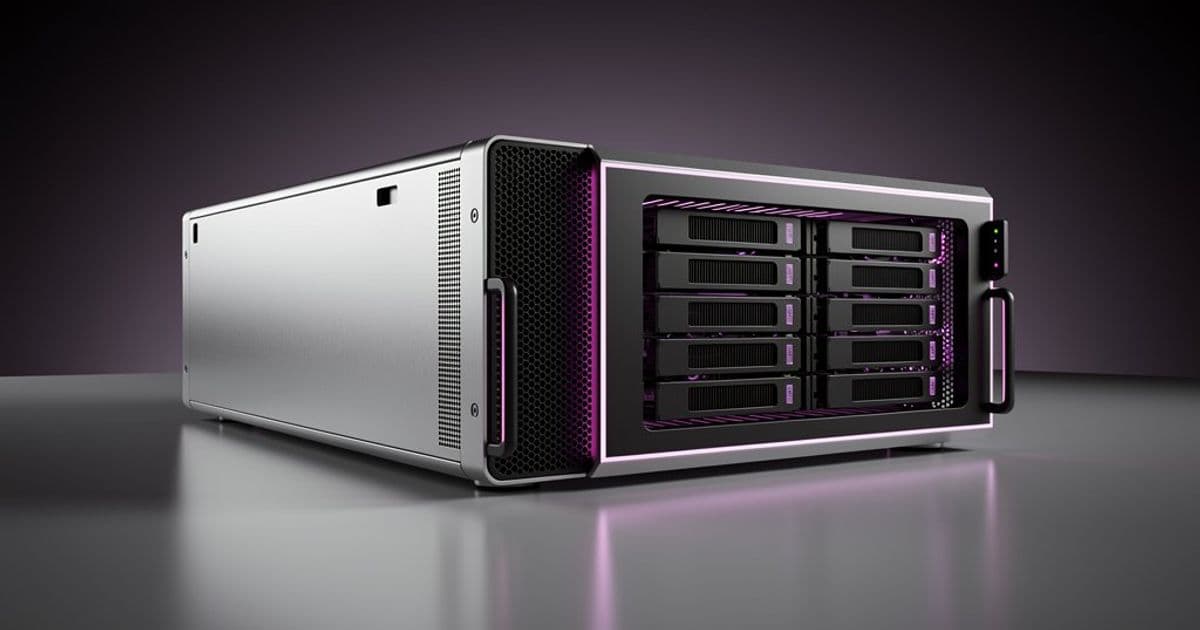
Nvidia-backed cloud provider Lambda is negotiating a $350M+ funding round led by Mubadala Capital as it prepares for a potential IPO in late 2026, reflecting intense demand for specialized AI compute infrastructure.

Lambda, a cloud provider specializing in renting access to Nvidia's AI accelerators, is in advanced talks to raise over $350 million in new funding according to sources familiar with the matter. Abu Dhabi's Mubadala Capital is leading the round, which would position Lambda for a potential public listing in the second half of 2026. The company counts Nvidia among its strategic investors and, notably, was recently disclosed as having Nvidia itself as its largest customer.
Technical Context and Business Model
Lambda operates in the rapidly expanding market for dedicated AI infrastructure-as-a-service. Unlike general-purpose cloud providers, Lambda focuses exclusively on provisioning high-performance computing resources optimized for AI workloads, primarily using Nvidia's H100, A100, and upcoming H200 GPUs. The company offers both on-demand instances and reserved capacity, with pricing models tied to GPU-hour consumption.
What distinguishes Lambda from hyperscalers is its hardware specialization: configurations are tuned for large-scale model training and inference, with deployments featuring dense GPU nodes interconnected via high-bandwidth networking. Recent benchmarks show Lambda clusters achieving 92% scaling efficiency when running distributed training jobs across 512 H100 GPUs - a critical metric for foundation model developers.
Market Position and Strategic Implications
This funding round arrives amid unprecedented demand for AI compute. Industry analysts estimate the AI cloud services market growing at 78% CAGR through 2027, with Lambda competing against specialists like CoreWeave and Genesis Cloud. The company's valuation reportedly doubled since its last funding round in early 2025, reflecting scarcity premiums for Nvidia GPU access.
The deal carries strategic significance beyond capital infusion:
- Nvidia Ecosystem Play: As both investor and key customer, Nvidia benefits from diversified distribution channels amid US-China trade restrictions
- Geographic Expansion: Mubadala's involvement suggests Middle East expansion plans, leveraging the region's growing AI investments
- Vertical Integration: Lambda recently acquired a liquid cooling startup to improve power efficiency in data centers
Operational Challenges and Market Realities
Despite strong demand, Lambda faces material constraints:
- Supply Chain Dependencies: 89% of Lambda's deployed hardware relies on Nvidia GPUs, creating vulnerability to production delays or allocation shifts
- Margin Pressure: Intense competition forces aggressive pricing; gross margins reportedly range between 18-22% for on-demand services
- Capacity Limitations: Wait times for reserved H100 instances currently average 11 weeks despite recent capacity expansions
Regulatory hurdles also loom: the SEC recently issued guidance requiring infrastructure providers to disclose client concentration risks in IPO filings - particularly relevant given Lambda's disclosed reliance on Nvidia as a major customer.
Looking Ahead
Lambda's roadmap reportedly includes support for Nvidia's upcoming Blackwell architecture and custom silicon experimentation. However, the company must demonstrate sustainable differentiation beyond GPU provisioning as hyperscalers expand AI offerings. With the AI infrastructure market projected to reach $152B by 2027 according to Gartner, Lambda's success hinges on executing its specialized strategy while navigating complex hardware dependencies and intensifying competition.
For technical teams evaluating providers, Lambda's performance data and architecture documentation offer concrete benchmarks for comparison against alternatives. The coming months will reveal whether Lambda can convert investor confidence into durable competitive advantage ahead of its IPO timeline.
Comments
Please log in or register to join the discussion