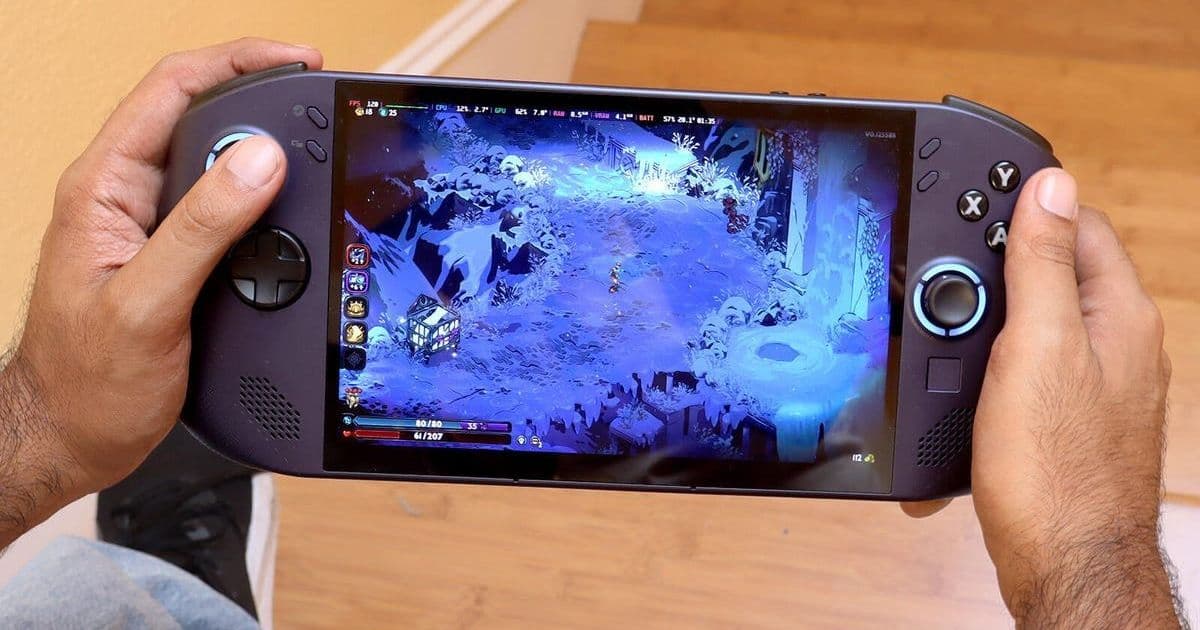
Lenovo unveils major upgrades across its gaming portfolio, headlined by the ergonomically redesigned Legion Go 2 handheld and next-gen Legion Pro 7 laptop. The announcements signal Lenovo's aggressive push into the competitive gaming hardware space with OLED displays, AMD Ryzen processors, and Nvidia's latest GPUs.
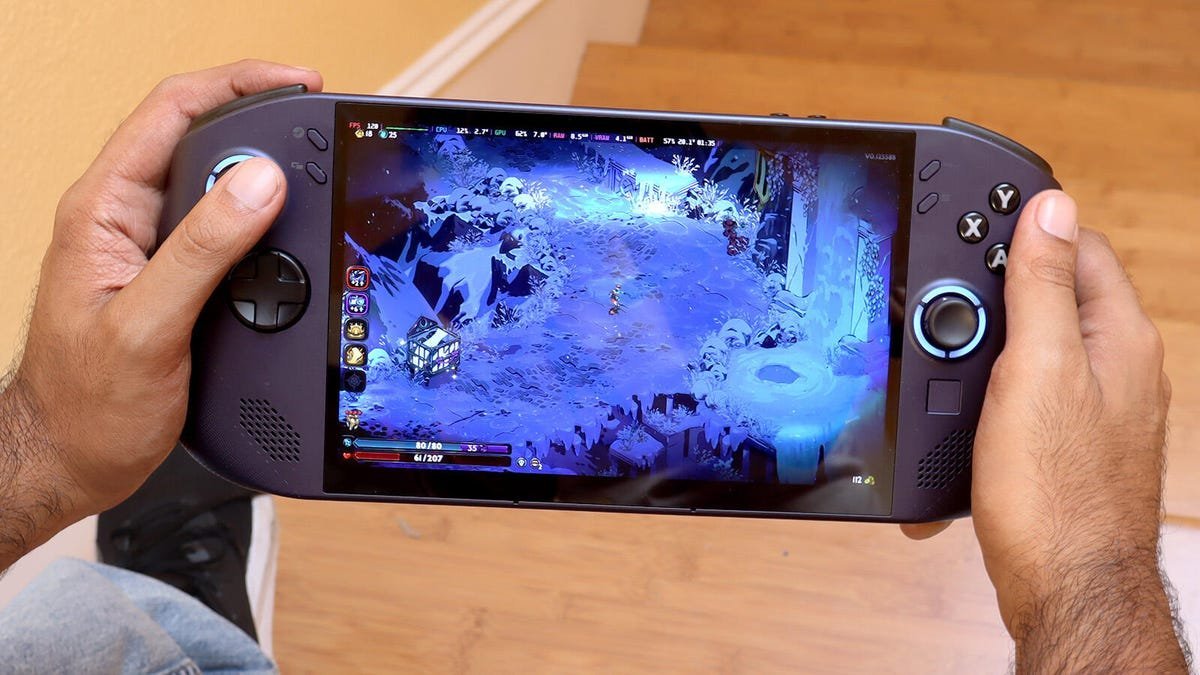
At IFA 2025 in Berlin, Lenovo made significant waves in the gaming hardware space with a trio of announcements targeting different segments of the market. The spotlight shines brightest on the redesigned Legion Go 2 handheld – a Windows-based gaming device that directly addresses ergonomic concerns plaguing many portable gaming systems.
The Ergonomic Evolution: Legion Go 2
The original Legion Go gained attention for its Switch-like detachable controllers, but the sequel makes substantial refinements. Lenovo has completely redesigned the TrueStrike controllers with smoother contours and a more intuitive layout to reduce hand fatigue during extended sessions. Crucially, these new controllers remain backward-compatible with the first-generation Legion Go.
 Lenovo's redesigned Legion Go 2 controllers prioritize comfort during long gaming sessions
Beyond ergonomics, the Legion Go 2 packs notable hardware upgrades:
- AMD Ryzen Z2 Extreme processor for enhanced performance
- Up to 32GB of 8000MHz RAM
- 8.8-inch OLED display with HDR TrueBlack 1000 certification (1920×1200 resolution)
- 74Whr battery – larger than its predecessor
- Up to 2TB SSD storage with microSD expansion
The controversial resolution drop from 2560×1600 to 1920×1200 is offset by the OLED panel's superior contrast and HDR capabilities. The handheld retains its innovative FPS Mode, transforming the right controller into a vertical mouse for precision shooting games. Priced from $1,049 with an October release, it positions itself as a premium alternative in the handheld PC market.
Desktop-Class Power: 10th-Gen Legion Pro 7
For traditional gaming setups, Lenovo unveiled the 16-inch Legion Pro 7 (10th Gen) laptop, featuring cutting-edge components:
"Under the hood, it runs an AMD Ryzen 9955HX3D processor and Nvidia GeForce RTX 5080 GPU – a combination that screams 'power' while retaining a sleek aesthetic unexpected in gaming laptops."
The laptop's PureSight WQXGA (2560×1600) OLED display boasts a 240Hz refresh rate and 0.08ms response time, crucial for competitive gaming. To manage thermal output from these high-wattage components, Lenovo implemented its Coldfront Vapor cooling system. Scheduled for November release starting at $2,399, it targets enthusiasts seeking desktop-replacement performance.
Mid-Range Value: LOQ Tower 26ADR10
Completing the trilogy is the LOQ Tower 26ADR10 desktop, positioning itself as a value-oriented powerhouse:
- AMD Ryzen 8000 series processor
- Nvidia 50-Series GPU options
- Up to 64GB DDR5 RAM and 4TB storage
- Wi-Fi 7 connectivity and abundant ports
Starting at approximately $1,000 with September availability, this 26L tower offers a compelling price-to-performance ratio for mainstream gamers.
Strategic Implications
Lenovo's announcements reveal a multi-pronged strategy: refining handheld ergonomics where competitors often falter, pushing performance boundaries with the latest AMD and Nvidia silicon, and offering tiered pricing across form factors. The focus on OLED across all premium products signals an industry-wide shift toward superior display technology, while the backward-compatible controllers demonstrate thoughtful ecosystem design.
For developers, these hardware advancements enable more ambitious game designs, particularly for handheld PCs now capable of handling resource-intensive titles. As portable gaming hardware matures, we're witnessing the emergence of truly viable PC gaming experiences beyond traditional desktops and laptops – with Lenovo positioning itself at the forefront of this evolution.
Comments
Please log in or register to join the discussion