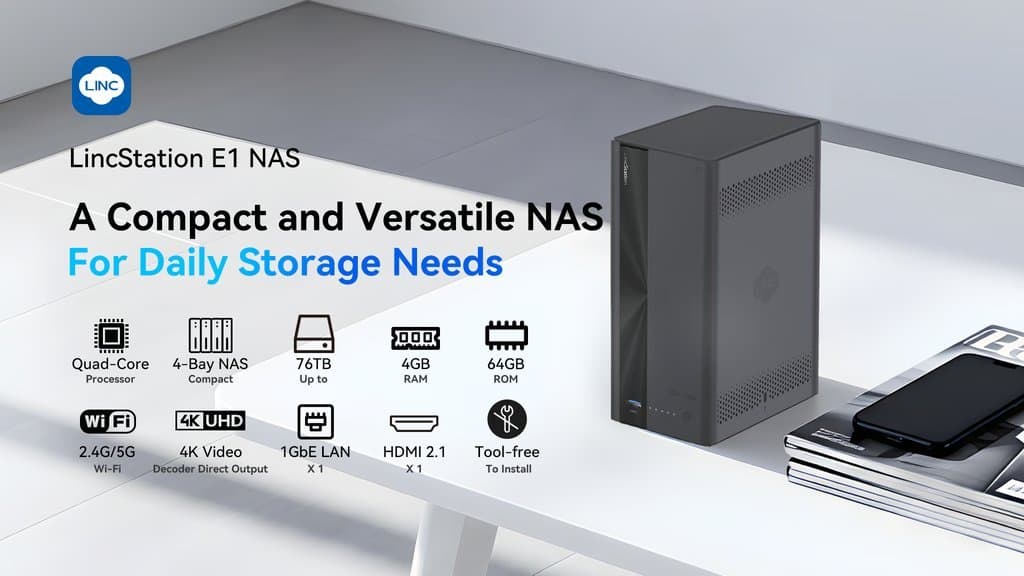
LincPlus launches a compact, affordable NAS device supporting up to 76TB of storage with both traditional hard drives and modern SSDs, priced at just $129 for early backers.
The LincStation E1 from LincPlus represents an interesting entry in the budget NAS market, offering a compact form factor with flexible storage options at an attractive price point. Measuring just 219 x 88 x 140mm (8.6" x 3.5" x 5.5"), this device packs significant storage potential while maintaining a small footprint suitable for home offices or media centers.
Storage Flexibility
The standout feature of the LincStation E1 is its hybrid storage approach, combining traditional hard drives with modern SSDs. The device includes two bays for 3.5" or 2.5" SATA drives and two M.2 2280 slots for SSDs. This configuration allows users to create a tiered storage system, with SSDs handling frequently accessed files while hard drives provide bulk storage capacity. With support for up to 76TB of total storage when fully configured, the E1 offers substantial room for media libraries, backups, and file sharing.
However, potential buyers should note that the M.2 slots are limited to PCIe 3.0 x1 speeds, which may not deliver the maximum performance that faster SSDs could achieve. This limitation suggests the device is optimized for capacity rather than extreme performance, making it more suitable for file serving than high-speed video editing workflows.
Processor and Performance Considerations
The LincStation E1 is powered by a Rockchip RK3568 quad-core Arm Cortex-A55 processor, a significant departure from the Intel N100 chip found in its predecessor, the LincStation N2. This processor choice has several implications for potential users.
First, the Arm architecture will likely affect performance compared to x86 alternatives. While adequate for basic NAS functions like file serving, media streaming, and backup tasks, users expecting the same level of processing power as x86-based systems may be disappointed. The 4GB of RAM (compared to 16GB in the N2) further reinforces this positioning as a budget device rather than a high-performance solution.
Second, the Arm processor limits operating system flexibility. Unlike x86-based NAS devices that can typically run various operating systems including TrueNAS, OpenMediaVault, or even full Linux distributions, the Rockchip chip restricts users to the provided LincOS. This custom operating system appears to handle basic functions like file sharing, media serving, and remote access, but users seeking advanced features or specific software compatibility may find themselves constrained.
Software and Usability
The LincStation E1 runs LincOS, a custom operating system developed by LincPlus. While NAS Compares reports that the software includes expected basic features, it apparently still feels somewhat like a work in progress. For users primarily interested in simple file sharing, media streaming, and basic backup functions, this may be sufficient. However, those requiring advanced features like Docker support, virtualization, or specialized media server applications may need to look elsewhere.
The device does offer some user-friendly features, including a tool-free design that allows for easy drive installation without requiring a screwdriver. This approach makes upgrades and maintenance more accessible for less technically inclined users. The inclusion of active cooling via a fan suggests that LincPlus has designed the system to handle sustained operation, though noise levels under load remain to be seen.
Connectivity and Ports
The LincStation E1 provides a reasonable selection of ports for a budget NAS:
- 1 x USB 3.2 Gen 1 Type-A (5 Gbps)
- 2 x USB 2.0 (480 Mbps)
- 1 x HDMI 2.1
- 1 x Gigabit Ethernet
- 1 x DC power input
The single Gigabit Ethernet port is a notable downgrade from the 10 Gigabit port in the previous N2 model. This limitation means the device will be constrained to standard network speeds, which may become a bottleneck when transferring large files or streaming multiple 4K video streams simultaneously. The inclusion of WiFi 5 and Bluetooth 5 provides wireless connectivity options, though for a NAS device, wired connections are generally preferred for reliability and speed.
Pricing and Value Proposition
LincPlus is positioning the E1 as an affordable option, with expected retail pricing around $219. However, the company is offering Kickstarter early bird pricing starting at just $129, representing significant savings for those willing to back the crowdfunding campaign. This pricing makes the LincStation E1 considerably cheaper than the $399 LincStation N2 reviewed last year.
The lower price point comes with several compromises compared to the N2: reduced RAM (4GB vs 16GB), less onboard storage (64GB eMMC vs 128GB), fewer M.2 slots (2 vs 4), and slower networking (1GbE vs 10GbE). The processor change from Intel N100 to Rockchip RK3568 is perhaps the most significant difference, affecting both performance and OS flexibility.
Market Position and Competition
The LincStation E1 enters a crowded budget NAS market dominated by established players like Synology, QNAP, and Asustor. These companies offer mature software ecosystems, extensive feature sets, and proven reliability, though typically at higher price points.
For users primarily seeking a simple, affordable way to store and share files across their network, the LincStation E1 could represent good value. However, those requiring advanced features, better performance, or the flexibility to choose their operating system might be better served by spending more on established brands or considering x86-based alternatives.
The inclusion of both HDD and SSD support in a compact, affordable package does address a specific need in the market. Users looking to create a cost-effective media server or home backup solution may find the E1's hybrid storage approach appealing, particularly at the early bird price point.
Potential Concerns
Several potential concerns should be noted for prospective buyers:
New Company Track Record: LincPlus appears to be a relatively new company, and the longevity of software support and hardware reliability remain unproven. Established NAS manufacturers typically offer multi-year warranty periods and ongoing software updates.
Arm Processor Limitations: The Rockchip RK3568 processor restricts operating system options, making it difficult for users to switch to alternative NAS software if they become dissatisfied with LincOS.
Performance Constraints: With only 4GB of RAM and a single Gigabit Ethernet port, the device may struggle with demanding workloads or high-traffic environments.
Software Maturity: While LincOS reportedly includes basic features, it may lack the polish and advanced capabilities of more established NAS operating systems.
Conclusion
The LincStation E1 presents an interesting proposition for budget-conscious users seeking a compact NAS with flexible storage options. At $129 for early backers, it offers significant value for those primarily needing basic file sharing, media streaming, and backup capabilities.
However, potential buyers should carefully consider their needs. Users requiring advanced features, better performance, or the flexibility to choose their operating system might want to consider alternatives or wait for reviews of shipping units to assess real-world performance and software stability.
For those who can live with the limitations of the Arm-based processor and are comfortable with a new company's first major NAS product, the LincStation E1 could provide an affordable entry point into the world of network-attached storage with its unique combination of HDD and SSD support in a compact form factor.
The Kickstarter campaign for the LincStation E1 is now live, with shipping expected for backers who choose the early bird options.
Comments
Please log in or register to join the discussion