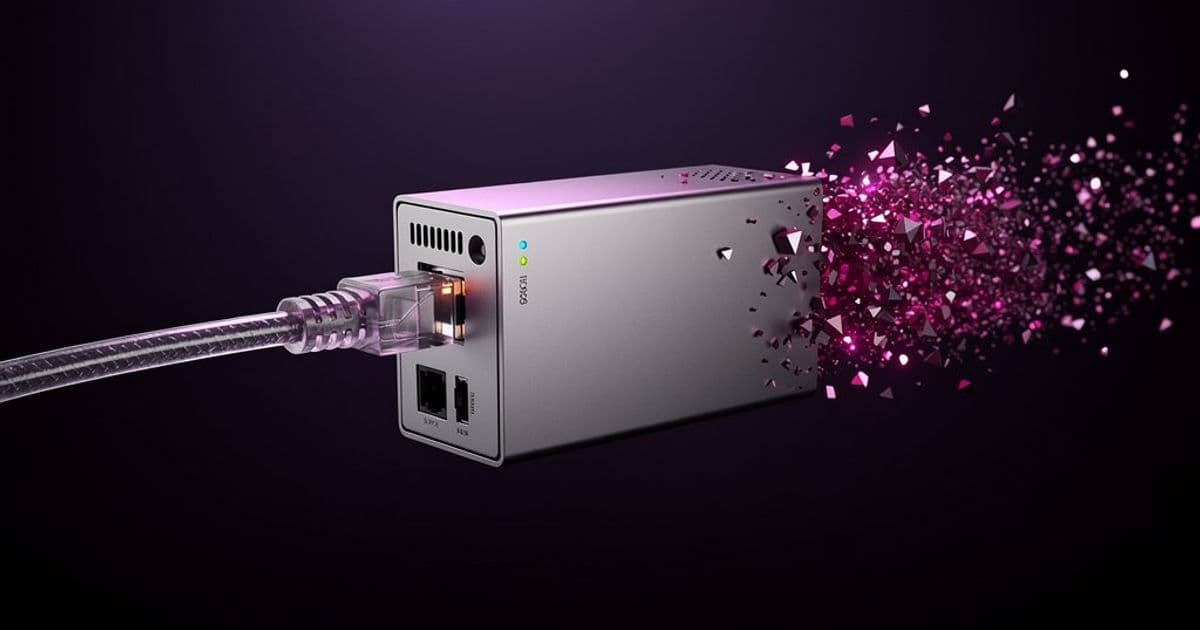
Linux 7.0 removes obsolete HIPPI networking support after 20+ years, eliminating legacy code from supercomputing era.
The Linux kernel maintainers have permanently removed support for the High Performance Parallel Interface (HIPPI) protocol in the upcoming Linux 7.0 release, ending over two decades of compatibility with the obsolete networking standard. This significant code removal reflects Linux's ongoing evolution toward modern infrastructure needs.
The Legacy of HIPPI
HIPPI emerged in the late 1980s as a high-speed interconnect for supercomputers and research systems, offering groundbreaking 800 Mb/s transfer speeds - revolutionary for its time. Developed when Ethernet maxed out at 10 Mb/s, HIPPI enabled data transfers between specialized systems across distances up to 25 meters using bulky copper cables. Its inclusion in Linux dates back to kernel versions from the late 1990s.
Why Removal Matters Now
Several converging factors made HIPPI obsolete:
- Modern fiber-optic networks now deliver equivalent speeds to residential users
- Current protocols like InfiniBand and 100GbE outperform HIPPI capabilities
- No active hardware using HIPPI exists in mainstream computing
- Kernel developers confirmed zero active users in recent years
The removal eliminates the rrunner network driver and associated HIPPI subsystems. A minimal header remains solely to preserve TUN/TAP compatibility for userspace applications.
Developer Impact
For Android developers leveraging Linux kernel foundations:
- No immediate action required - HIPPI wasn't supported on mobile platforms
- Kernel size reduction benefits embedded/constrained devices
- Demonstrates Linux's commitment to removing unmaintained legacy code
- Highlights Android's reliance on upstream Linux kernel modernization
Cross-platform developers should note:
- Containerized environments (like Alpine Linux systems) gain efficiency
- Cloud infrastructure benefits from streamlined kernel code
- Historical protocols eventually give way to contemporary standards
Technical Migration Considerations
While HIPPI removal won't affect consumer devices, developers maintaining legacy scientific equipment should:
- Audit systems for HIPPI hardware dependencies
- Migrate to modern interconnect protocols like InfiniBand
- Consider maintaining custom kernels if HIPPI support is critical
- Evaluate virtualization solutions for legacy hardware interfaces
The HIPPI removal follows similar cleanups like dropping ISA sound card support in Linux 6.7. These changes collectively reduce kernel complexity by approximately 15,000 lines of code per year. As Linux Foundation Fellow Greg Kroah-Hartman stated: "Removing obsolete code is as important as adding new features for long-term sustainability."
This systematic pruning ensures Linux remains viable for next-generation devices - from embedded IoT sensors to mobile devices and cloud servers - proving that even foundational open-source projects must evolve with technological progress.
Comments
Please log in or register to join the discussion