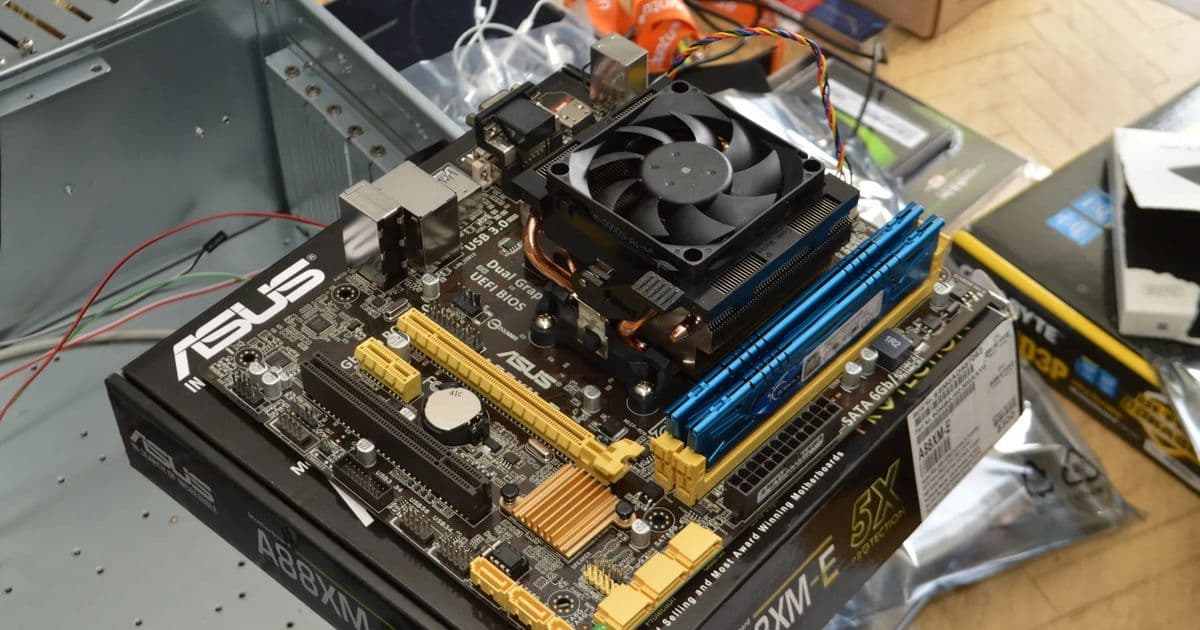
Linux 7.1 promises significant improvements for AMD and Intel hardware, including dropping legacy CPU support, new graphics driver features, and expanded hardware compatibility across multiple architectures.
The Linux 7.1 kernel cycle is shaping up to be one of the most hardware-focused releases in recent memory, with extensive improvements targeting both AMD and Intel platforms alongside broader hardware support across multiple architectures.

CPU Support Changes
Linux 7.1 will begin the process of removing support for Intel 486 CPUs, marking the end of an era for these nostalgic but obsolete processors. This cleanup reflects the kernel's ongoing evolution toward modern hardware while shedding legacy code that no longer serves the majority of users.
For newer Intel hardware, Linux 7.1 will enable FRED (Fast Return from Exception and Interrupts) by default on Panther Lake CPUs, providing better performance through improved interrupt handling. The kernel will also raise the minimum required Rust version for builds with Rust support, ensuring developers work with more modern tooling.
AMD users will see significant improvements, particularly for older APUs. Kaveri, Kabini, and Mullins APUs will now default to using the AMDGPU driver instead of the legacy Radeon driver. This change brings better performance, out-of-the-box RADV Vulkan support, and other modern graphics features to these aging systems.
The kernel is also preparing for upcoming AMD Zen 6 processors with improved instruction-based sampling support and will expose AVX-512 BMM (Byte Manipulation and Merge) capabilities to KVM guest VMs, a new ISA feature coming to Zen 6.
Graphics Driver Enhancements
NVIDIA's Nova driver continues to see development work, with Linux 7.1 including further improvements and refinements. The driver represents NVIDIA's effort to provide open-source graphics support, and its ongoing development suggests increasing maturity.
Intel's graphics driver receives multiple enhancements in this release. The Xe driver improves memory pressure handling and out-of-memory behavior for vRAM, addressing stability issues that users have encountered. A particularly significant change enables transparent hugepages for device pages, which provides a substantial improvement for Shared Virtual Memory usage.
The driver also prepares for Intel Nova Lake P graphics and UHBR (Ultra High Bit Rate) DisplayPort tunnels, ensuring compatibility with next-generation Intel hardware. Additionally, there are numerous improvements for Intel Xe3 graphics, continuing the refinement of Intel's graphics stack.
AMD's graphics team isn't being left behind, with multi-SDMA engine optimization coming to AMDGPU and continued work on GFX12.1 enablement for next-gen hardware. The AMDXDNA driver gains per-process memory usage queries and power estimate reporting for Ryzen AI NPUs, improving AI workload management.
Networking and System Changes
Linux 7.1 will retire the UDP-Lite code from the networking subsystem. This removal not only cleans up the codebase but should result in faster UDP performance due to the simplified networking stack.
The kernel will now power off systems by default when fatal ACPI errors occur, providing a more predictable failure mode for hardware issues rather than potentially leaving systems in unstable states.
Hardware Support Expansion
RISC-V architecture sees several improvements, though the XIP (Execute-In-Place) kernel feature is being removed due to its recurring instability issues. HDMI display support arrives for both the RISC-V BeagleV Ahead SBC and the Lichee Pi 4A board, expanding display capabilities for RISC-V developers.
Mobile and laptop support receives attention with new Lenovo Legion HID drivers being mainlined and a new Lenovo laptop fan driver providing better fan speed monitoring across various Lenovo models. The Bitland WMI driver enables more functionality on laptops from this Chinese ODM, while TUXEDO Computers laptops gain additional features through ongoing Uniwill platform driver work.
Wireless networking improves with numerous MediaTek MT76 WiFi driver enhancements, and the Intel QAT driver adds Zstd offloading support for QuickAssist accelerators and prepares for wireless mode support with QAT Gen6 hardware.
System Management and Debugging
The kernel addresses a long-standing limitation by supporting multiple batteries per HID device, better handling modern hardware configurations that may have several battery units. Sched_EXT is expected to prioritize SMT siblings for better performance and provide tighter control over task placement on CPUs.
Sensor monitoring expands to more ASUS desktop motherboards, and HRTICK timer overhead is reduced, improving system responsiveness. A safeguard prevents single programs from exhausting all NPU resources on Intel systems, and a small but useful debugging feature arrives for AMD Zen systems.
Miscellaneous Improvements
Several new drivers and features round out the release. The kernel gains support for extended attributes on sockets, enabling new functionality for GNOME and systemd. Sub-scheduler support for cgroups looks likely to land, providing more granular resource control.
New drivers include VeriSilicon DC8200 and Coreboot frame-buffer drivers via the DRM tree. The Adreno X2-85 GPU used in Snapdragon X2 laptop SoCs receives improvements, and a DRM dedicated CRTC background color property is added.
SpacemiT K3 RVA23 SoC enablement continues, and the kernel now supports more comprehensive hardware monitoring and management features across various platforms.
Looking Ahead
With Linux 7.0 expected to release soon, the 7.1 merge window will open for a two-week period where all these changes and more will be integrated into the mainline kernel. Once the merge window closes, attention will shift to performance benchmarking to quantify the real-world impact of these improvements.
The breadth and depth of changes in Linux 7.1 demonstrate the kernel's continued evolution to support modern hardware while maintaining compatibility with older systems where practical. From CPU support changes to graphics driver improvements and expanded hardware compatibility, this release promises significant benefits for users across the Linux ecosystem.
Comments
Please log in or register to join the discussion