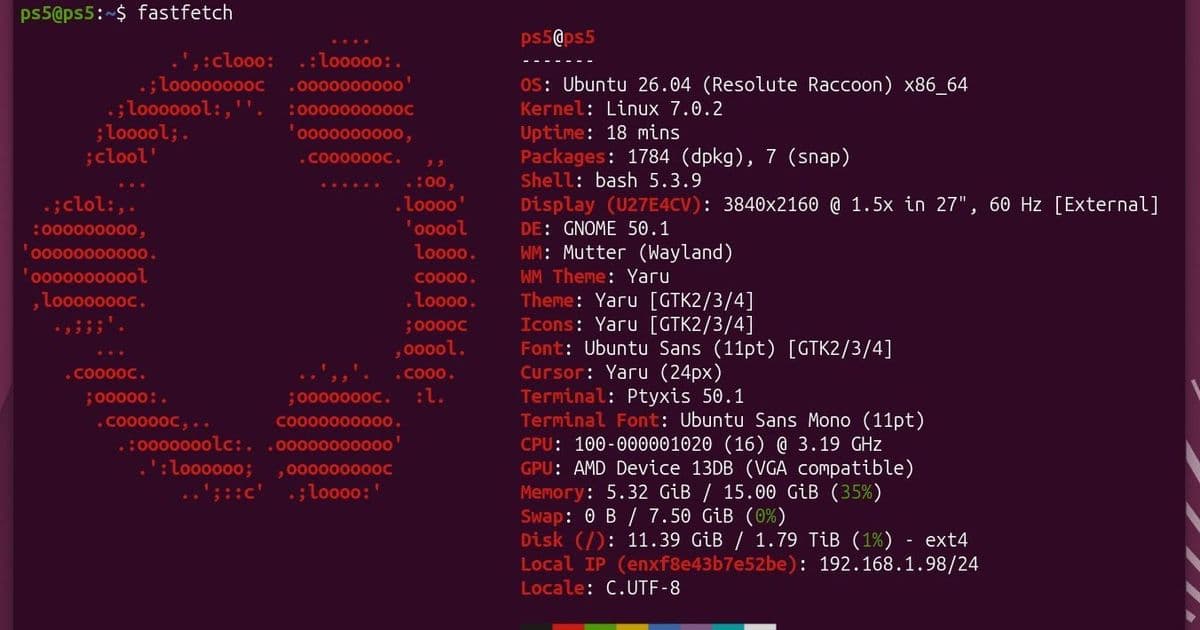
Some PlayStation 5 consoles can now run Ubuntu Linux, enabling developers and gamers to expand the console's capabilities beyond its native operating system.
Modern game consoles have evolved into specialized computers, with architectures increasingly similar to traditional PCs. Microsoft's next Xbox is expected to support PC games natively and reportedly run a version of Windows. However, another operating system has been enabling users to unlock the potential of gaming consoles for years—Linux—and now, thanks to developer Andy Nguyen, it's possible to run Ubuntu on certain PlayStation 5 consoles.
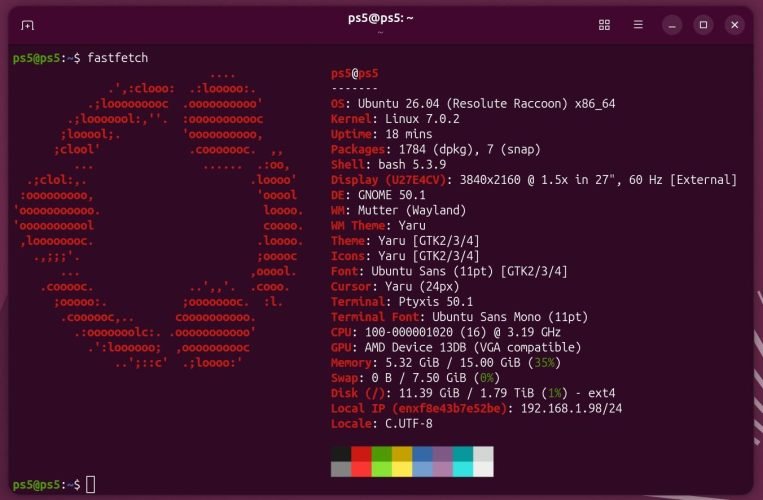
Nguyen demonstrated the capability last month, and detailed installation instructions have since been released for specific PS5 models. This development represents a significant milestone for console enthusiasts and developers looking to push the boundaries of what's possible on Sony's next-generation hardware.
Platform Requirements and Limitations
Before attempting to install Linux on your PS5, several important constraints must be considered:
- Hardware Requirements: Only PS5 consoles with disc drives are currently supported. Digital edition consoles are not compatible with this method.
- Firmware Constraints: The exploit works only on firmware versions 3.xx or 4.xx. Consoles running newer firmware (5.xx and later) or older versions are not supported at this time.
- Non-Permanent Solution: This method doesn't permanently replace the PS5's operating system with Linux. Instead, users must re-run the exploit each time they reboot the console. This approach has both advantages and disadvantages.
The temporary nature of the Linux installation means there's minimal risk of damaging your console. However, it does require additional steps to access the Linux environment after each reboot. For convenience, users can prepare an M.2 SSD with an Ubuntu image, allowing for quicker boot to Linux after running the exploit again.
Technical Implementation and Capabilities
The Linux installation leverages an exploit in the PS5's system software that was patched in firmware version 5.xx. While the exact technical details of the exploit remain somewhat guarded, the resulting implementation provides several interesting capabilities:
- Performance Boosts: The Linux environment includes tools to adjust the fan curve and boost the CPU speed to 3.5 GHz and the GPU to 2.23 GHz.
- Display Support: The system supports 1080p, 1440p, and 2160p gaming at 60 Hz. However, HDMI output and 1440p or higher video output may not work properly on some monitors, indicating potential driver or hardware compatibility issues.
- Gaming Capabilities: Once Ubuntu is running, users can install Steam and play PC games that may not be available on the PS5 natively. This also enables playing PC versions of PS5 games with more control over graphics settings and performance options that might not be accessible through the standard PlayStation interface.
Current Limitations and Workarounds
The implementation has several notable limitations that users should be aware of:
- Bluetooth Support: The current software doesn't support the PS5's built-in Bluetooth functionality. However, users can connect DualSense controllers using a Bluetooth dongle, providing a workaround for controller connectivity.
- Audio and Video: While video output works at various resolutions, there may be compatibility issues with certain displays, particularly at higher resolutions.
- System Integration: Since Linux runs alongside the PS5's native OS rather than replacing it, there's no direct integration between the two environments. Files and settings aren't shared between them.
Developer Impact and Applications
For developers, the ability to run Linux on PS5 opens several interesting possibilities:
- Cross-Platform Development: Developers can test applications on PS5 hardware using familiar Linux development tools and environments.
- Homebrew Applications: The homebrew community can create applications that leverage the PS5's hardware capabilities in ways not possible through Sony's official development framework.
- Performance Analysis: Developers can analyze system performance and optimize their games for the PS5's architecture using Linux-based tools.
- Prototyping: The Linux environment could serve as a platform for prototyping new game concepts or experimental applications before committing to full development.
Migration Process and Considerations
For those interested in attempting to install Linux on their PS5, the migration process involves several key steps:
- Verify Compatibility: Ensure your PS5 has a disc drive and is running firmware version 3.xx or 4.xx.
- Prepare Exploit: Follow the published instructions to run the exploit that enables Linux booting.
- Install Ubuntu: Install the Linux distribution using the provided method.
- Configure Environment: Set up the Linux environment, including installing Steam and configuring controllers with a Bluetooth dongle if needed.
- Prepare Secondary Boot Option: Optionally, prepare an M.2 SSD with an Ubuntu image for faster subsequent boots.
Users should be aware that this process requires technical comfort with both PS5 system software and Linux administration. While the risk of permanent damage is minimal due to the non-permanent nature of the installation, there's always some risk when modifying system software.
Future Possibilities
The ability to run Linux on PS5 represents just the beginning of what might be possible with continued development:
- Broader Firmware Support: As new exploits are discovered, we may see support for additional firmware versions, including the latest 5.xx and beyond.
- Improved Hardware Integration: Future versions could potentially offer better integration with PS5 hardware components, including full Bluetooth support and optimized graphics drivers.
- Additional Linux Distributions: While Ubuntu is the current focus, other distributions might become viable options as the implementation matures.
- Virtualization Containers: The development of containerized Linux environments could allow for easier switching between different Linux distributions or configurations.
This achievement follows a long tradition of console modification that dates back to early PlayStation and Xbox systems. Each generation brings new technical challenges and opportunities, and the PS5 represents one of the most complex targets yet due to its sophisticated security measures.
For developers and enthusiasts interested in exploring this capability, the installation instructions and technical details can be found through various enthusiast forums and Nguyen's original demonstration. As with any console modification, users should proceed with caution and understand the potential limitations and risks involved.
The ability to run Linux on PS5 underscores an interesting convergence between traditional gaming consoles and general-purpose computing devices. As these platforms continue to evolve, we may see increasingly blurred lines between dedicated gaming systems and multi-purpose computing platforms, potentially opening new avenues for innovation in both gaming and general software development.
Comments
Please log in or register to join the discussion