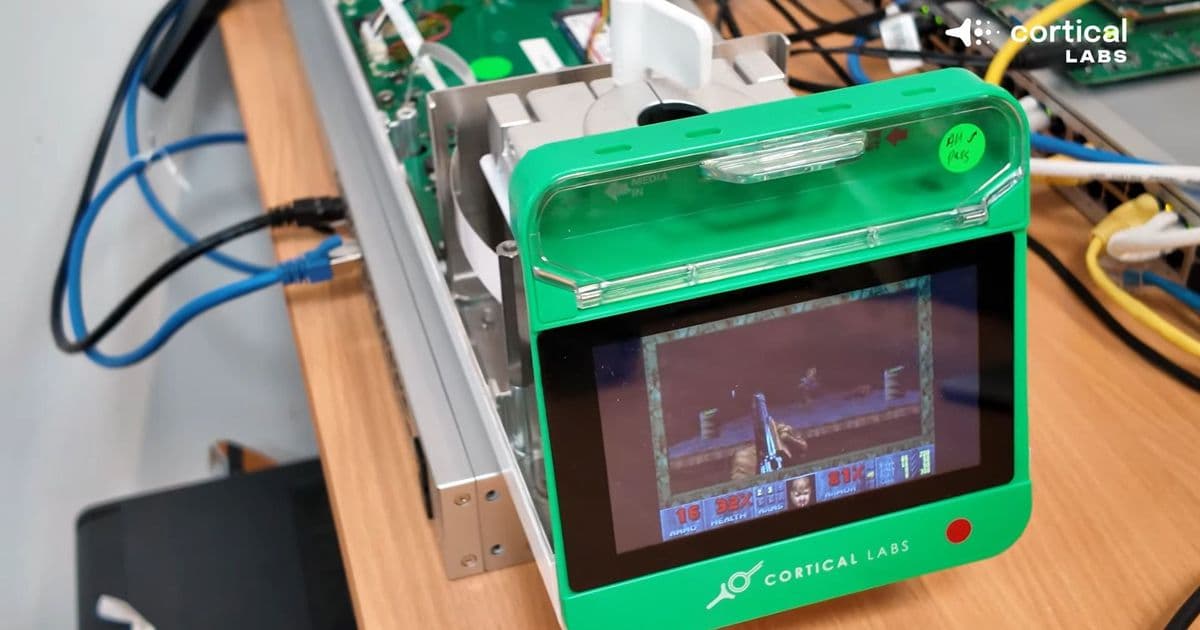
Cortical Labs' CL1 computer combines 200,000 human neurons with silicon to play complex video games, marking a significant advance in biological computing.
Cortical Labs has demonstrated its CL1 biological computer playing the classic first-person shooter Doom, showcasing a significant advancement in the field of biological computing. The system, which combines 200,000 living human neurons with traditional silicon-based computing, represents what the company calls "the world's first code deployable biological computer."
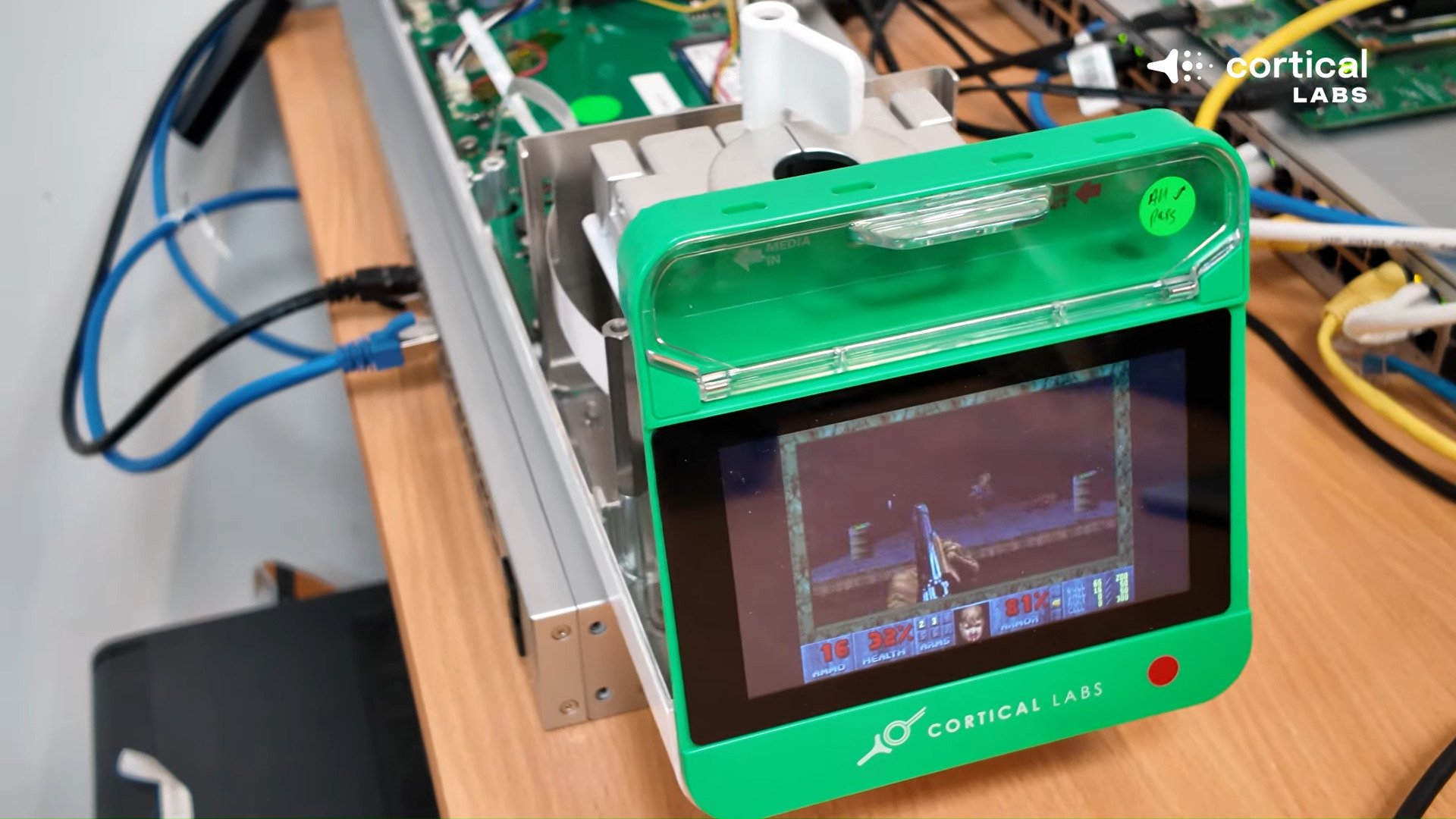
From Pong to Doom: Scaling Biological Intelligence
The journey to Doom began with a simpler demonstration. Last year, Cortical Labs first showcased their technology by having the neuron-silicon hybrid system play Pong, the pioneering arcade game. However, following the initial demonstration, internet users bombarded the company with requests for a more complex challenge - Doom.
"Doom was much more complex," explained Dr. Brett Kagan in the demonstration video. "Its 3D labyrinths, enemies, weapons, etc., make it several degrees more advanced than Pong." This complexity inspired the development of what Cortical Labs calls the 'Cortical Cloud' for training more complex tasks.
How the Biological Computer Works
The CL1 system interfaces living human neurons with traditional computing hardware through a sophisticated API. Dr. Alon Loeffler of Cortical Labs, who presented the demo video, explained that "together with one of our collaborators, an independent researcher named Sean Cole, we coded the first working version of Doom using the Cortical Labs API, and running on a CL1."
Company CTO David Hogan detailed the interface mechanism: "Sean Cole managed to pipe the video feed from the game into patterns of electrical stimulation" that the neurons could interpret. The system works bidirectionally - the neurons receive visual information through electrical patterns and respond by firing in specific learned patterns that translate to game actions.
For example, when the neurons fire in a specific learned pattern, the Doom character shoots. Another pattern prompts movement. This allows the brain cells to find enemies, shoot them, and progress through the game.
Current Limitations and Future Potential
While the demonstration is impressive, Dr. Kagan tempered expectations: "Is it an eSports champion? Absolutely not." The neurons are still learning, and feedback mechanisms for right and wrong actions need refinement. However, the company has "solved the interface problem" - the critical challenge of interacting with brain cells in real-time, training them, and shaping their behavior.
This real-time interaction capability is precisely why the CL1 was designed. The company hopes the system will soon excel at Doom gaming and then take on increasingly complex tasks beyond entertainment applications.
Open Development Platform
The video demonstration concludes with a call to action for developers and researchers. Cortical Labs is inviting the scientific and developer community to interact with their open CL1 API to explore what can be built with this novel computing platform. "The neurons are ready," the company states, signaling their readiness to support external development efforts.
Technical Context and Industry Implications
This development sits at the intersection of several emerging technology trends: biological computing, neuromorphic engineering, and hybrid silicon-biological systems. While traditional AI relies on artificial neural networks implemented in software or specialized hardware, Cortical Labs is working with actual biological neurons.
The use of 200,000 living human neurons represents a significant scale-up from earlier demonstrations. Each neuron can form thousands of synaptic connections, creating a biological network with computational properties distinct from traditional von Neumann architectures.
Timeline and Commercial Availability
Cortical Labs initially announced the CL1 launch last year, with shipments scheduled for June of the same year. The Doom demonstration suggests the company has made substantial progress in both the hardware and software interfaces necessary for practical applications.
The technology raises interesting questions about the future of computing, particularly for tasks that might benefit from the adaptive, parallel processing capabilities of biological systems. While still in early stages, the ability to train living neurons to perform goal-directed tasks in real-time environments represents a notable milestone in the evolution of computing paradigms.
As biological computing continues to mature, systems like the CL1 may find applications in areas where traditional computing struggles, such as adaptive pattern recognition, complex decision-making under uncertainty, or tasks requiring continuous learning from limited data.
The demonstration of Doom-playing neurons serves as both a proof of concept and a compelling visual representation of biological computing's potential, even as the technology remains far from replacing conventional computing systems for most applications.
Comments
Please log in or register to join the discussion