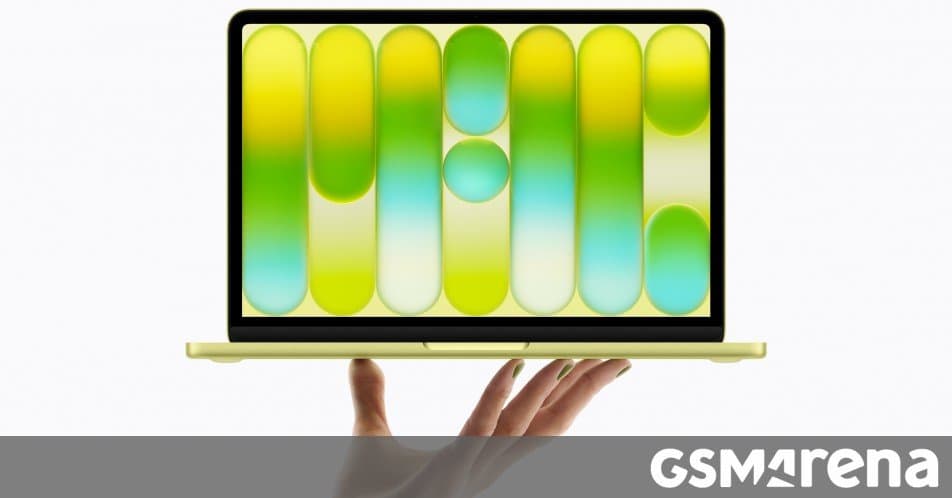
Apple's new entry-level MacBook Neo is projected to ship 4.5-5 million units this year, while rumors suggest the Neo 2 may skip touchscreen to maintain price advantage.
Apple's latest entry into the laptop market, the MacBook Neo, is showing strong sales projections that suggest the company's strategy to capture the budget-conscious segment is working. Industry analysts now predict that the Neo will ship between 4.5 to 5 million units in its first year, with an impressive 2 to 2.5 million of those sales expected to occur before the end of June.
This robust demand comes despite the Neo's positioning as Apple's "cheapest" MacBook, a relative term in the premium laptop market. The device represents a calculated move by Apple to offer a more accessible entry point into its macOS ecosystem without significantly cannibalizing sales of its higher-end models.
Supply Chain Dynamics and Assembly Strategy
The current assembly of the MacBook Neo is exclusively handled by Quanta Computer, one of Apple's key manufacturing partners. However, industry sources indicate that Foxconn, another major Apple assembler, may join as a second supplier in the near future. This potential expansion of the supply chain suggests Apple is preparing for sustained high demand and wants to mitigate any production bottlenecks.
Meanwhile, Luxshare, a company rapidly expanding its presence in the laptop assembly market, is reportedly seeking to become an assembler for the upcoming Neo 2. This aligns with Luxshare's broader strategy to become the world's largest laptop assembler. The company has been aggressively expanding its Windows laptop assembly business over the past one to two years, positioning itself as a formidable competitor in the contract manufacturing space.
Neo 2 Development and Touchscreen Controversy
Perhaps the most interesting development surrounding the MacBook lineup involves the rumored Neo 2. Initially expected to feature a touchscreen display, respected analyst Ming-Chi Kuo now suggests this feature may be dropped from the design. This potential change represents a significant strategic decision by Apple.
The reasoning appears straightforward: Apple may have realized it can maintain strong sales of the Neo line without the added cost and complexity of a touchscreen interface. By keeping the Neo 2 as a traditional clamshell laptop, Apple can maintain a clear price distinction between its entry-level and premium offerings.
This strategy would also preserve the touchscreen as an exclusive feature for the MacBook Ultra, Apple's most expensive MacBook model to date. The Ultra represents Apple's premium positioning in the laptop market, and maintaining feature exclusivity helps justify its higher price point.
Market Positioning and Competitive Dynamics
Kuo's analysis suggests that the MacBook Neo's value proposition may actually improve later in the year. He predicts that competing Windows laptops will inevitably become more expensive toward the end of 2026 due to rising memory costs. If this prediction holds true, the MacBook Neo could look increasingly attractive to budget-conscious consumers who want reliable performance without premium pricing.
This timing could be particularly advantageous for Apple, as it would position the Neo as a compelling alternative when Windows laptop prices typically rise due to seasonal component cost fluctuations.
Reader Feedback and Feature Requests
Community response to the MacBook Neo has been mixed, with users highlighting both strengths and areas for improvement. One common criticism centers on the device's memory configuration, with many users noting that the 8GB RAM cap represents the biggest limitation of the current model.
Feature requests for the Neo 2 include more RAM, a backlit keyboard, an SD card reader, and consistent USB port speeds to avoid user confusion. These suggestions indicate that while the core offering is solid, there's appetite for modest upgrades that would enhance the user experience without significantly increasing the price.
Some users have defended the 8GB configuration, noting that Windows can run adequately on this amount of memory, though many acknowledge that upgrading to 16GB provides a better experience, particularly for gaming and more demanding applications.
Strategic Implications for Apple
The strong sales projections and strategic decisions around the Neo line suggest Apple is successfully executing a multi-tiered laptop strategy. By offering a genuinely capable entry-level machine, Apple can attract users who might otherwise choose Windows laptops while still maintaining clear differentiation between its product tiers.
The decision to potentially exclude the touchscreen from the Neo 2 demonstrates Apple's discipline in feature allocation and pricing strategy. Rather than diluting its premium offerings, Apple appears committed to maintaining distinct value propositions across its product lineup.
As the laptop market continues to evolve, Apple's approach with the MacBook Neo suggests the company is willing to compete aggressively on price and accessibility while still preserving the premium positioning of its higher-end models. The strong sales projections indicate this strategy is resonating with consumers, potentially setting the stage for continued growth in Apple's laptop business.

The coming months will reveal whether these projections materialize and whether Apple's strategic decisions around the Neo 2 prove prescient. For now, the MacBook Neo appears to be a significant success in Apple's broader hardware ecosystem strategy.
Comments
Please log in or register to join the discussion