
Microsoft's negotiated deal framework in Marketplace offers cloud partners a powerful mechanism to scale sales without development overhead. This analysis breaks down the four deal types—Customer Private Offers, Multiparty Private Offers, Resale Enabled Offers, and CSP Private Offers—explaining when each fits specific sales motions and how to leverage App Advisor for strategic decision-making.
Cloud partners face a fundamental tension: the need to scale sales while maintaining flexibility in pricing, billing, and terms. Microsoft Marketplace's negotiated deal framework addresses this by allowing partners to customize transactions without rebuilding applications or agents. The strategic value lies not in the technology itself, but in how these deals align with different sales motions—direct sales, partner-led execution, and channel scale.
The Core Strategic Question
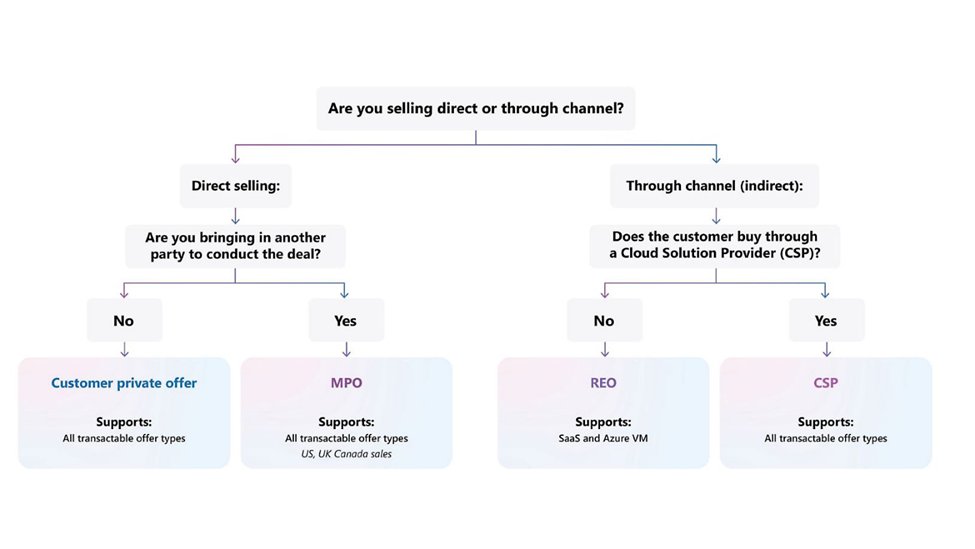
Most negotiated deal decisions reduce to two strategic questions: Are you selling directly to customers or through partners? Do you want to manage each deal yourself, or enable others to sell on your behalf? The answers determine which deal type creates the most efficient path to revenue.
This framework matters because it decouples product development from sales execution. Partners can maintain a single, publicly transactable offer while creating customized terms for specific customers or partners. This eliminates the overhead of creating duplicate offers for different pricing scenarios, which traditionally required separate app listings or complex provisioning logic.
Deal Type Analysis: Strategic Fit and Implementation
Customer Private Offers: Direct Sales Control
Best for: Direct, 1:1 customer deals where you maintain ownership of the customer relationship.
Strategic Value: Customer Private Offers keep sales motions simple when you're managing the customer relationship directly. They enable custom pricing, terms, and flexible billing without creating a new offer. You negotiate directly with a specific customer using one or more existing marketplace plans.
Implementation Pattern: This works well when you want a fast, controlled way to bring an off-marketplace agreement into Marketplace using your existing app or agent. Consider this when you have enterprise customers requiring customized terms but want to maintain Marketplace billing recognition for benefits and incentives.
Technical Considerations: The offer remains your existing marketplace listing. The private offer creates a customized purchasing agreement tied to that listing. No code changes are required. The customer sees your standard offer with negotiated terms applied at checkout.
Multiparty Private Offers (MPO): Collaborative Deals
Best for: Collaborative deals with a selling partner where multiple parties contribute to the solution.
Strategic Value: MPOs support partner-led deals while preserving Marketplace benefits. They package software and partner services into one coordinated purchase, empowering joint sales to a specific customer through a single negotiated transaction.
Implementation Pattern: MPOs are a strong choice when a partner plays a critical role in influencing the deal or delivering the solution, but you still want to transact through Marketplace. This is particularly valuable for complex solutions requiring professional services, implementation support, or complementary software from other vendors.
Important Limitation: MPOs are currently only available in the US, UK, and Canada. Partners operating in other regions must use alternative approaches until Microsoft expands availability.
Technical Architecture: The MPO creates a single transaction that allocates revenue shares to all participating parties. The customer purchases through one marketplace transaction, but the billing splits according to pre-negotiated terms between you and your partners.
Resale Enabled Offers (REO): Scaling Through Partners
Best for: Partner-led selling at scale where you want to extend reach without managing individual deals.
Strategic Value: REOs shift sales execution to partners while maintaining Marketplace billed sales recognition. You authorize a partner once, allowing them to resell your existing offer repeatedly using negotiated terms.
Implementation Pattern: REO is ideal if your growth strategy relies on channel scale and repeatable partner execution using the same core app or agent. This approach works particularly well for ISVs targeting mid-market and enterprise segments through established partner networks.
Strategic Consideration: REOs require careful partner selection and governance. While they enable scale, you lose some control over the sales process and customer experience. The partner becomes the primary relationship holder, which affects your ability to influence upsell and cross-sell opportunities.
Technical Implementation: You configure REO in Partner Center by authorizing specific partners to resell your offer. The partner can then create private offers for their customers using your base offer with their own negotiated terms. You maintain visibility into transactions through Marketplace reporting.
CSP Private Offers: Channel Alignment
Best for: Customers who buy through Cloud Solution Providers (CSPs).
Strategic Value: CSP Private Offers enable structured margin sharing to CSPs without duplicating offers. They align with how many customers already purchase cloud solutions, extending negotiated pricing to CSP partners who then sell to their customers.
Implementation Pattern: This fits when customers prefer to buy through their CSP relationship rather than directly from you. Many enterprise customers have established CSP agreements and prefer consolidated billing through their existing channel.
Technical Architecture: The CSP Private Offer creates a pricing agreement between you and the CSP partner. The CSP then resells to their customers at their negotiated margin. The transaction flows through the CSP's billing relationship, maintaining Marketplace recognition for your benefits and incentives.
Strategic Decision Framework
The choice between these deal types isn't just about features—it's about aligning with your sales motion and growth strategy.
Direct Sales Motion: If you maintain direct customer relationships and control the sales process, Customer Private Offers provide the most straightforward path. They give you pricing flexibility without ceding control to partners.
Partner-Influenced Deals: When partners play a critical role in solution delivery or influence, MPOs create a collaborative transaction that recognizes all contributors. This is particularly valuable for complex enterprise solutions requiring specialized implementation.
Channel Scale Strategy: If your growth depends on partner reach rather than direct sales, REOs enable you to scale through authorized resellers. This shifts your role from sales execution to partner enablement and product development. CSP-Centric Markets: For customers already committed to CSP relationships, CSP Private Offers align with their existing procurement processes. This reduces friction and accelerates deal closure.
The Role of App Advisor in Strategic Planning
App Advisor serves as a decision-support tool, removing guesswork by guiding partners through eligibility requirements, supported offer types, and regional considerations. It helps answer the strategic questions: Which deal types are you eligible for? Which align with your sales motion? What regional limitations apply?
Practical Application: Before configuring any deal type in Partner Center, use App Advisor to validate your approach. This prevents investing time in configuring deals that don't align with your offer type or regional availability.
Strategic Insight: App Advisor's guidance reflects Microsoft's evolving Marketplace strategy. The tool's recommendations indicate which deal types Microsoft prioritizes for different partner profiles and sales scenarios.
Implementation in Partner Center
All negotiated deal types are configured in Partner Center within the Marketplace Offers workspace, under the Private Offers tab. The configuration process varies by deal type:
Customer Private Offers: Create a private offer for a specific customer, selecting existing marketplace plans and applying custom terms. The offer generates a unique link for the customer to purchase.
Multiparty Private Offers: Configure revenue sharing between you and your partners. Define the terms for each party's contribution and the final customer pricing.
Resale Enabled Offers: Authorize specific partners to resell your offer. Set the base terms and allow partners to create their own private offers from your listing.
CSP Private Offers: Establish pricing agreements with CSP partners. Configure margin structures and enable the CSP to resell to their customers.
Strategic Trade-offs and Considerations
Each deal type involves trade-offs between control, scale, and complexity:
Control vs. Scale: Customer Private Offers maintain maximum control but limit scale. REOs enable scale but require trusting partners with customer relationships.
Complexity vs. Flexibility: MPOs handle complex multi-party transactions but require coordination between partners. Customer Private Offers are simpler but limited to direct sales.
Regional Limitations: MPOs are currently restricted to three regions. Partners operating globally must plan alternative approaches for other markets.
Development Overhead: All deal types work with existing offers, eliminating development costs. However, each requires administrative configuration and partner management.
Strategic Recommendations
For New Marketplace Partners: Start with Customer Private Offers to understand the Marketplace transaction flow while maintaining direct customer relationships. This provides a low-risk entry point.
For Established Partners with Partner Networks: Implement REOs to scale through authorized resellers. Begin with a small group of trusted partners to refine your partner enablement process.
For Complex Solution Providers: Use MPOs when partners contribute significantly to solution delivery. This recognizes their value while maintaining Marketplace billing benefits.
For CSP-Centric Markets: Implement CSP Private Offers to align with customer procurement preferences. This reduces friction and leverages existing channel relationships.
Looking Ahead: Marketplace Evolution
Microsoft's negotiated deal framework reflects a broader shift toward flexible transaction models in cloud marketplaces. The ability to customize pricing and terms without rebuilding applications represents a maturation of marketplace platforms.
Partners who master these deal types gain competitive advantage through transactional flexibility. They can respond to customer requirements quickly without development cycles, scale through partners efficiently, and maintain Marketplace benefits regardless of sales motion.
The strategic imperative is clear: understand your sales motion, choose the appropriate deal type, and implement through Partner Center. App Advisor provides the guidance, but strategic execution depends on aligning deal types with your growth strategy.
Next Steps:
- Use App Advisor to validate your approach
- Review the REO blog post for detailed implementation guidance
- Configure your first private offer in Partner Center's Marketplace Offers workspace
The framework exists. The tools are available. The strategic advantage goes to partners who implement thoughtfully, aligning deal types with their unique sales motions and growth objectives.
Comments
Please log in or register to join the discussion