A comprehensive overview of the most significant hardware benchmarks, software updates, and security disclosures from May 2026, focusing on NVIDIA's Vera ARM CPU, Linux kernel improvements, and the latest performance comparisons across various platforms.
May 2026 delivered an exciting mix of hardware breakthroughs and software advancements in the Linux ecosystem. As Phoronix celebrates its 22nd anniversary, the month was packed with benchmark revelations, security disclosures, and performance optimizations that continue to push the boundaries of open-source computing.
NVIDIA Vera CPU: ARM Performance Breakthrough
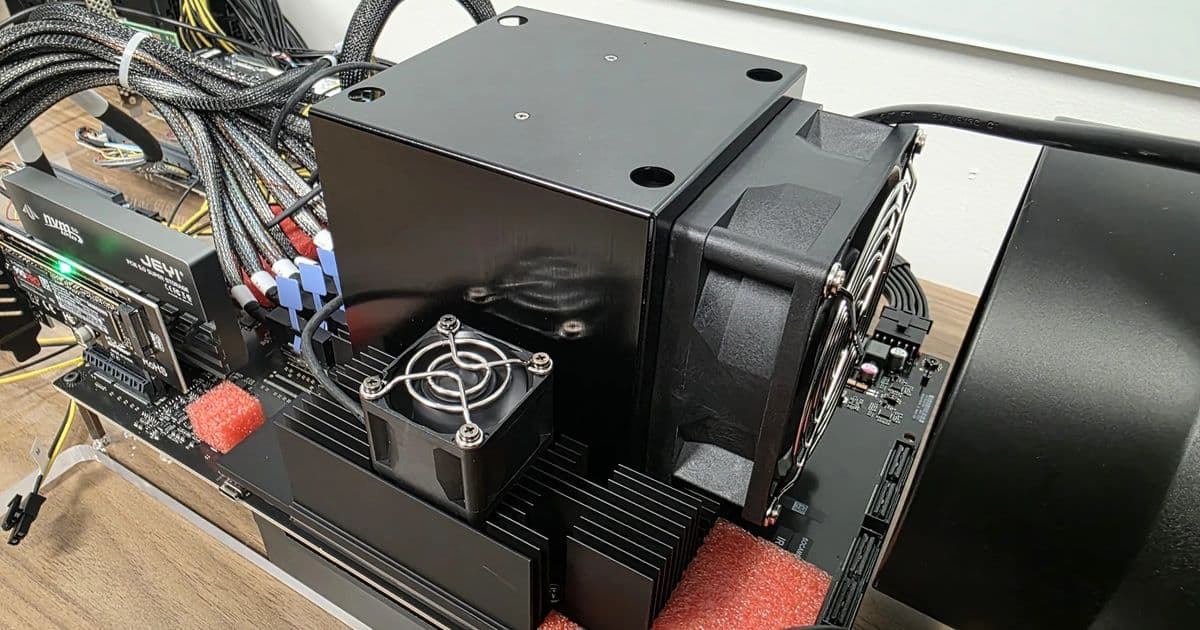
NVIDIA's Vera data center CPU, designed specifically for agentic AI workloads, has shown exceptional performance in early benchmarks. This ARM-based processor with NVIDIA's in-house Olympus CPU cores delivers competitive performance to Intel/AMD x86_64 CPUs, something unprecedented in the ARM processor space. The benchmarks indicate that Vera could potentially disrupt traditional CPU markets, particularly in AI and data center applications where power efficiency and specialized processing capabilities are paramount.
The Vera CPU's performance metrics reveal significant improvements over previous ARM implementations, with particular strength in multi-threaded workloads that benefit from its specialized architecture. For homelab builders and data center operators, this CPU represents a compelling alternative to traditional x86 solutions, especially for AI/ML workloads where the specialized instruction sets provide tangible advantages.
Linux Kernel Performance Evolution
The Linux 7.1 kernel development cycle continues the impressive performance trajectory we've seen in recent years. Comparative benchmarks show a remarkable 13% performance improvement (geometric mean) on AMD Threadripper processors when comparing Linux 6.6 LTS to Linux 7.1. This improvement spans across various workloads, demonstrating the cumulative effect of kernel optimizations over time.
Key improvements in Linux 7.1 include:
- A new NTFS driver with enhanced compatibility and performance
- Support for new Intel and AMD hardware
- Performance optimizations across subsystems
- Modernization efforts to streamline the codebase
For users running production systems, these improvements translate to tangible benefits in responsiveness and throughput, particularly in I/O-bound and CPU-intensive workloads.
GCC 16: Compiler Performance Gains
The GCC 16.1 compiler release has shown consistent performance improvements over its predecessor, GCC 15. Benchmarks across multiple architectures (x86_64, ARM, AMD Zen 6) demonstrate faster binary generation with equivalent optimization flags. This is particularly significant for developers and system administrators who rely on compiler optimizations for performance-critical applications.
GCC 16 introduces several notable features:
- Enhanced support for AMD Zen 6 and Arm AGI CPUs
- New C++ language features
- Algol 68 programming language front-end
- Improved optimization passes
Comparative benchmarks against LLVM Clang 22 show GCC 16 holding its own in many workloads, maintaining the healthy competition that benefits the entire compiler ecosystem.
Graphics Driver Performance: Nouveau vs. NVIDIA R595
A fascinating benchmark comparison between the open-source Nouveau driver and NVIDIA's proprietary R595 driver for workstation graphics reveals an interesting development. While the official NVIDIA driver remains the optimal choice for RTX (PRO) hardware, Nouveau continues to close the gap with each kernel release.
The comparison was conducted using an HP Z6 G5 A workstation, highlighting the performance differences in professional graphics workloads. The results show that Nouveau, while still trailing in certain areas, has made significant strides in stability and performance, particularly for non-RTX workloads. This progress is encouraging for users who prioritize open-source drivers and is a testament to the ongoing development efforts.
AMD vs. Windows Performance
Benchmark comparisons between Linux (Ubuntu 26.04 LTS) and Windows 11 on the AMD Ryzen 9 9950X3D2 Dual Edition processor reveal interesting insights. The Linux platform consistently outperformed Windows across multiple workloads, suggesting that AMD's 3D V-Cache technology benefits from Linux's memory management and scheduling optimizations.
These results are particularly relevant for gamers and content creators who might be considering platform choices for AMD's latest processors. The performance delta varies by workload but consistently favors Linux, adding another data point to the ongoing Linux vs. Windows performance discussions.
Security Landscape: Vulnerabilities and Disclosures
May 2026 was a challenging month for Linux security, with multiple vulnerabilities disclosed:
- Dirty Frag: A local privilege escalation vulnerability that was made public before patches were available
- Fragnesia: Another LPE vulnerability following Dirty Frag
- ssh-keysign-pwn: Allows reading of root-owned files by unprivileged users
The early disclosure of Dirty Frag highlights ongoing tensions in the security research community regarding embargo periods. These vulnerabilities underscore the importance of timely kernel updates and system hardening practices.
Hardware Highlights
Several hardware releases made waves in May:
- System76 Thelio Major: A redesigned workstation featuring AMD Ryzen Threadripper 9000 and Radeon AI PRO R9700 graphics, optimized for open-source Linux workflows
- CachyOS on Thelio Major: Demonstrated significant performance gains over upstream distributions
- ARCTIC Fan Controller Driver: Expected in Linux 7.2, this driver represents improved hardware support from manufacturers
Future Developments
Several promising projects are on the horizon:
- Rust kernel support for s390 architecture from IBM
- VideoLAN's dav2d: An open-source AV2 decoder implementation
- AMD HDMI 2.1 FRL support: Patches implementing Fixed Rate Link for higher bandwidth
- Steam Controller support in SDL3: Enabling broader compatibility for Valve's new hardware
These developments collectively point to a vibrant ecosystem where hardware manufacturers increasingly contribute to open-source drivers, and the software stack continues to evolve with performance and security as primary focuses.
For enthusiasts and professionals alike, May 2026 demonstrated that the Linux ecosystem continues to innovate across the entire stack, from kernel improvements to compiler optimizations and hardware support. The benchmark results and feature updates provide valuable insights for anyone building or maintaining high-performance Linux systems, particularly in AI/ML, content creation, and data center environments.
Comments
Please log in or register to join the discussion