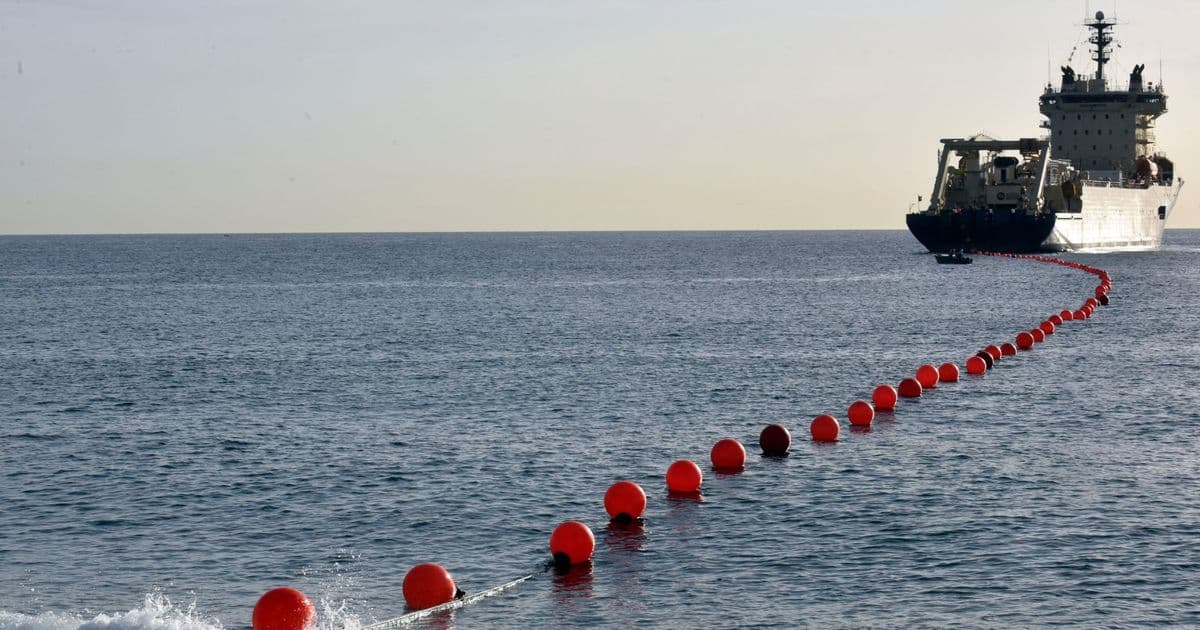
Alcatel Submarine Networks declares force majeure on Meta's Africa2 undersea cable project due to safety concerns in the Persian Gulf amid US-Israel-Iran conflict, delaying critical connectivity infrastructure.
Meta's ambitious Africa2 undersea cable project has hit a major roadblock as Alcatel Submarine Networks (ASN), the company contracted to lay the fiber-optic cables, has declared force majeure in the Persian Gulf region. The declaration comes amid escalating tensions following the U.S.-Israel-Iran conflict, effectively halting work on the Pearls section of the network that was meant to connect Persian Gulf states and South Asia to Africa and Europe.
The Africa2 project represents one of Meta's most significant infrastructure investments, designed to provide high-speed internet connectivity across multiple continents. While the core sections of the undersea cable have already been completed and laid on the ocean floor, the Pearls extension remains unfinished. This critical segment was intended to link Iraq, Kuwait, Saudi Arabia, Bahrain, Qatar, United Arab Emirates, Oman, Pakistan, and India to the broader network connecting African coastal states with European countries.
Force Majeure Declaration Creates Legal and Operational Impasse
The force majeure declaration by ASN represents a significant legal and operational challenge for Meta's infrastructure plans. Under international contract law, force majeure allows companies to suspend or terminate contractual obligations when extraordinary circumstances beyond their control make performance impossible or unreasonably dangerous. In this case, the ongoing military conflict in the region has created conditions where operating cable-laying ships poses unacceptable risks to personnel and equipment.
ASN's decision reflects the harsh realities facing infrastructure companies operating in conflict zones. The Persian Gulf has become increasingly volatile, with multiple actors capable of targeting commercial vessels. Insurance costs for ships operating in these waters have skyrocketed, and the risk of damage to critical infrastructure has made many companies reconsider their involvement in the region.
Project Already Faced Previous Delays
This latest setback is not the first challenge for the Africa2 project. Late last year, the Red Sea section experienced significant delays due to Houthi rebel attacks in the area, compounded by permitting issues across multiple jurisdictions. The Red Sea corridor has become particularly dangerous for commercial shipping, with repeated attacks on vessels forcing companies to seek alternative routes or suspend operations entirely.
The Pearls section was initially seen as a strategic alternative to the troubled Red Sea route, offering a more stable path for connecting Africa to Asia and Europe. However, the escalation of conflict between Iran and Western-aligned nations has transformed the Persian Gulf into another high-risk area, eliminating what was supposed to be a reliable backup option.
Geopolitical Tensions Disrupt Global Tech Infrastructure
Meta's Africa2 project is just one example of how geopolitical conflicts are disrupting global technology infrastructure. The U.S.-Israel-Iran conflict has created ripple effects across multiple sectors, forcing companies to reassess operations in the Middle East and reconsider long-term investment strategies in the region.
The situation highlights the vulnerability of undersea cable networks to political instability. Unlike terrestrial infrastructure, which can be more easily protected or rerouted, undersea cables require specialized ships and equipment to install and repair. When conflict zones overlap with planned cable routes, companies face impossible choices between abandoning projects or risking catastrophic losses.
Broader Impact on Tech Industry Operations
Meta's cable project is not the only technology infrastructure affected by the current Middle East conflict. Amazon Web Services has reported deliberate targeting of its data centers in the region by Iranian drone attacks, forcing the company to implement enhanced security measures and potentially relocate some operations. Several other tech firms based in Middle Eastern countries have received threats from Iranian-aligned groups, creating an atmosphere of uncertainty for the entire sector.
In a separate but related incident, Stryker, a major American medical technology company, suffered a significant cyberattack attributed to Iranian actors. The attack disrupted the company's global operations, demonstrating how geopolitical tensions can manifest as direct threats to corporate infrastructure and data security.
Shadow Fleet Threats to Undersea Cables
Beyond active conflict zones, undersea cables worldwide face constant threats from so-called "shadow fleets" - vessels with unclear ownership structures that often operate as proxies for state actors. Russia and China have been particularly active in deploying these ships, which have been implicated in multiple incidents of cable damage in European and East Asian waters.
These shadow fleet operations represent a form of hybrid warfare, where states can disrupt critical infrastructure without direct attribution. The practice has become increasingly sophisticated, with vessels using techniques to disguise their movements and ownership while conducting operations that could damage or sever undersea cables.
Meta's Long-Term Infrastructure Strategy
In response to these ongoing challenges, Meta has been developing alternative infrastructure plans. The company announced Project Waterworth, an ambitious initiative to build a 50,000-kilometer (30,000-mile) undersea cable network designed to bypass current geopolitical hotspots. This project represents a significant strategic shift, acknowledging that traditional cable routes through the Middle East may no longer be viable for critical infrastructure.
However, Project Waterworth faces its own challenges. Announced for 2025, the project is expected to take several years to complete, meaning Meta and other tech giants will continue to rely on vulnerable existing infrastructure in the interim. The scale of such an undertaking also means that even if construction begins on schedule, it could be years before the network becomes operational.
Economic and Connectivity Implications
The delays to Meta's Africa2 project have significant implications for internet connectivity in Africa and South Asia. These regions have been counting on improved undersea cable infrastructure to support growing digital economies, enable better educational opportunities, and provide essential services to underserved populations. Each delay means continued reliance on older, slower, or more expensive connectivity options.
For Meta, the delays also represent substantial sunk costs and extended timelines for return on investment. Undersea cable projects require massive upfront capital expenditure, and delays can significantly impact the financial viability of these infrastructure investments. The company must now balance the costs of maintaining existing contracts against the risks of operating in conflict zones.
Industry-Wide Reassessment of Risk
The challenges facing Meta's Africa2 project are forcing a broader reassessment across the technology industry about how to build and maintain global infrastructure in an increasingly unstable world. Companies are having to develop more sophisticated risk assessment models that account for not just traditional factors like weather and technical challenges, but also geopolitical risks, cyber threats, and the potential for state-sponsored disruption.
This new reality may lead to more distributed infrastructure models, with companies building redundant systems and alternative routes to ensure connectivity even when primary paths are compromised. However, such approaches come with significantly higher costs and longer development timelines, potentially slowing the rollout of new services and capabilities in developing regions.
Looking Ahead: Uncertain Timeline for Completion
The declaration of force majeure by ASN effectively puts the Pearls section of the Africa2 project on indefinite hold. While Meta may seek alternative contractors or attempt to negotiate modified terms with ASN, the fundamental safety concerns that led to the declaration remain unresolved. The timeline for completing this critical infrastructure component is now highly uncertain, dependent on factors largely outside Meta's control.
For now, the completed sections of the Africa2 cable sit on the ocean floor, connected to nothing, while Meta's engineers and executives work to find a path forward through one of the most complex geopolitical landscapes the tech industry has faced. The situation serves as a stark reminder that even in our digital age, physical infrastructure remains vulnerable to the same geopolitical forces that have shaped human history for centuries.
Comments
Please log in or register to join the discussion