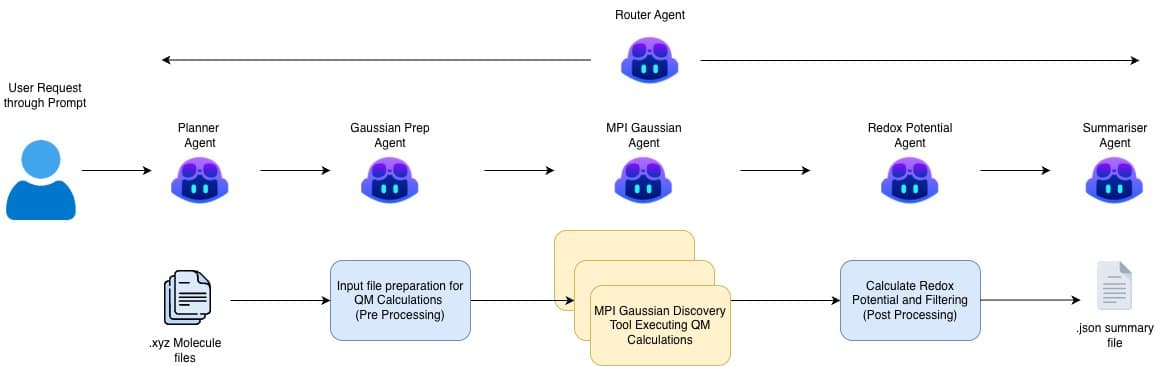
Microsoft's new Discovery platform transforms scientific R&D by leveraging cloud-native AI and high-performance computing, offering strategic advantages for organizations navigating complex multi-cloud environments.
The landscape of scientific research is undergoing a fundamental transformation as cloud providers increasingly compete to offer specialized AI and high-performance computing capabilities. Microsoft's recent launch of Microsoft Discovery represents a significant entry into this competitive space, directly challenging established players like AWS SageMaker, Google Cloud AI Platform, and IBM Watson in the scientific computing domain.
What Changed: From Traditional R&D to Cloud-Native Science
Traditional scientific research has been constrained by sequential processes, limited computational resources, and fragmented knowledge management. Researchers operated in silos, manually conducting literature reviews, designing experiments, and running constrained computations. This approach created bottlenecks that extended research timelines and limited the scope of scientific inquiry.
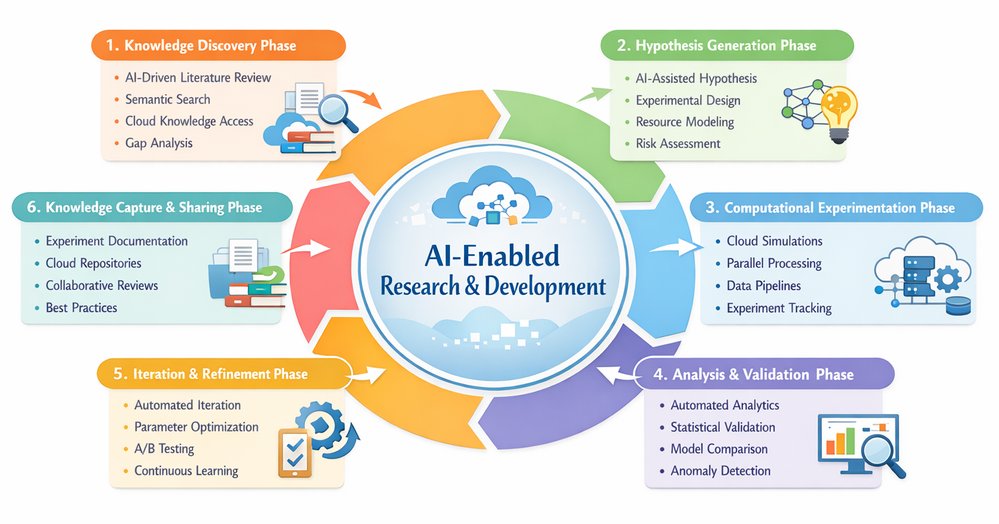
Microsoft Discovery introduces a cloud-native paradigm that fundamentally changes this model. By integrating advanced AI, elastic high-performance computing, and intelligent knowledge management, the platform enables an end-to-end scientific workflow that operates at unprecedented scale and speed. This shift mirrors broader industry trends where cloud computing has transformed other domains from entertainment to finance.
The platform's architecture represents a strategic response to the growing complexity of scientific challenges, from drug discovery to materials science, where computational requirements have outpaced traditional infrastructure capabilities. Microsoft positions Discovery not as a replacement for scientific judgment but as an amplifier of human expertise, embedding AI assistance at each stage of the R&D process while maintaining governance and scientific rigor.
Provider Comparison: Microsoft Discovery vs. Cloud Scientific Computing Alternatives
When evaluating scientific computing platforms in a multi-cloud strategy, organizations must consider several factors: specialized AI capabilities, high-performance computing infrastructure, integration with existing research tools, and total cost of ownership. Microsoft Discovery enters a competitive field with several established alternatives:
AWS offers a comprehensive scientific computing ecosystem through AWS SageMaker, which provides machine learning capabilities alongside high-performance computing services like AWS ParallelCluster and EC2 instances with GPU acceleration. AWS has established partnerships with research institutions and has a strong presence in genomic research and drug discovery. Pricing follows a pay-as-you-go model, which can be cost-effective for variable workloads but may lead to unexpected costs without careful monitoring.
Google Cloud Platform (GCP) provides alternatives through its AI Platform and Vertex AI, complemented by Google's specialized hardware like TPUs optimized for machine learning. GCP's strength lies in data analytics and machine learning, with strong integration to Google's data processing tools. Google's research collaborations, particularly in healthcare and life sciences, provide domain-specific advantages. Pricing is competitive, with sustained use discounts that benefit long-running scientific workloads.
IBM Watson offers domain-specific solutions with particular strength in healthcare and pharmaceutical research. IBM's approach emphasizes governance and compliance, which may appeal to regulated industries. Pricing is typically more premium, reflecting IBM's focus on enterprise solutions with comprehensive support.
Microsoft differentiates Discovery through its integration with Microsoft 365 and Azure ecosystem, providing a familiar interface for organizations already using Microsoft products. The platform's multi-agent architecture represents a unique approach to automating scientific workflows, potentially reducing operational overhead compared to more generic solutions. Microsoft's pricing model emphasizes value-based pricing, with options for enterprise agreements that can provide cost predictability for large-scale deployments.
From a technical perspective, Microsoft Discovery's strength lies in its orchestration capabilities, allowing researchers to focus on scientific reasoning while the platform handles the operational aspects of experiment execution. This approach contrasts with competitors that often require more manual configuration of workflows.
Business Impact: Accelerating Innovation and Competitive Advantage
The introduction of Microsoft Discovery has significant implications for organizations developing multi-cloud strategies for scientific research. The platform's ability to automate complex workflows and scale computations across Azure's infrastructure directly impacts research timelines and innovation velocity.
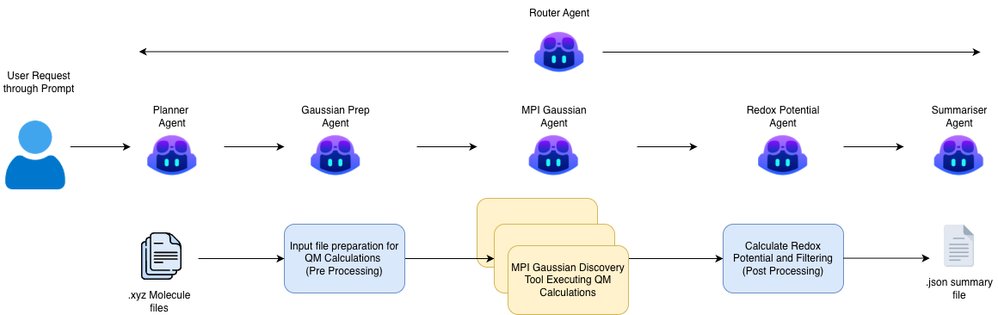
For organizations in mining, pharmaceuticals, materials science, and other research-intensive industries, the time-to-insight reduction offered by platforms like Microsoft Discovery can translate directly to competitive advantage. In the mining example described in Microsoft's documentation, what previously took days of manual work can now be completed in hours, with the results immediately available for scientific interpretation.
The economic impact extends beyond simple time savings. By reducing the computational overhead of scientific workflows, organizations can allocate more resources to high-value scientific reasoning rather than operational mechanics. This reallocation of human capital can accelerate innovation cycles and improve the return on research investments.
From a risk management perspective, Microsoft Discovery's emphasis on governance and reproducibility addresses a critical challenge in scientific computing. The automated documentation of experiment lineage and results provides audit trails that are essential for regulated industries and intellectual property protection.
For organizations navigating multi-cloud environments, Microsoft Discovery presents both opportunities and challenges. The platform's deep integration with Azure may create vendor lock-in concerns, potentially limiting flexibility in cloud provider selection. However, the specialized capabilities offered by cloud-native scientific computing platforms may justify this trade-off for organizations prioritizing research acceleration over cloud agnosticism.
The total cost of ownership for scientific computing platforms extends beyond raw compute expenses. Factors like researcher productivity, time-to-market for research outcomes, and the ability to handle increasingly complex scientific problems must be considered when evaluating these platforms. Microsoft's value proposition emphasizes these broader economic benefits rather than focusing solely on infrastructure costs.
Looking forward, the emergence of specialized scientific computing platforms like Microsoft Discovery reflects a broader trend in cloud computing toward domain-specific solutions. As organizations develop multi-cloud strategies, they will need to evaluate how these specialized platforms fit into their overall cloud architecture, balancing the benefits of specialized capabilities against the risks of vendor lock-in and increased operational complexity.
Microsoft's entry into the scientific computing space intensifies competition among cloud providers, ultimately benefiting researchers through improved capabilities and potentially more favorable pricing. Organizations should evaluate these platforms not as isolated technology purchases but as strategic investments that can fundamentally transform their research capabilities and competitive positioning.
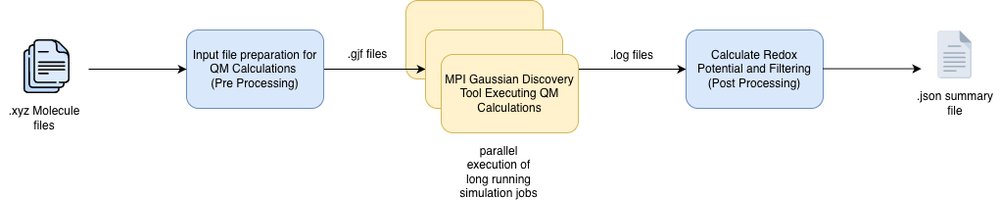
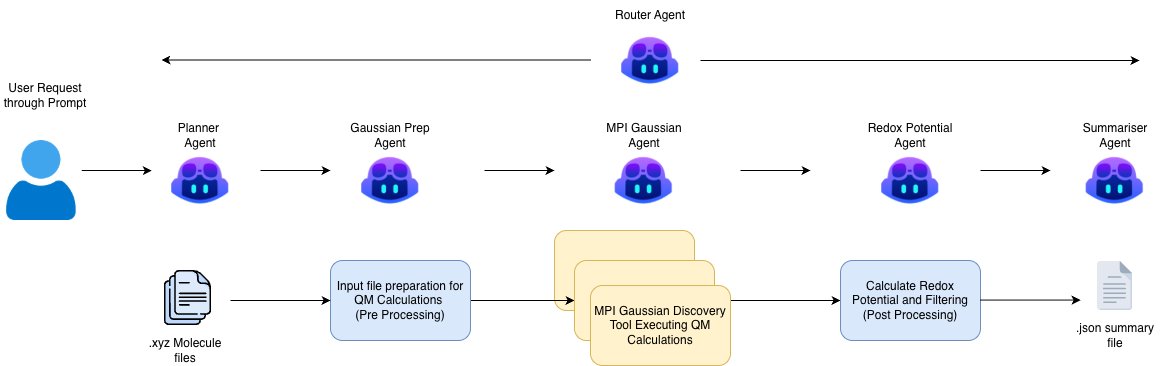
The implementation of Microsoft Discovery in real-world scenarios demonstrates the practical benefits of cloud-native scientific computing. In the mining industry example, a team of AI agents automated a molecular simulation workflow that would have required extensive manual intervention. This automation enabled researchers to focus on interpreting results and generating new hypotheses rather than managing computational pipelines.
The economic implications of such transformations extend beyond individual organizations. As more industries adopt cloud-native scientific computing approaches, we may see accelerated innovation across multiple domains, from drug discovery to climate modeling. This acceleration could lead to breakthroughs that address some of society's most pressing challenges.
For organizations developing multi-cloud strategies, Microsoft Discovery represents both an opportunity and a challenge. The platform offers specialized capabilities that can accelerate scientific research, but its deep integration with Azure may limit flexibility in cloud provider selection. Organizations must balance these factors based on their specific research priorities and cloud architecture requirements.
Looking ahead, the evolution of scientific computing platforms will likely continue along several trajectories. We can expect increased automation of complex workflows, tighter integration of domain-specific knowledge, and improved governance capabilities. These developments will further transform scientific research, enabling organizations to tackle increasingly complex problems with greater efficiency and confidence.
In conclusion, Microsoft Discovery represents a significant advancement in cloud-native scientific computing, offering organizations new capabilities to accelerate research and innovation. As organizations develop multi-cloud strategies, they should evaluate how platforms like Microsoft Discovery fit into their overall cloud architecture, considering both the specialized benefits and the potential limitations of vendor-specific solutions. The future of scientific research will increasingly be defined by the ability to leverage cloud-native capabilities, and platforms like Microsoft Discovery are positioned to play a central role in this transformation.
Comments
Please log in or register to join the discussion