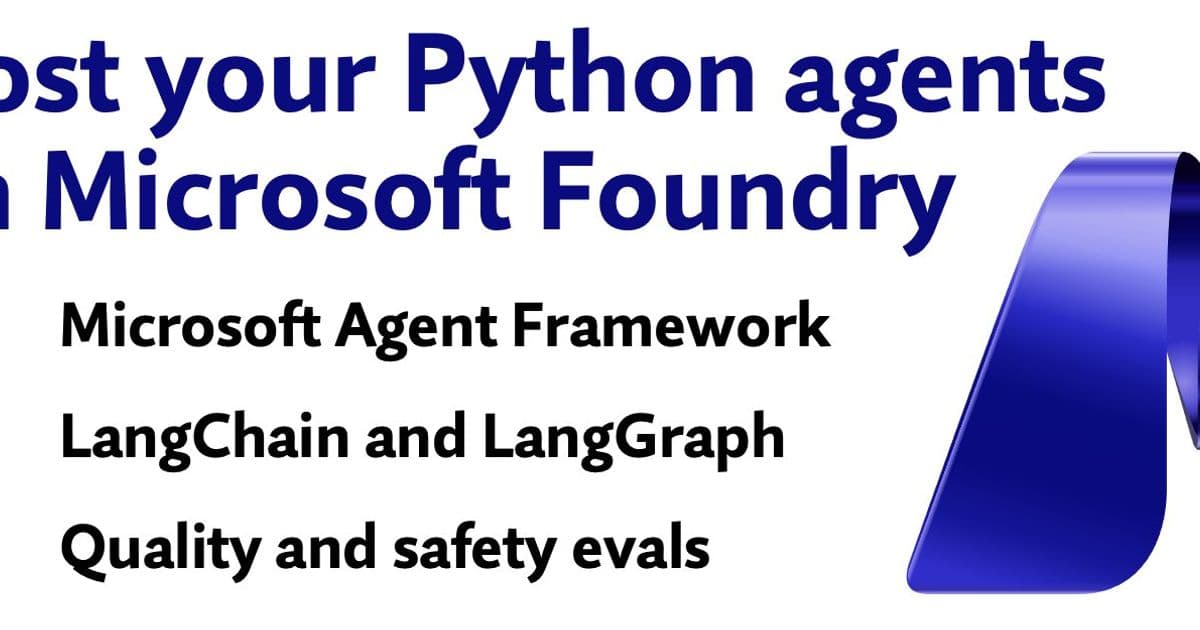
Microsoft's Foundry platform now offers a complete solution for deploying, managing, and evaluating AI agents, with specialized integrations for both Microsoft Agent Framework and popular open-source frameworks like LangChain.
Microsoft has expanded its Foundry platform with a comprehensive solution for deploying and managing AI agents, addressing a critical need in enterprise AI adoption. The recently concluded 'Host your agents on Foundry' three-part livestream series demonstrates how organizations can leverage Microsoft's cloud infrastructure to build, deploy, and maintain production-ready AI agents with enterprise-grade reliability and safety features.
What Changed: Microsoft's Foundry for AI Agent Deployment
Microsoft Foundry now provides end-to-end capabilities for AI agent deployment, moving beyond simple hosting to include development tools, evaluation systems, and integration with enterprise data sources. The platform supports multiple development approaches, catering to both Microsoft-centric and open-source ecosystems.
The series covered three critical aspects of AI agent deployment:
Azure Developer CLI Integration: Foundry now supports streamlined deployment of Python agents through Azure Developer CLI, reducing the friction between development and production environments. This integration allows developers to maintain consistent workflows across development, testing, and production stages.
Microsoft Agent Framework Support: As the successor to Autogen and Semantic Kernel, Microsoft Agent Framework provides a structured approach to building enterprise AI agents. Foundry's integration includes support for multi-agent workflows and Foundry IQ, which grounds agents in enterprise data sources.
LangChain + LangGraph Compatibility: Recognizing the widespread adoption of open-source frameworks, Foundry now supports agents built with LangChain and LangGraph. This includes integration with Microsoft's Bing Web Search tool and other proprietary capabilities that enhance open-source solutions.
Provider Comparison: Foundry vs. Cloud Alternatives
Microsoft's entry into the AI agent hosting space positions it against several established providers, each with distinct advantages:
Amazon Web Services (AWS): While AWS offers SageMaker for machine learning deployment, its agent hosting capabilities are more fragmented. Foundry provides a more integrated experience specifically for conversational agents, with built-in evaluation tools that AWS lacks in a unified offering.
Google Cloud Platform (GCP): GCP's Vertex AI provides strong machine learning capabilities, but its agent hosting solutions are less comprehensive than Foundry's. Microsoft's advantage lies in its tight integration with enterprise data sources through Foundry IQ and its support for both proprietary and open-source frameworks.
Open-Source Solutions: Platforms like LangServe for LangChain offer flexibility but lack the enterprise-grade features, safety evaluations, and integration capabilities that Foundry provides. Organizations evaluating open-source solutions must weigh customization benefits against the operational overhead of building supporting infrastructure.
Specialized AI Platforms: Providers like Anthropic or OpenAI offer powerful models but limited hosting options for custom agents. Foundry bridges this gap by allowing organizations to host their own agents while leveraging Microsoft's infrastructure and tools.
Business Impact: Enterprise AI Adoption Accelerated
The comprehensive nature of Foundry's AI agent hosting capabilities addresses several pain points for enterprise AI adoption:
Reduced Time-to-Production: By providing deployment-ready infrastructure and tools, Foundry significantly reduces the time from concept to production for AI agents. The Azure Developer CLI integration, in particular, streamlines the deployment process, allowing organizations to iterate faster.
Enhanced Safety and Compliance: The platform's built-in evaluation system addresses a critical concern for enterprise AI adoption. Organizations can now implement bulk, scheduled, and continuous evaluations to ensure agents produce high-quality outputs while maintaining safety standards. The guardrails and red-teaming capabilities provide additional layers of protection against potential risks.
Multi-Framework Support: By supporting both Microsoft Agent Framework and popular open-source solutions like LangChain, Foundry accommodates diverse development preferences and existing investments. This flexibility allows organizations to adopt the platform without requiring complete rewrites of existing agent implementations.
Enterprise Data Integration: Foundry IQ's ability to ground agents in enterprise data sources provides a significant advantage for organizations with substantial proprietary data. This integration ensures that AI agents can provide accurate, context-aware responses based on the organization's specific knowledge base.
Operational Efficiency: The platform's evaluation and monitoring capabilities reduce the operational overhead of maintaining AI agents in production. Features like continuous evaluation on live traces allow organizations to identify and address issues proactively rather than reactively.
For organizations considering AI agent deployment, Microsoft Foundry presents a compelling option that balances ease of use with enterprise-grade capabilities. The platform's comprehensive approach addresses the full lifecycle of AI agent development and deployment, from initial creation through ongoing maintenance and evaluation.
The availability of open-source code samples and detailed documentation further lowers the barrier to entry, allowing organizations to experiment with the platform before committing significant resources. As AI adoption continues to accelerate across industries, solutions like Microsoft Foundry will play an increasingly important role in bridging the gap between AI capabilities and practical enterprise implementation.
For organizations interested in exploring Microsoft Foundry for AI agent deployment, the complete series materials, including video recordings, slides, and code samples, provide a comprehensive starting point. The weekly Python+AI office hours on Foundry Discord offer additional support for organizations with specific questions or requirements.
Comments
Please log in or register to join the discussion