The Microsoft partner landscape is undergoing significant transformation as Business Central adoption accelerates, AI capabilities emerge, and partner-to-partner collaboration becomes essential for delivering comprehensive solutions to SMB and mid-market customers.
The Microsoft partner ecosystem is experiencing a fundamental shift driven by three converging forces: rapid Business Central adoption, accelerating AI-enabled services, and increasing reliance on partner-to-partner collaboration. These trends are creating a new growth model that requires partners to develop deeper expertise, form strategic alliances, and deliver more integrated solutions to remain competitive in the evolving market.
The Business Central Modernization Wave
Microsoft Business Central has emerged as a central player in the ERP modernization trend, surpassing 50,000 customers and showing no signs of slowing down. This growth is fueled by several migration patterns:
- Organizations transitioning from Microsoft Dynamics NAV as they seek cloud-native solutions
- Businesses moving off Dynamics GP as it approaches end-of-life
- Companies outgrowing QuickBooks Enterprise and requiring more robust functionality
- Increasing demand for cloud-based ERP platforms with modern capabilities
For Microsoft Dynamics partners, this shift represents a significant opportunity. Legacy systems reaching end-of-life and SMBs accelerating digital transformation have created sustained demand for ERP consulting, implementation, and integration services. The Business Central opportunity extends beyond basic ERP deployments to encompass broader business transformation initiatives.
Modern ERP as an Ecosystem Platform
Contemporary ERP implementations rarely operate in isolation. Instead, Business Central increasingly serves as a central platform integrating multiple solutions from the broader Microsoft ISV ecosystem. Typical deployments now incorporate five to ten independent software vendor solutions that extend ERP functionality:
- Accounts payable automation tools
- Marketing automation platforms
- Warehouse management systems
- Logistics and shipping solutions
- CRM integrations
- Industry-specific vertical applications
This evolution transforms ERP projects into comprehensive business platform implementations. Partners can now deliver end-to-end solutions rather than single software tools, significantly expanding consulting opportunities. A single ERP project can evolve into a broader transformation initiative involving workflow automation, advanced analytics, and operational modernization.
AI Adoption: Opportunity and Challenges
While ERP modernization drives immediate demand, AI adoption is emerging as the next major wave in the Microsoft ecosystem. Microsoft's emphasis on developing "frontier partners"—organizations capable of delivering AI-enabled solutions—is accelerating across the channel.
Microsoft's AI tools, including Copilot and AI agents, are already demonstrating productivity benefits within partner organizations:
- Automating proposal writing processes
- Accelerating RFP response times
- Summarizing meeting content and documentation
- Supporting research and content creation
However, deploying AI within customer environments presents greater complexity. The primary barrier to AI adoption is not technological but rather data readiness. Many organizations continue to operate with fragmented systems:
- CRM platforms disconnected from marketing automation
- ERP systems not fully integrated with customer data
- Multiple databases containing duplicate or inconsistent records
Without robust data governance, AI systems struggle to produce reliable insights. For partners delivering AI solutions, data architecture has become a core competency. Before deploying AI tools, partners must often assist clients with:
- Consolidating disparate data sources
- Standardizing data models across systems
- Improving data quality through cleansing processes
- Establishing governance policies for ongoing maintenance
Only after addressing these foundational elements can AI deliver meaningful business results for clients.
Convergence of MSPs and Business Applications Partners
Historically, managed service providers (MSPs) and Business Applications partners operated in distinct domains. MSPs focused on infrastructure, security, and cloud services, while BizApps partners specialized in ERP, CRM, and operational systems. Today, these boundaries are dissolving due to several factors:
- The Microsoft cloud integrates Modern Work, Azure, and Business Applications
- Customers expect a unified partner experience rather than working with multiple vendors
- AI solutions increasingly require expertise across data, infrastructure, and application domains
MSPs are entering the Business Applications market through multiple approaches:
- Building internal ERP and CRM practices
- Acquiring specialized BizApps consulting firms
- Forming partnerships with implementation experts
For MSPs, the opportunity is compelling. Business Applications projects typically generate significantly higher service revenue than software licensing alone. However, due to the complexity of ERP and CRM systems, MSPs often need to collaborate with experienced BizApps partners to deliver complete solutions.
The Rise of Partner-to-Partner Collaboration
As the Microsoft ecosystem becomes more complex, no single partner can deliver everything independently. Modern customer environments require expertise across multiple domains:
- Infrastructure and cloud architecture
- ERP and CRM systems
- Data platforms and analytics
- AI deployment and automation
- Industry-specific solutions
This reality is driving a shift toward partner-to-partner collaboration (P2P). Successful collaborations typically share several characteristics:
- Long-Term Trust: Effective partnerships develop over time, not through one-off project engagements
- Complementary Expertise: Partners focus on their strengths while bringing in specialists where needed
- Shared Opportunity: Strong P2P relationships create reciprocal value—partners refer opportunities to each other rather than competing
Communities such as the International Association of Microsoft Channel Partners (IAMCP) play a crucial role in facilitating these relationships. As the Microsoft ecosystem becomes increasingly interconnected, building strong partner networks has become essential for success.
Strategic Priorities for Microsoft Partners
For Microsoft partners navigating these changes, several strategic priorities are emerging:
Invest in Business Applications Expertise The demand for ERP and CRM solutions is growing rapidly, particularly in the SMB market. Partners who develop deep understanding of Business Central and related ISV ecosystems will be well-positioned for sustained growth. This includes not only implementation skills but also industry-specific knowledge and integration capabilities.
Build Data and AI Capabilities AI will increasingly shape how businesses operate. Partners must develop expertise in:
- Data architecture and modeling
- Data governance frameworks
- AI deployment methodologies
- Change management for AI adoption
Developing these capabilities requires investment in training, certification, and practical experience with Microsoft's AI tools and platforms.
Develop P2P Partnerships Strategic alliances allow partners to expand capabilities without building every skill internally. When forming partnerships, partners should focus on:
- Identifying complementary service offerings
- Establishing clear governance frameworks for collaboration
- Creating mutually beneficial referral arrangements
- Investing in relationship management
Engage in the Partner Community Industry conferences, partner networks, and learning platforms provide invaluable opportunities to build relationships and stay informed about emerging trends. Active participation in the partner community is vital to thriving in the Microsoft ecosystem.
The Future of Microsoft Partner Growth
The Microsoft partner ecosystem is entering a new era defined by larger, more complex opportunities that combine ERP modernization, AI adoption, and collaborative delivery models. The partners who succeed in this environment will not be those attempting to deliver everything themselves. Instead, the winners will be firms that:
- Build deep expertise in specific solution areas rather than trying to be everything to everyone
- Invest in data and AI capabilities to prepare for the next wave of digital transformation
- Form strong, trusted partnerships across the ecosystem to deliver comprehensive solutions
Collaboration has become the foundation of partner growth in the increasingly interconnected Microsoft ecosystem. Partners who recognize this shift and adapt their business models accordingly will be best positioned to capitalize on the emerging opportunities in the SMB and mid-market segments.
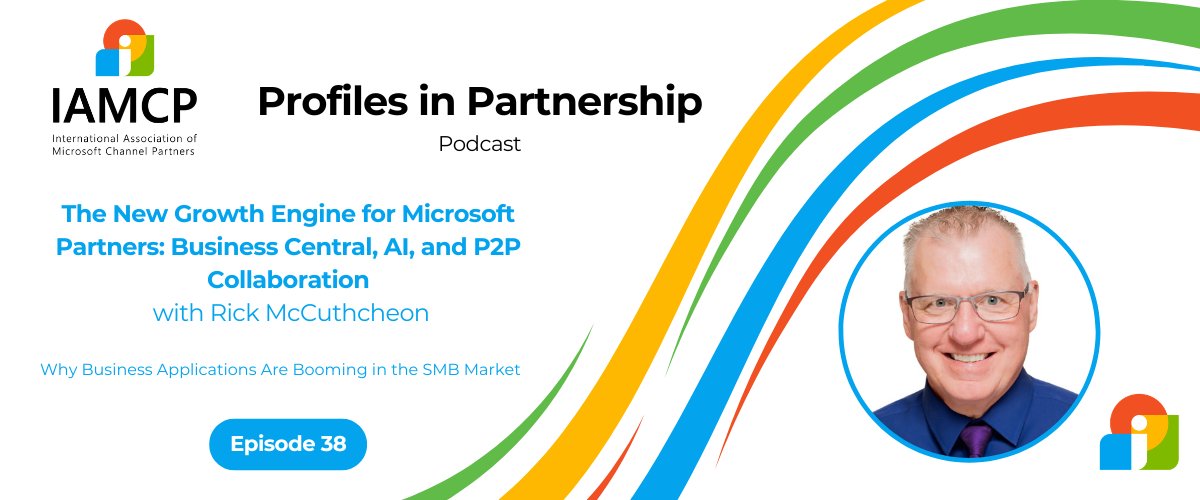
For partners seeking to understand these trends in greater detail, the complete episode of IAMCP Profiles in Partnership featuring Rick McCutcheon provides additional insights on Microsoft partner growth strategies and implementation approaches.
Comments
Please log in or register to join the discussion