At the AI Now Summit in Paris, Mistral AI positioned itself as a European full‑stack AI partner, emphasizing on‑premise deployment, efficient open models, and industry‑specific harnesses. The event highlighted real‑world use cases and partnership‑driven growth, while also exposing a quieter product roadmap and lingering doubts about long‑term scalability.
Mistral AI’s Full‑Stack Playbook: What the Paris Summit Revealed About Europe’s Emerging AI Model
Observation – Europe is looking for an AI stack that stays on its own soil
The AI Now Summit in Paris showed a clear shift in how European firms view artificial intelligence. Rather than chasing the biggest language model, many attendees were asking for control, efficiency, and regulatory compliance. Mistral answered that call by presenting a vertically integrated offering: their own compute farms, open‑source‑friendly models, a platform for building agentic applications, and consulting services that help enterprises embed the technology.
Evidence – Concrete signals from the summit
| Signal | What Mistral showed | Why it matters |
|---|---|---|
| Compute ownership | A 40 MW data centre in Paris, with a second site planned for Sweden. | Keeps data‑flow within Europe, reduces latency, and sidesteps reliance on US hyperscalers. |
| On‑premise focus | BNP Paribas runs Mistral models inside its own data centre for KYC, and Abanca orchestrates customer‑service agents for two‑million users without sending data to the cloud. | Demonstrates that sensitive workloads can stay behind corporate firewalls, a key requirement for banks and insurers. |
| Specialised small models | Document AI for EU Patent Office OCR, Voxtral for multilingual voice in Alexa+, and Robostral for ASML’s robotics line. | These examples prove that a 1‑2 B‑parameter model can beat a 100 B‑parameter competitor on speed and energy use when the task is narrow. |
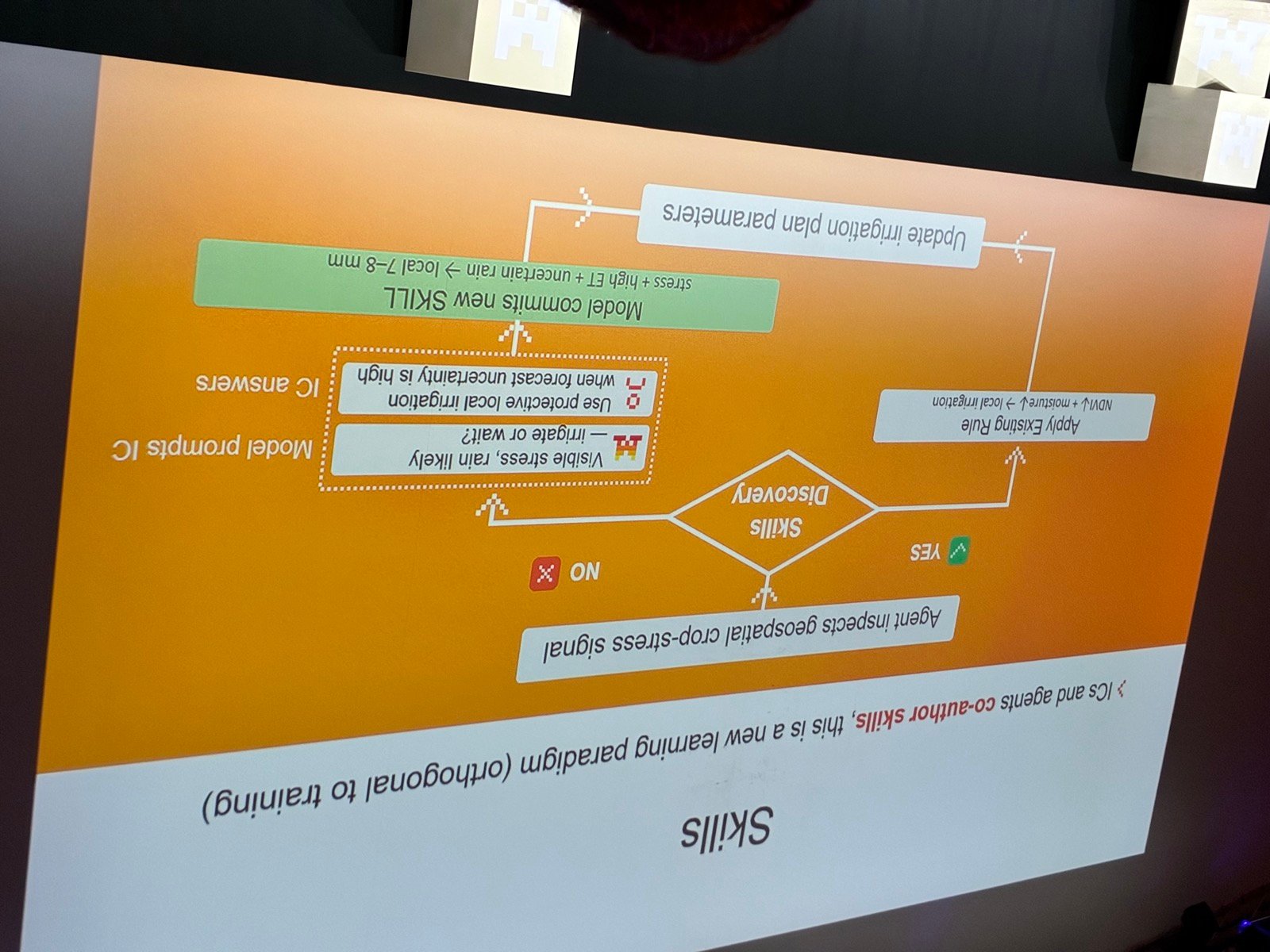
| Agentic harness | Pieter Stock explained that a model needs a surrounding “harness” that adds context, persistence, and reasoning. Skills – reusable micro‑agents – let organisations codify best practices. | Turns a static LLM into a living workflow component, which is essential for complex, token‑heavy tasks. |
| Open‑model strategy | Release of Vibe for Work (a Claude‑style chat for enterprises) and the open‑source Codestral fine‑tuned to read ancient papyri. | Signals a willingness to share model weights while still offering commercial support, appealing to developers who want auditability. |
The summit also featured a striking humanities case: an Austrian research team used a finetuned Codestral model to transcribe 180 000 fragments of Egyptian papyrus, a task that would have taken millennia by hand. The story illustrates that the same efficiency gains prized by industry can unlock cultural heritage.
Counter‑perspectives – Why the optimism may be premature
- Product roadmap opacity – Apart from the Vibe for Work announcement, Mistral kept quiet about upcoming model releases. Competitors such as Anthropic and OpenAI continue to push larger, multimodal systems that attract developer attention. Without a clear roadmap, partners may hesitate to commit long‑term resources.
- Scale versus specialization trade‑off – While small, task‑specific models excel in speed, they struggle with zero‑shot generalisation. Companies that need a single model to cover many domains might still prefer a larger, more versatile system, even at higher cost.
- Ecosystem lock‑in risk – Mistral’s “full‑stack” promise is attractive, yet it also means customers become dependent on a single vendor for compute, platform, and consulting. If the European data‑centre rollout stalls, organisations could face migration headaches.
- Regulatory uncertainty – Europe’s AI regulations are still evolving. An on‑premise deployment that claims sovereignty today could run into new compliance requirements tomorrow, potentially requiring costly re‑architectures.
What this means for the broader European AI community
Mistral’s approach aligns with a growing sentiment that value now matters more than chasing headline‑grabbing model sizes. By bundling hardware, open models, and application‑level tooling, they aim to become the go‑to partner for regulated sectors. If enough banks, manufacturers, and public institutions adopt this stack, a self‑sustaining European AI ecosystem could emerge, reducing the continent’s reliance on US cloud providers.
However, the path forward hinges on two factors:
- Adoption velocity – The more enterprises that move critical workloads in‑house, the stronger the network effect for Mistral’s platform.
- Innovation cadence – Maintaining a pipeline of new model families and harness features will be essential to keep the stack competitive against the rapid advances seen elsewhere.
Bottom line
The AI Now Summit painted a picture of a European AI player that is less interested in headline‑making model races and more focused on delivering tangible ROI through efficiency, data sovereignty, and industry‑specific partnerships. Whether that strategy will scale into a dominant European AI infrastructure remains an open question, but the signals from Paris suggest a serious alternative is taking shape.
For readers who want to explore Mistral’s open models, the official repository is available on GitHub. The Vibe for Work product page can be found on the Mistral website.
Comments
Please log in or register to join the discussion