
MIT's inaugural Robert R. Taylor Day celebrates the Institute's first Black graduate and establishes a renewed academic exchange with Tuskegee University, bridging historical architectural education with contemporary design practices and digital fabrication techniques.
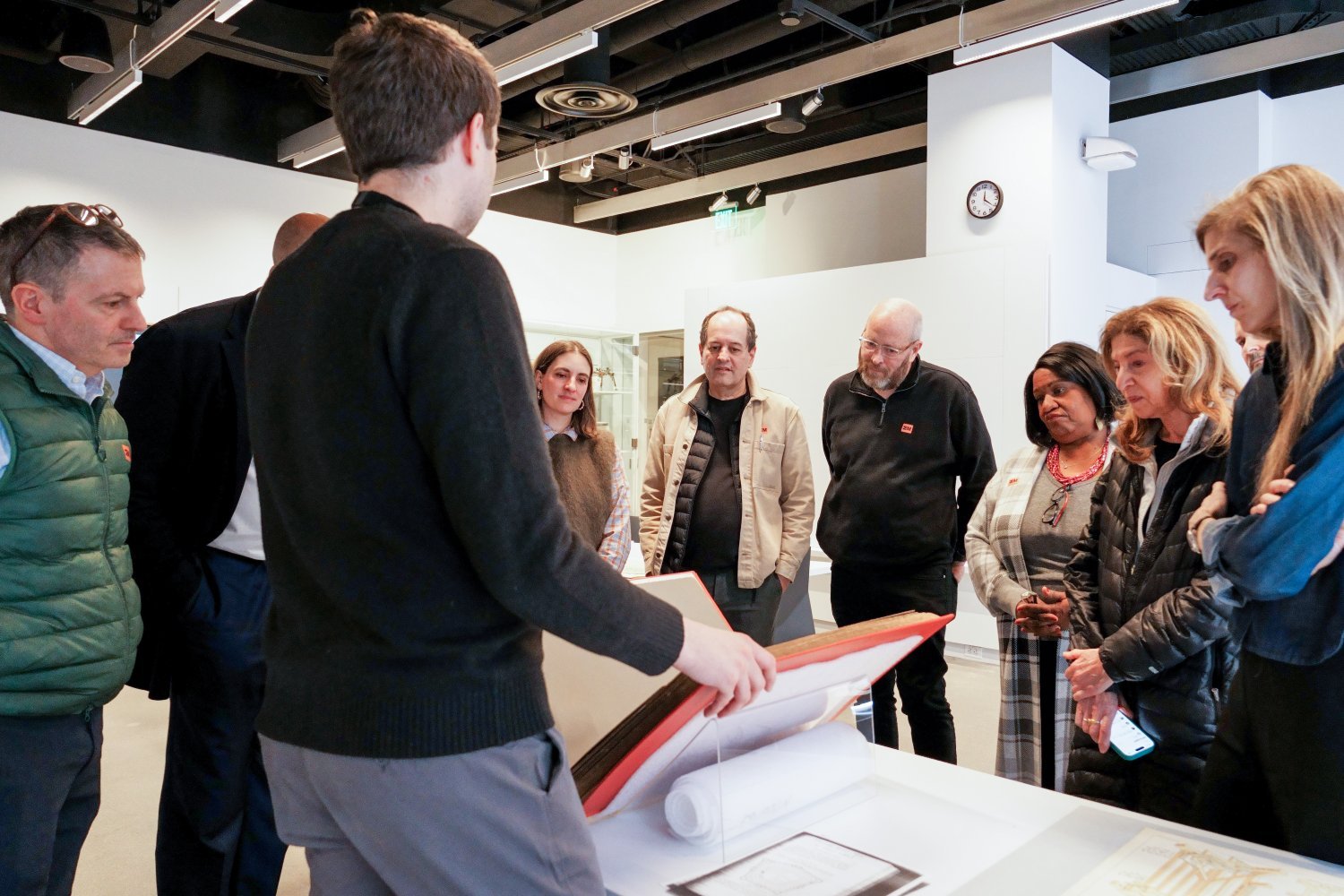
MIT recently marked its first official Robert R. Taylor Day on April 10, 2026, honoring the Institute's first Black graduate and the first academically trained Black architect in the United States. The event, held at the MIT Museum, represented more than just a historical commemoration—it signaled the beginning of a renewed academic partnership between MIT and Tuskegee University, building directly on Taylor's legacy and the educational philosophy he helped develop.
Robert Robinson Taylor (Class of 1892) graduated from MIT and subsequently joined Tuskegee Institute (now Tuskegee University), where he designed campus buildings, developed curriculum, and established an approach to architectural education centered on making and community life. Taylor returned to MIT on April 10, 1911, to speak at the 50th anniversary of the Institute's founding—the date now observed as Robert R. Taylor Day. In his address, Taylor credited MIT with providing the "methods and plans" he carried to Tuskegee, emphasizing the "spirit of doing things correctly, of putting logical ways of thinking into the humblest task."
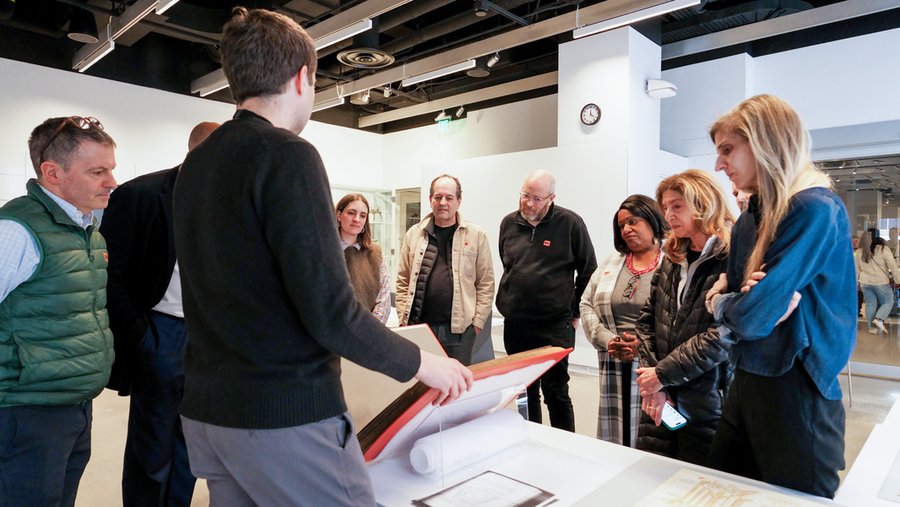
The 2026 celebration brought Taylor's ideas into direct dialogue with contemporary architectural education through a carefully structured program that combined archival research, panel discussions, and student exchanges. At the MIT Museum, attendees gathered around Taylor's original thesis, "A Soldiers Home" (1892), presented alongside archival materials by Jonathan Duval, assistant curator of architecture and design. This direct engagement with primary sources established Taylor's work not as distant history, but as an active point of reference for current teaching and research.
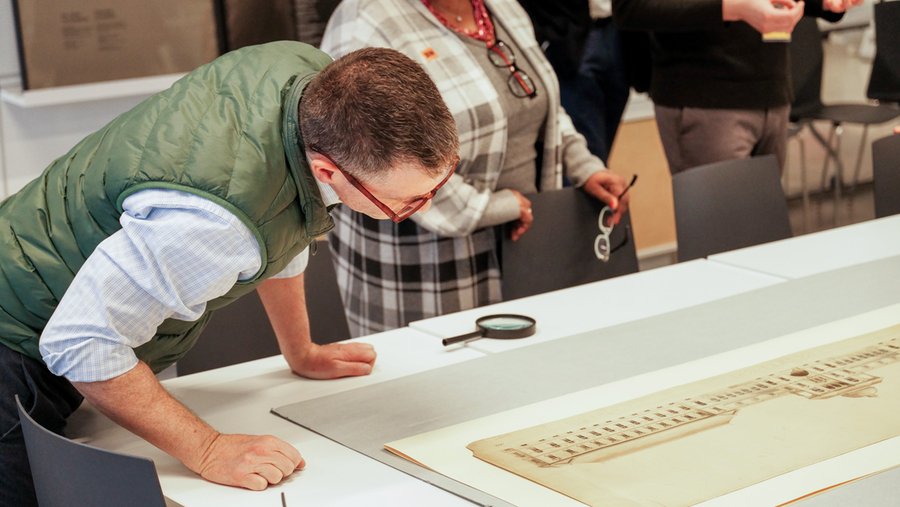
The technical approach to engaging with Taylor's legacy extends beyond simple historical preservation. Since 2022, dedicated coursework has documented buildings on the Tuskegee campus through measured drawings and archival interpretation. In class 4.s12 (Brick x Brick: Drawing a Particular Survey), taught by Carrie Norman, assistant professor in architecture at MIT, students work from limited historical material to reconstruct both form and intent of Taylor's buildings. This process involves traditional drawing techniques alongside digital documentation methods, creating a hybrid approach that honors Taylor's methods while incorporating contemporary tools.
The real-world applicability of this research became evident through a recent exhibition at the National Building Museum, where students developed large-scale models of the Tuskegee Chapel—originally designed by Taylor as the first electrified building in Alabama's Macon County. Using a limited set of archival materials, students created new 3D fabrications that reconstruct the chapel, which was destroyed by fire in 1957. This project demonstrates how historical research can inform contemporary design practices while preserving cultural heritage.
The educational exchange between MIT and Tuskegee represents a model for inter-institutional collaboration that bridges technical innovation with cultural heritage. MIT students travel to Tuskegee for work in historic preservation and community engagement, while Tuskegee students come to MIT to engage with digital fabrication and entrepreneurship. This reciprocal relationship embodies Taylor's educational philosophy, which emphasized both technical skill and social responsibility.
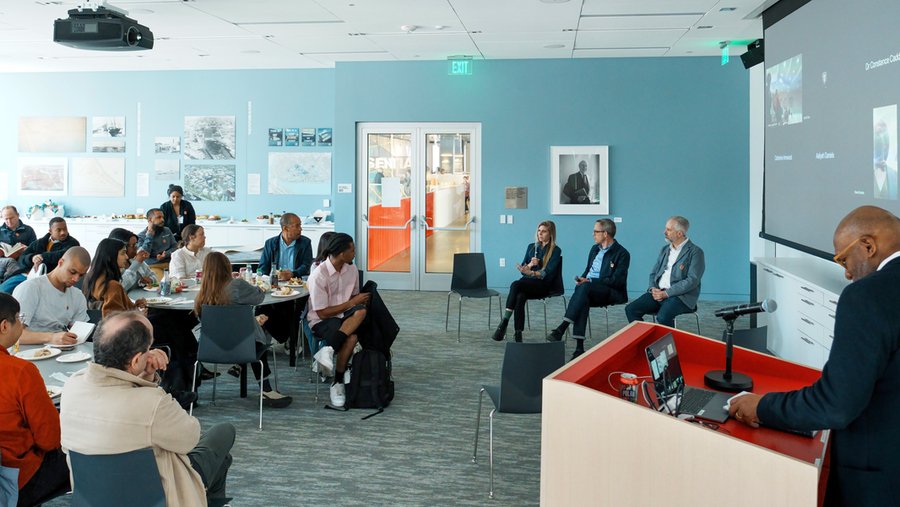
One notable example of this exchange is Myles Sampson, who participated in the MIT Summer Research Program as an undergraduate at Tuskegee. This experience connected architecture with computation, leading him to enroll in MIT's Master of Science in Architecture Studies (SMArchS) computation program. Sampson's work, "Brick Parable," combines historical reference with robotic construction, reflecting the long arc of Taylor's legacy—from bricks fired by students in Taylor's training program to contemporary robotic fabrication techniques.
The technical capabilities required for this research extend beyond traditional architectural documentation to include 3D scanning, drone technology, and digital fabrication. At Tuskegee, students and faculty utilize scanning and drone equipment developed by associate professor Kwesi Daniels to document Taylor's buildings, while at MIT, students access advanced fabrication technologies to reinterpret Taylor's designs. This combination of historical research and contemporary technology creates a unique educational environment that values both tradition and innovation.
The limitations of this approach are acknowledged by participants, particularly when working with incomplete historical records. As Norman explains, students must reconstruct both form and intent from limited materials, requiring careful interpretation and documentation of their research process. This methodological rigor ensures that contemporary interventions remain grounded in historical context while allowing for creative reinterpretation.
Looking forward, the MIT-Tuskegee partnership is expanding through documentary projects, dedicated coursework, and student exchanges. Timothy Hyde, professor in the MIT Department of Architecture, is developing a documentary on Taylor's life with historian Christopher Capozzola, senior associate dean for MIT Open Learning. This project aims to situate Taylor's work within broader historical contexts, including the influence of Boston's civic architecture on his development.
For Catherine Armwood, dean of Tuskegee University Robert R. Taylor School of Architecture and Construction Science, the continued circulation of students between institutions represents the core of this partnership. "While our students leverage MITdesignX to turn architectural concepts into social enterprises through advanced fabrication and venture mentorship, MIT students come to Tuskegee for an immersion in historic preservation," she explains. "Together, we are bridging technical innovation with deep-rooted heritage to train a new generation of visionary leaders."

The first Robert R. Taylor Day serves as both celebration and catalyst for future collaboration. As Nicholas de Monchaux, professor and head of the Department of Architecture at MIT, notes, "We are not uniting. We're reuniting." This perspective frames the partnership as a continuation of Taylor's original vision rather than a new initiative, emphasizing the enduring relevance of his educational philosophy.
The integration of historical research with contemporary technology in the MIT-Tuskegee partnership offers a model for architectural education that values both tradition and innovation. By engaging directly with Taylor's original work and extending his educational philosophy into new contexts, this collaboration demonstrates how historical figures can continue to inform contemporary practice while adapting to new technological possibilities.
As the partnership continues to develop, it promises to produce not only new insights into Taylor's legacy but also innovative approaches to architectural education that balance technical skill with social responsibility—a balance that Taylor himself sought to achieve throughout his career.
For more information about the MIT Museum and its exhibitions, visit the official MIT Museum website. For details on the Department of Architecture at MIT, see their official page. The ongoing collaboration between MIT and Tuskegee University continues to develop through various programs and research initiatives, with future events planned to further explore Taylor's legacy and its contemporary applications.
Comments
Please log in or register to join the discussion