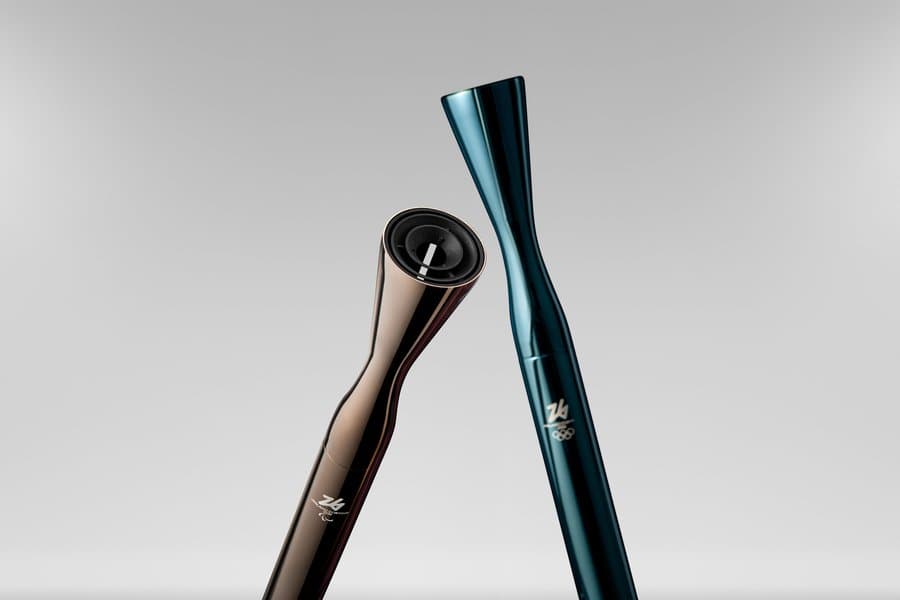
Carlo Ratti, MIT professor of the practice, created the "Essential" torch for the 2026 Winter Olympics, blending Italian design heritage with future-forward sustainability technologies.
When the Olympic flame is lit in Olympia, Greece, and begins its journey to Milan for the 2026 Winter Games, it will be carried in a torch that embodies both ancient tradition and cutting-edge sustainability. Designed by Carlo Ratti, professor of the practice in MIT's Department of Urban Studies and Planning, the "Essential" torch represents a thoughtful reimagining of this iconic Olympic symbol.
{{IMAGE:1}}
Ratti, who also directs MIT's Senseable City Lab, approached the design with the same principles he brings to his work at the Institute: focusing on human connection, emotional resonance, and sustainable innovation. "It is about what the object or the design is to convey," Ratti explains. "How it can touch people, how it can relate to people, how it can transmit emotions. That's the most important thing."
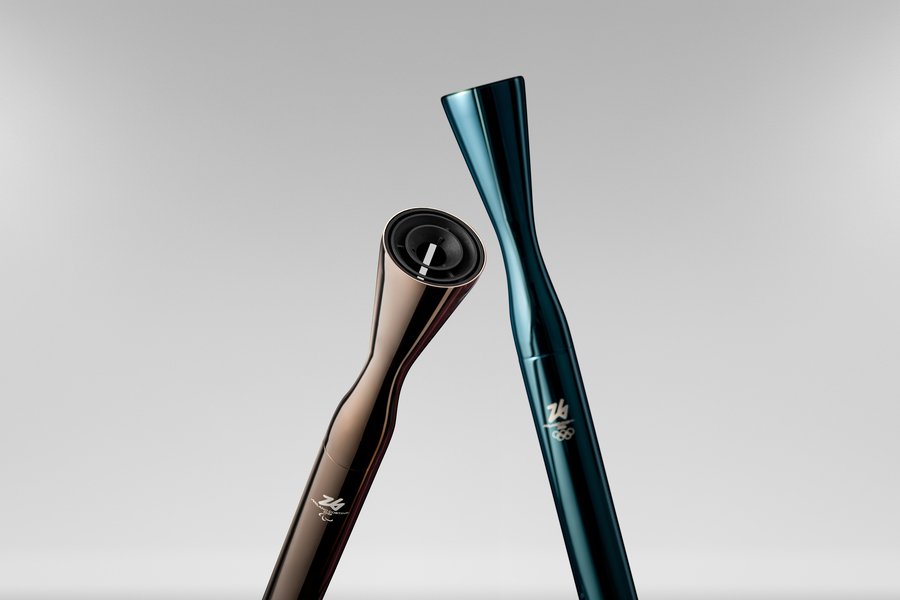
The design process, which took three years of collaboration with Olympic committees and sponsor Versalis, centered on one fundamental question: what is truly essential to the Olympic torch? Ratti's answer was elegantly simple—the flame itself. Drawing inspiration from ancient Greek traditions where the flame was considered sacred and meant to remain lit throughout competition, Ratti decided to strip away everything that wasn't essential to the flame.
This philosophy led to several groundbreaking innovations. The torch features a high-performance burner powered by bio-GPL produced by energy company ENI from 100 percent renewable feedstocks. Unlike previous Olympic torches that were used only once, Ratti's design can be recharged 10 times, enabling a 10-fold reduction in the number of torches created. The torch is also the lightest ever made for the Olympics, weighing just under 2.5 pounds and primarily composed of recycled aluminum.
Perhaps most striking is the torch's internal mechanism, visible through a vertical opening along its side. This design choice reinforces the emphasis on the flame rather than the object itself, allowing audiences to see the burner in action during the relay.

The torch's surface features a PVD coating that is heat resistant and can shift colors by reflecting the environments through which it is carried—the mountains, city lights, and landscapes of Italy. The Olympic torch is finished in blue-green, while the Paralympic torch is gold, creating a visual distinction between the two events.
Ratti's connection to this project runs deep. A native of Turin, Italy, he grew up skiing in the very mountains where the 2026 Winter Games will be held. "Winter sports are my favorite," he says. "I grew up skiing where these games are being held, and has since skied around the world—from Utah to the Himalayas."
Beyond its technical innovations, Ratti saw the torch as an opportunity to showcase modern Italy. "When people think about Italy, they often think about the past, from ancient Romans to the Renaissance or Baroque period," he notes. "Italy does indeed have a significant past. But the reality is that it is also the second-largest industrial powerhouse in Europe and is leading in innovation and tech in many fields."
The torch has already received recognition, earning an honorable mention in Italy's most prestigious industrial design award, the Compasso d'Oro. But for Ratti, the true measure of success lies in how the design connects with people and embodies the Olympic spirit.
As the torch relay began in late November, traveling through cities across Greece before making its way through all 110 Italian provinces, Ratti had the opportunity to carry it himself through Turin in mid-January. This personal connection to the Olympic tradition, combined with his commitment to sustainable design and technological innovation, makes the "Essential" torch a fitting symbol for the 2026 Winter Games.
The torch represents more than just a practical object for carrying the Olympic flame—it's a statement about the future of design, sustainability, and the role of technology in creating meaningful human experiences. As Ratti puts it, "There should be some kind of architectural design always translating into form some kind of ethical principles or ideals. It's not just about a physical thing. Ultimately, it's about the human dimension. That applies to the work we do at MIT or the Olympic torch."

The 2026 Winter Olympics torch relay will conclude in Milan on February 6, 2026, where the flame will light the cauldron and officially open the Games. In that moment, the "Essential" torch will have fulfilled its purpose—not just as a vessel for fire, but as a bridge between ancient tradition and a sustainable future, between Italian heritage and technological innovation, and between the Olympic ideals of unity and the practical realities of modern design.
Comments
Please log in or register to join the discussion