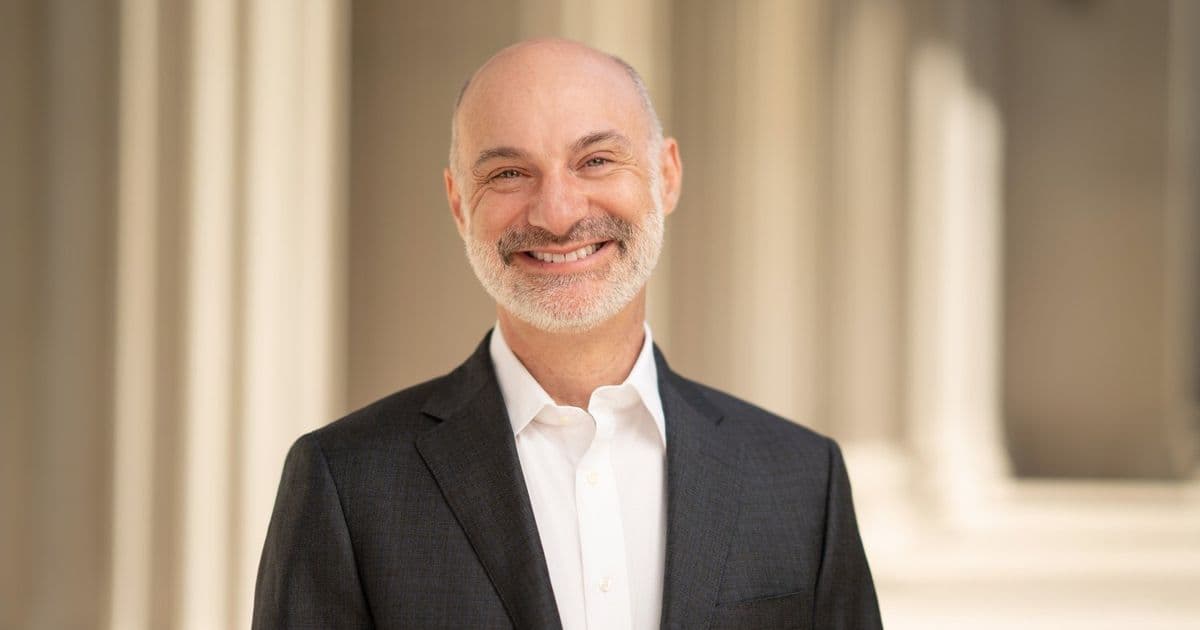
As MIT's School of Humanities, Arts, and Social Sciences celebrates 75 years, Dean Agustín Rayo explains why humanistic education is essential for developing the broad-minded, ethically-grounded leaders needed to navigate AI's societal transformation.
As artificial intelligence reshapes every aspect of society, from labor markets to human relationships, universities face a critical question: How can they provide education that remains valuable in an AI-dominated world? According to MIT School of Humanities, Arts, and Social Sciences (SHASS) Dean Agustín Rayo, the answer lies not in doubling down on technical training alone, but in strengthening the very humanistic disciplines that have been central to MIT's mission since its founding.
The Deeper Challenge of AI
Rayo argues that AI's impact extends far beyond pedagogy. "Artificial intelligence isn't just changing the way students learn — it's transforming every aspect of society," he explains. The labor market is experiencing dramatic shifts that upend traditional paths to financial stability, while AI simultaneously changes how we build relationships, pay attention, and find meaning in our lives.
The fundamental challenge, Rayo suggests, is ensuring universities provide students with the tools they need to find financial security and build meaningful lives in this new landscape. This requires developing minds that are both nimble and broad — students who can not only execute tasks effectively but also exercise judgment about which tasks are worth executing.
The Essential Role of Humanistic Education
At MIT, undergraduates are already required to take at least eight courses in humanities, arts, and social sciences (HASS) disciplines. Rayo emphasizes that fields like philosophy, political science, economics, literature, history, music, and anthropology are crucial for developing the essentially human aspects of our lives that AI cannot replace.
These disciplines are vital for cultivating critical thinking and moral compass, understanding people and their values, institutions, cultures, and ways of thinking. They help create broad thinkers who understand how the world works and develop excellent communicators who can describe their projects and lives in ways that endow them with meaning.
As one MIT student put it: "Engineering gives me the tools to measure the world; the humanities teach me how to interpret it. That balance has shaped both how I do science and why I do it."
Preserving MIT's Technological Edge
Some worry that emphasizing humanistic study could dilute MIT's technological edge. Rayo sees the opposite: "I think the opposite is true."
MIT plays a crucial role in social mobility and entrepreneurship in the United States, transforming talented undergraduates into the nation's top scientific and engineering leaders. The age of AI is forcing a rethinking of what it means to be a top engineer. Challenges in AI development aren't just technical — issues like bias, accountability, governance, and societal impact of automation are equally important.
Understanding these dimensions helps technologists design better systems and anticipate real-world consequences. "Strengthening the humanities at MIT isn't a departure from our core mission — it's a way of ensuring that our technical leadership continues to matter in the world," Rayo states.
MIT SHASS's Strategic Evolution
To support this vision, SHASS is pursuing multiple initiatives. The MIT Human Insight Collaborative (MITHIC) has been launched to strengthen research in humanities, arts, and social sciences while deepening collaboration across MIT. The school is shaping the undergraduate experience to ensure every MIT student engages with the big societal questions of our time, from democratic resilience to climate change to the ethics of new technologies.
SHASS has created shared faculty positions with the MIT Schwarzman College of Computing and recently launched a new Music Technology and Computation Graduate Program with the School of Engineering. The school is partnering with SERC (the SCC's Social and Ethical Responsibilities of Computing) to design new classes on the intersection of computing and human-centered issues such as ethics.
Rayo describes this as "a very exciting time for SHASS," emphasizing that the school is elevating the humanities both for their own sake and as a space for experimentation, bringing together students, faculty, and partners to explore new forms of research, teaching, and public engagement.
A Vision for the Future
As SHASS marks its 75th anniversary, Rayo's vision connects directly to the school's founding mission. Established in 1950 in response to "a new era emerging from social upheaval and the disasters of war," SHASS was created to ensure genuine integration of scientific and technical topics with humanistic scholarship and teaching — the only way, as the 1949 Lewis Committee Report stated, to tackle "the most difficult and complicated problems confronting our generation."
Today's technological revolution presents similar challenges. The need for developing students with broad minds and human understanding remains as urgent as ever. In an age where AI can execute tasks with increasing sophistication, the uniquely human capacities cultivated through humanistic education — judgment, ethics, communication, and understanding of human complexity — become not just valuable but essential.
Rayo's message is clear: MIT's technical leadership will matter more in the world when it's grounded in deep humanistic understanding. The future of education in the age of AI isn't about choosing between technical and humanistic training — it's about ensuring they remain inseparably integrated, just as they were envisioned to be 75 years ago.
Comments
Please log in or register to join the discussion