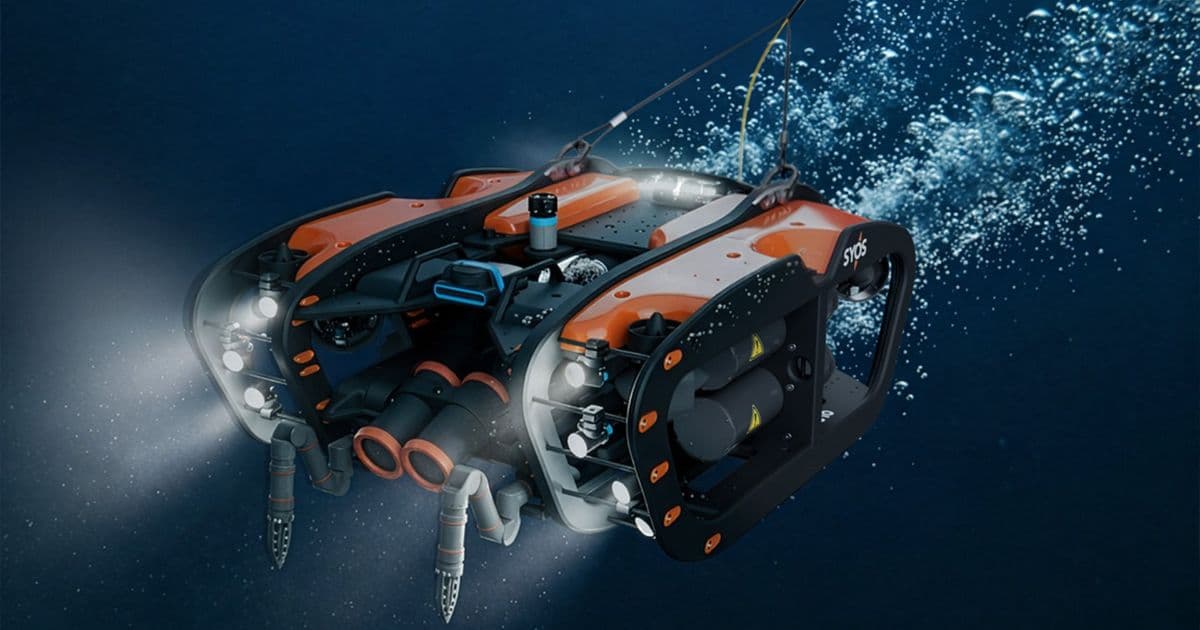
The SYOS SU10 unmanned underwater vehicle can dive to 500 m, carry a 10 kg payload, and operate for four hours on battery or indefinitely when tethered. Its AAIM software stack and fiber‑optic tether enable real‑time control and data streaming, positioning it as a cost‑effective tool for undersea infrastructure protection.
SYOS SU10 UUV Introduces AI‑Driven Undersea Cable Patrol with Tethered Power Option
Announcement
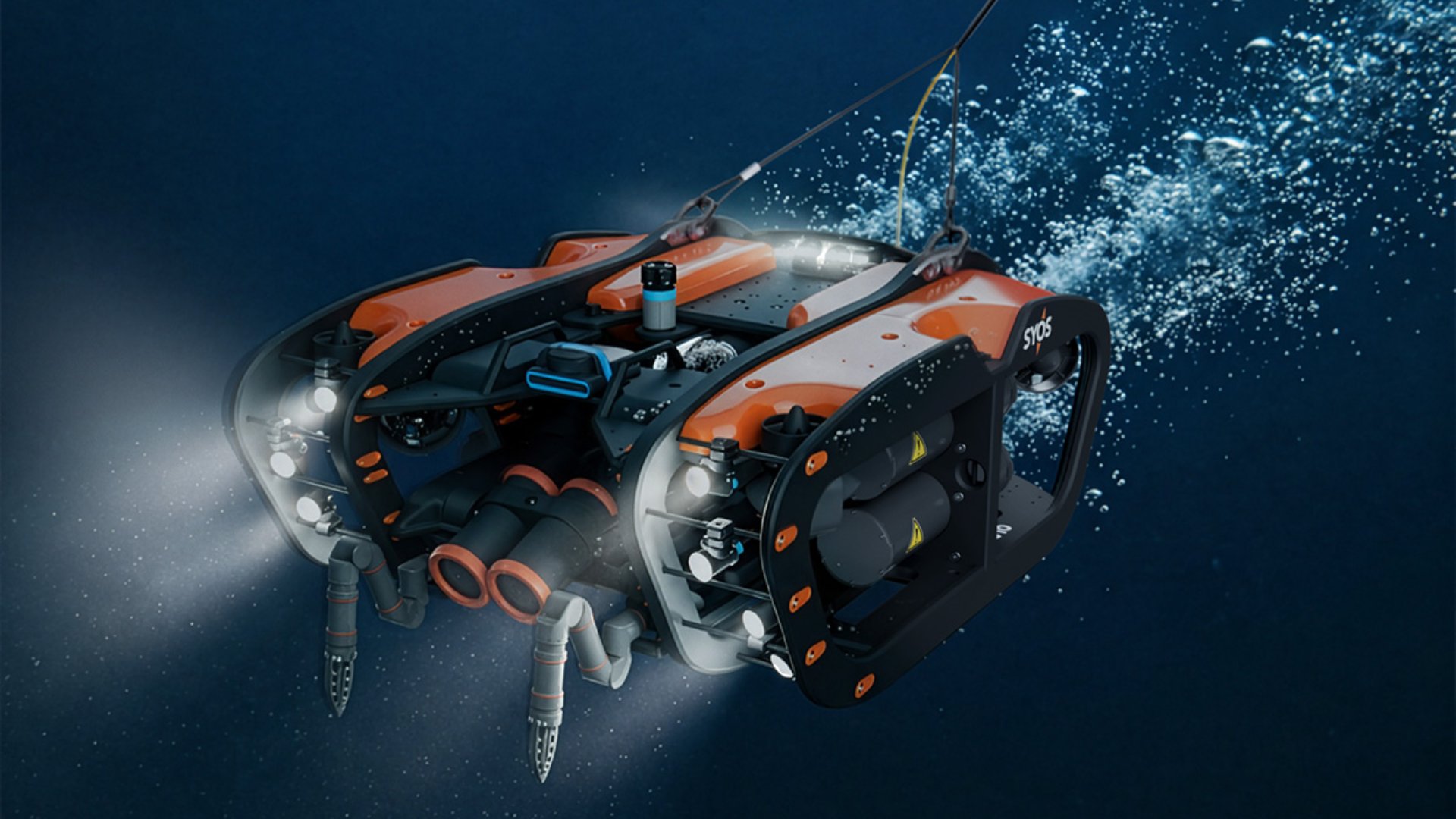
A startup named SYOS has rolled out the SU10, an autonomous uncrewed underwater vehicle (UUV) capable of reaching 500 meters (1,640 feet) depth. The platform is marketed for inspection, protection, and intervention on subsea assets such as fiber‑optic cables, power lines, and pipelines. Key headline figures include a 10 kg payload capacity, four‑hour battery endurance, and unlimited endurance when tethered to a surface power source.
Technical specifications
| Parameter | Value |
|---|---|
| Maximum operating depth | 500 m (1,640 ft) |
| Payload capacity | 10 kg (22 lb) |
| Battery‑only endurance | 4 h |
| Tethered endurance | Unlimited |
| Tether composition | Ultra‑slim fiber‑optic + power conductors |
| Launch options | Shore‑based, crewed mothership, or larger uncrewed surface vessel |
| Autonomous stack | AAIM (Autonomous Aerial‑Aquatic‑Inland‑Maritime) |
The SU10’s power system relies on a lithium‑ion battery pack sized for short‑range missions. When the mission profile exceeds four hours, the vehicle can connect to a fiber‑optic tether that supplies continuous power and a high‑bandwidth data link. The tether’s diameter is under 10 mm, allowing deployment from a modest surface platform without significantly increasing drag.
Sensor suite and processing
The vehicle integrates a dual‑frequency sonar, high‑resolution optical camera, and environmental sensors (temperature, pressure, salinity). All sensor data are processed on an on‑board ARM Cortex‑A78AE processor, chosen for its low‑power consumption and extended temperature range. The processor runs SYOS’s proprietary AAIM AI stack, which fuses sensor inputs to generate navigation waypoints and detect anomalies in real time.
Autonomy and control
AAIM coordinates the SU10 with SYOS’s other unmanned platforms (air, land, surface). In a typical patrol, the UUV follows a pre‑programmed grid while continuously scanning the cable sheath. If the AI detects a potential fault—such as a pressure drop or acoustic signature—it flags the event, streams live video to the surface operator, and can switch to manual control via the tether link. The same software can orchestrate multiple SU10 units in a “wolf‑pack” formation, sharing situational data over a mesh network.
Market implications
Cost efficiency
Traditional undersea cable inspections rely on crewed research vessels that cost $10,000–$15,000 per day in fuel, crew, and support. A single SU10 deployment, even with a surface support ship, can reduce operational expense by 30‑40 % according to SYOS’s internal analysis. The ability to tether the vehicle eliminates the need for multiple battery swaps, extending mission duration without additional hardware.
Scalability for smaller navies
Many coastal nations lack the budget for dedicated anti‑submarine vessels. The SU10’s modular launch options—shore‑based winch, small surface craft, or integration with existing unmanned surface vehicles—make it accessible to budget‑constrained defense forces. The platform’s payload capacity also allows integration of magnetometers or small manipulator arms, expanding its role from passive monitoring to active repair.
Competitive positioning
Compared with rival UUVs such as the Bluefin‑15 (maximum depth 4,500 m, 6 h endurance) and Saab Seaeye Falcon (depth 3,000 m, 8 h endurance), the SU10 sacrifices extreme depth for integrated AI and a tethered power architecture. This trade‑off aligns with a market segment focused on high‑frequency, low‑depth cable routes in the Atlantic and Pacific littorals, where the majority of fiber‑optic infrastructure resides.
Supply chain considerations
The SU10’s core electronics—Cortex‑A78AE, Li‑ion cells, and fiber‑optic cable—are sourced from global suppliers with Tier‑1 status (e.g., Samsung for processors, CATL for batteries). Recent semiconductor shortages have not impacted SYOS’s production because the design uses standardized, high‑volume components rather than custom ASICs. However, the fiber‑optic tether relies on precision‑drawn glass fibers, a segment that experienced a 12 % capacity contraction in Q1 2024. SYOS has mitigated risk by qualifying two alternate vendors.
Outlook
If the SU10 can achieve its claimed indefinite tethered endurance, operators could maintain a continuous presence over critical cable corridors, dramatically reducing the window for sabotage or accidental damage. The combination of AI‑driven anomaly detection, real‑time video, and the option to deploy additional autonomous assets positions the SU10 as a practical solution for modern subsea infrastructure security.
For more technical details, see SYOS’s official product page SYOS SU10 UUV.
Comments
Please log in or register to join the discussion