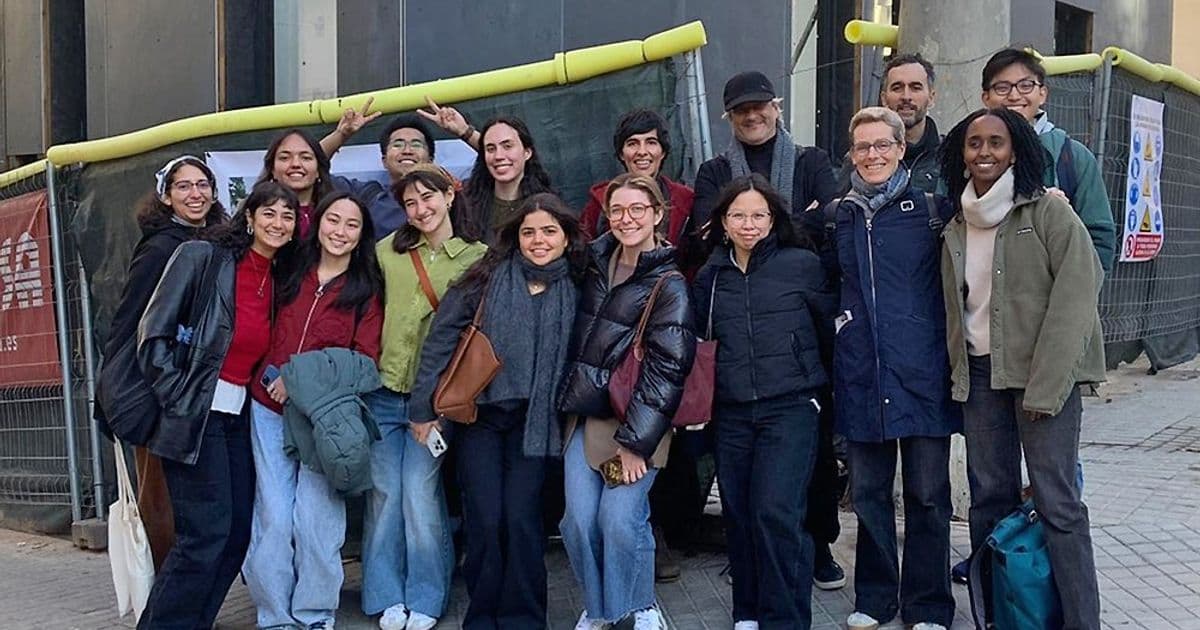
MIT's MISTI Global Classroom immerses students in Barcelona's regenerative agriculture movement, combining hands-on experience with cooperative models to address climate challenges.
A dozen MIT students recently embarked on an educational journey to Barcelona that transformed their understanding of sustainability and climate resilience. As part of STS.S22 (How to Grow Resilient Futures: Regenerative Agriculture and Economies in Catalunya, Spain), an Independent Activities Period course taught by Kate Brown, the Thomas M. Siebel Distinguished Professor in the History of Science, these students experienced sustainable systems firsthand rather than just reading about them in textbooks.
The course, offered through MIT International Science and Technology (MISTI) as a Global Classroom, reimagined educational boundaries by immersing students in living systems of sustainability. Instead of traditional classroom learning, the students visited local farms and slaughterhouses, prepared cooperative dinners for migrants, and constructed a working greenhouse—all while examining the historical roots and contemporary applications of cooperative movements in the region.
"I wanted the students to think about alternatives to the notion of capitalist development, where the latest technology is seen as the solution to every social problem that emerges," explains Brown. "I wanted them to see ways people are solving problems in a place like Barcelona, where communities and ecologies are centered as part of the solution."
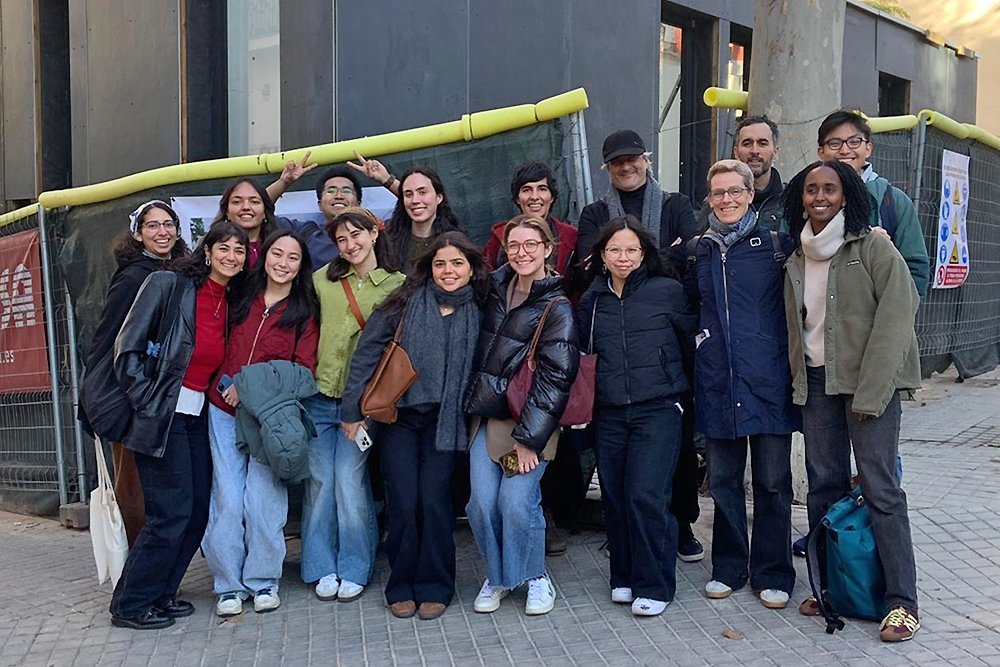
The program leveraged Barcelona's rich cooperative heritage, with more than a century of creating both worker and farm cooperatives providing an ideal environment for fieldwork rooted in community. During their first week, students collaborated with volunteers at the Agora Squat—a "pocket park" that was saved from development into a luxury hotel through community action. Now, this green space hosts a community kitchen and gardens where volunteers provide weekly dinners for recent North African migrants using ingredients that would otherwise go to waste.
"They received a lot of turnips and had to create a recipe to use them," Brown recounts. "In the end, a flavorful stew simmered in a massive metal pan over propane burners, brought alive with fresh chilies picked from the garden."
This hands-on approach pushed students beyond their comfort zones, creating profound educational moments. "Many of us do not consider ourselves chefs, so it was empowering to discover that, together, we had the capacity to create a nourishing meal for 70 people, with produce that would have otherwise gone to waste," says Sonia Torres Rodriguez, a first-year PhD student in urban studies and planning. "This meal that we created on the spot, in combination with many of the other workshops during the program, was a strong reminder of how much agency each of us has to effect change within isolating and constraining systems, especially in community with like-minded individuals."
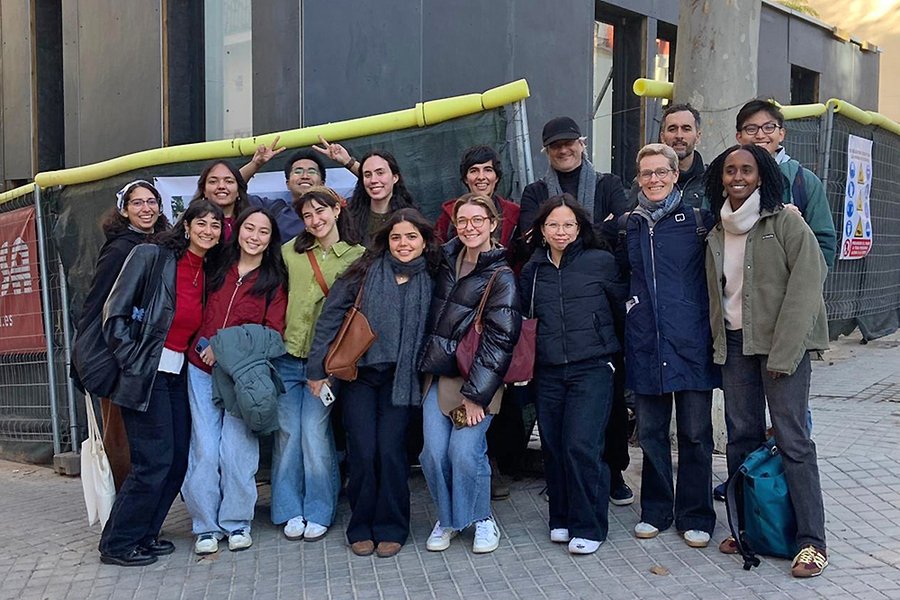
The cohort also spent time at La Bruguera, an eco-resort partnered with Research and Degrowth (R&D) that serves as a "living laboratory." There, students learned from local experts in regenerative agriculture, soil health, and low-tech agroforestry while participating in hands-on activities like eco-art sessions, weaving lessons, and greenhouse construction.
"Cooking together, admiring healthy regenerative soil, foraging, learning traditional methods to braid grass, installing mini solar panels, and hosting poetry circles, would have been impossible to replicate on Zoom," notes Torres Rodriguez.
For Calvin Macatantan, a senior in computer science and urban studies and planning, the experience was transformative. "I was losing a lot of faith in the world before this trip," he admits. "We're constantly surrounded by consumption and the drive to do more. This experience helped me realize that I want to do something that impacts people. For me, that will look like research. I want to become an expert in a subject and become someone who can help communicate that knowledge to people who need it."
Brown intentionally designed the three-week syllabus to push students beyond classroom walls and into direct engagement with local MISTI Spain collaborators. The students met with Pino Delàs, a pig farmer who left the industrial system to start Llavora, a localized, cyclical operation that supports community farming and generates significantly less waste.
"I'm focused on training students to approach these problems at the local level, so they see what happens when they're working through communities, rather than prescribing to them something to scale all over the world," Brown explains. "That localized, individualized approach helped expand on what the students initially believed was possible, and compelled them to become part of the solution through their studies and in their professional lives."
Since returning to campus, Brown's students have continued building community, gathering weekly to cook dinners "Barcelona squat style"—each bringing ingredients and collectively creating nourishing meals. This ongoing connection reflects the lasting impact of their immersive experience in sustainable systems.
"MISTI Global Classrooms like this show what happens when learning extends beyond the MIT campus," says Alicia Goldstein Raun, associate director of MISTI and managing director of the MIT-Spain Program at the Center for International Studies. "The students tackled global challenges like climate change and explored the degrowth movement while immersing themselves in Spanish communities and culture."
For faculty interested in designing a MISTI Global Classroom, more information can be found at the MISTI Global Classroom page.
Comments
Please log in or register to join the discussion