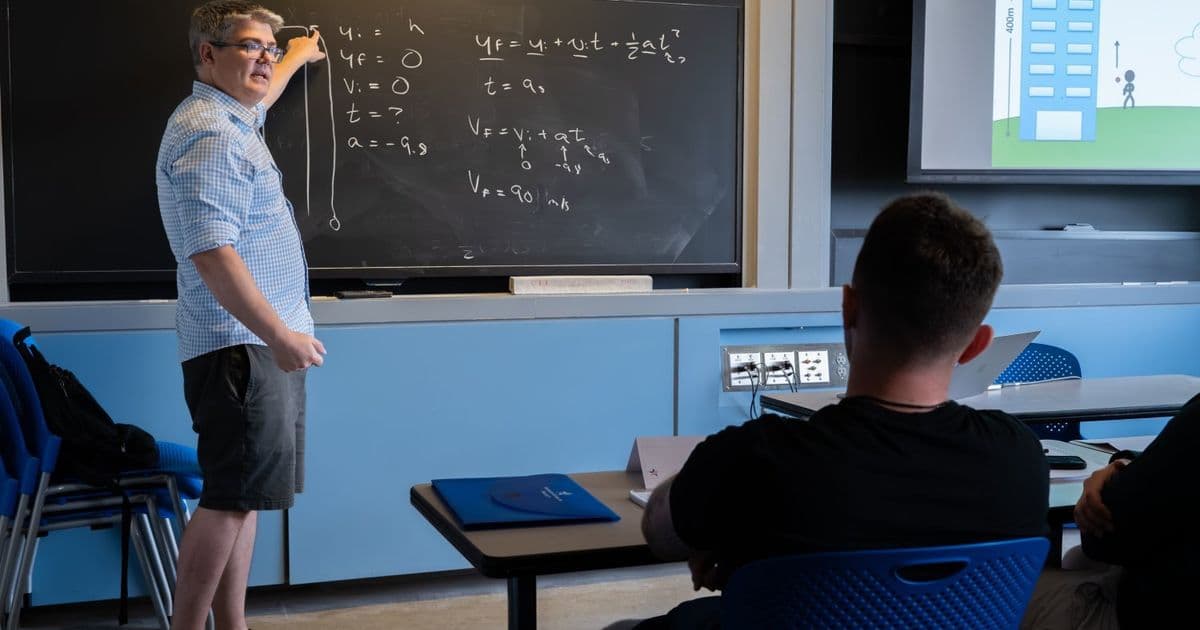
The MIT-hosted STEM boot camp transforms enlisted veterans' approach to higher education through intensive academic immersion and veteran mentorship.
Justin Cole spent nine years as a U.S. Air Force satellite systems operator before encountering an unexpected catalyst for career change: natural disasters. After responding to Colorado's devastating 2013 Black Forest Fire and surviving twin Category 5 typhoons in Okinawa, he recognized climate science as critical to national security. 'I realized this climate work forms the foundation of security objectives,' Cole explains. His journey led him to MIT's Warrior-Scholar Project (WSP) STEM boot camp in 2023, an experience that reshaped his academic trajectory. Today, he's an MIT sophomore studying climate system science and engineering.
Bridging Military Service and Academia
The Warrior-Scholar Project, founded at Yale in 2012, operates academic boot camps at 19 universities nationwide. MIT joined in 2017 as one of the first three STEM sites. The program simulates undergraduate life through a meticulously structured week where participants—enlisted veterans and active service members—experience college-level STEM coursework while developing academic confidence.

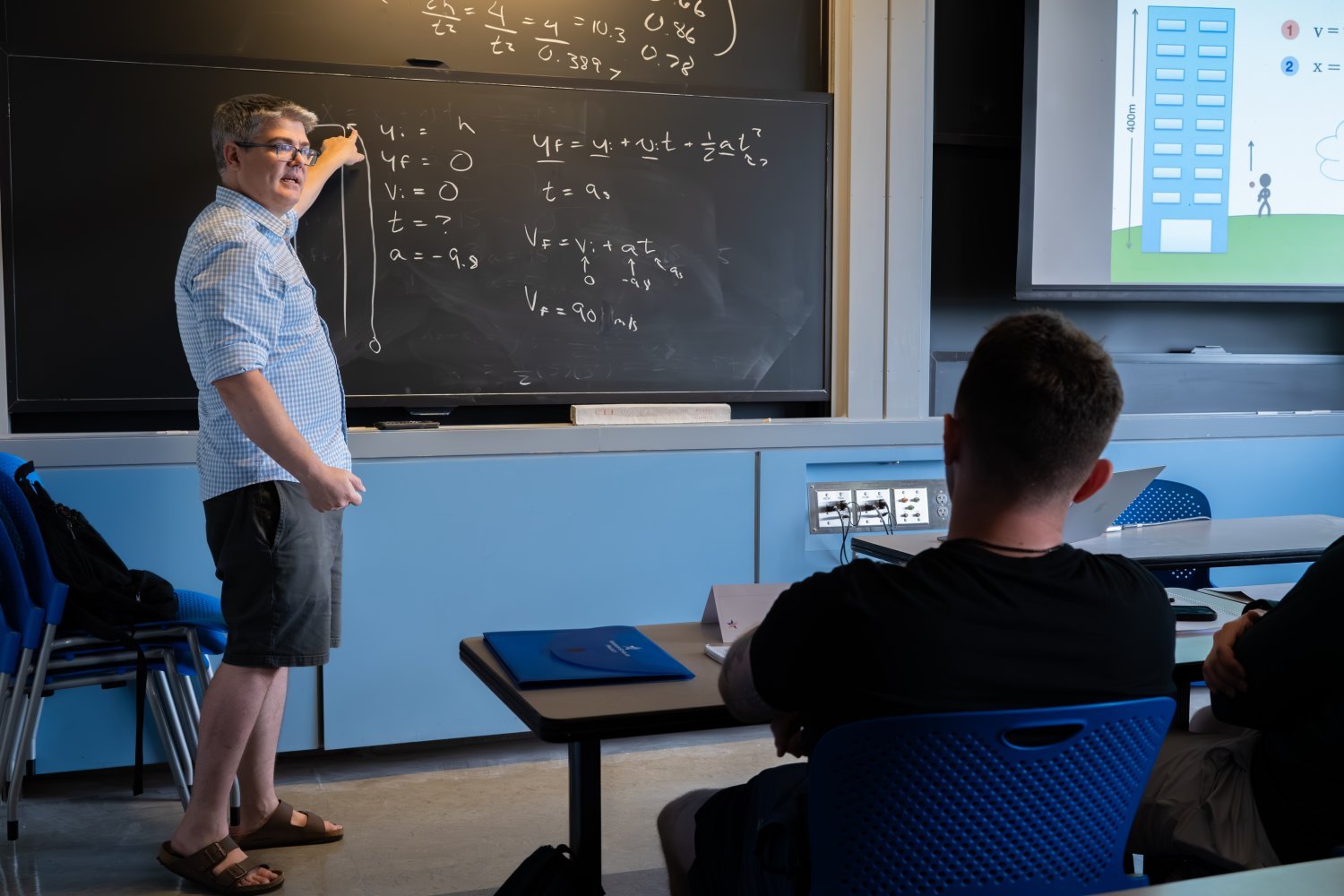
'It's a lot like the MIT experience,' notes Cole, recalling 16-hour days spanning physics lectures, lab tours, and problem sets. The schedule runs from 8:45 AM to 10:00 PM daily, blending faculty instruction with practical workshops on note-taking, time management, and admissions strategies. Navy veteran Nelson Olivier MBA '17, who co-founded MIT's program during his Sloan studies, emphasizes its purpose: 'We translate military skills into academic frameworks. When someone who repairs helicopters grasps Newton's laws, that's transformative.'
The Confidence Transformation
Physics professor Michael McDonald observes predictable transformations each summer. 'By Tuesday, participants often feel overwhelmed. By Friday, they're asking for another week.' This shift stems from recognizing their military experience as valuable preparation. 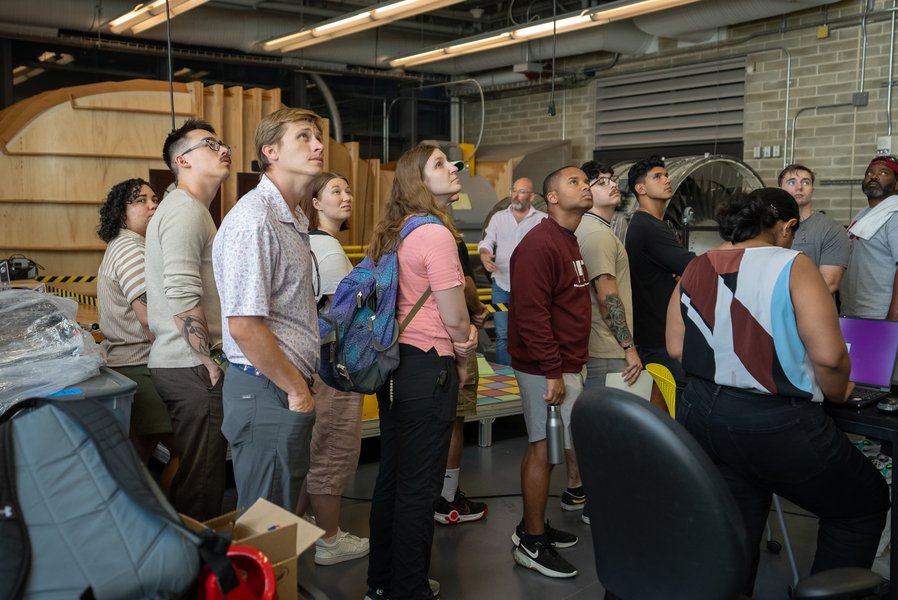 showcases scholars touring MIT labs—from aerospace facilities to nanotechnology cleanrooms—where they witness research applications firsthand.
McDonald describes teaching veterans as revelatory: 'Twelve hands shoot up immediately when I ask a question. Their curiosity is fearless—a professor's dream class.' He frequently counters self-doubt by connecting military expertise to academic concepts, telling helicopter mechanics, 'You already understand these principles; now we're giving you the theory.'
The Veteran-to-Veteran Advantage
Central to WSP's success is its 'virtuous cycle' of alumni engagement. Recent participants learn from veterans who've navigated academia—like Andrea Henshall, an Air Force major pursuing her AeroAstro PhD. 'Hearing students say, "I never considered MIT until this boot camp" is profoundly rewarding,' she notes. Henshall leads lab tours in her motion-capture research facility and mentors participants informally.
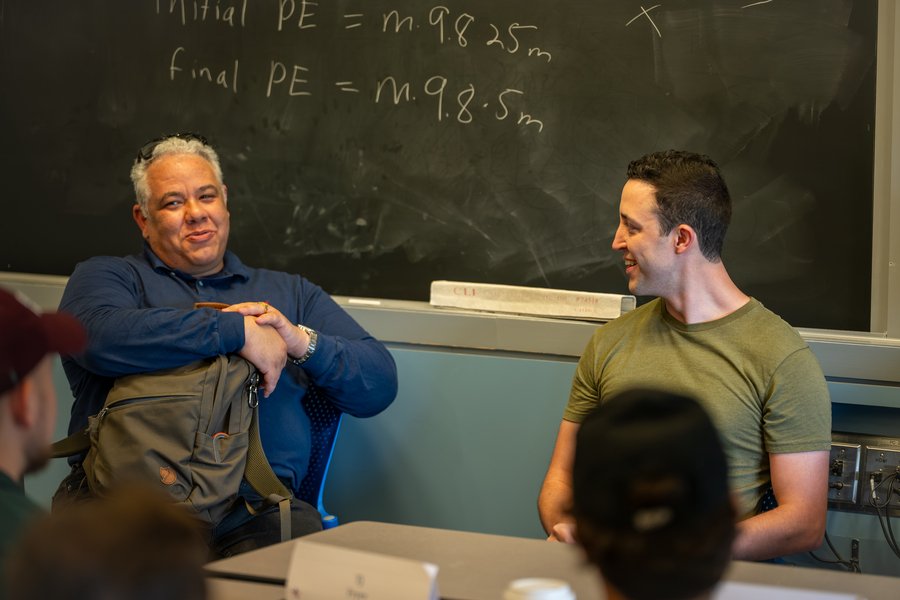
The multiplier effect proved pivotal for Marine Corps veteran Aaron Kahler. 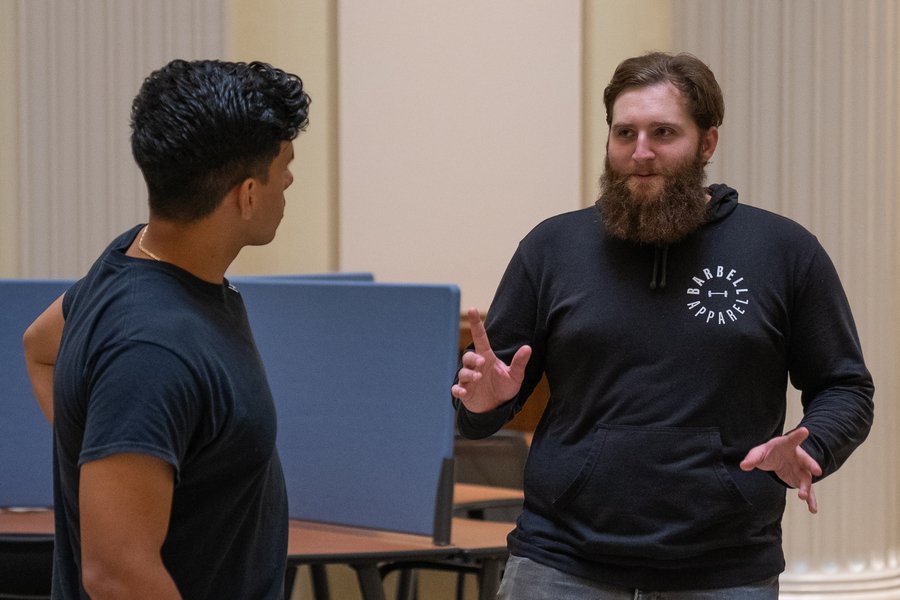 shows him conversing during the 2024 boot camp where encounters with veteran PhD students changed his perspective: 'There were more successful veterans here than I imagined.' Kahler enrolled at MIT this year, crediting WSP with making elite education feel attainable.
The Symbolic Finish
Each boot camp concludes with a military tradition: scholars receive custom challenge coins. One side features Newton's laws superimposed on the WSP logo; the other bears MIT's mens et manus motto beneath the Great Dome. Olivier explains the symbolism: 'Just as Building 10 lacks a name, we tell scholars: Earn your place by impacting humanity.' Kahler keeps his coin on his MIT desk—a daily reminder of possibility.
Over 120 veterans have completed MIT's program since 2017, with 93% enrolling in colleges including Stanford, Georgetown, and Harvard. For Cole, now mentoring new cohorts, the boot camp's legacy is clear: 'It showed us that our military experience isn't a barrier to academia—it's our foundation.'
Comments
Please log in or register to join the discussion