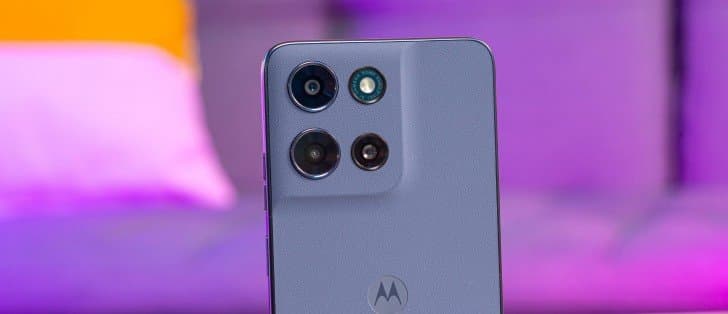
Motorola's 2026 Moto G and G Play offer vegan leather backs, microSD slots, and 3.5mm jacks at budget prices, but compromise on display resolution and performance.
The 2026 Moto G and Moto G Play represent Motorola's latest budget smartphone offerings, and they bring some interesting design choices to the table. After reviewing the Moto G Power (2026), we're now examining the vanilla Moto G (2026) and its near-identical sibling, the Moto G Play (2026). These devices occupy the middle ground in Motorola's 2026 lineup, with the G Play positioned as the most affordable option.
Design and Build Quality
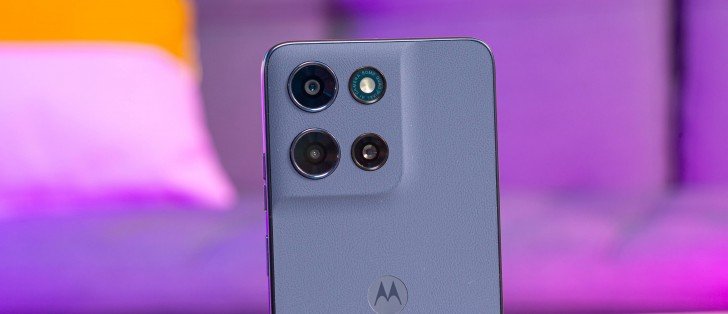
Both phones feature a vegan-leather-like back panel that feels surprisingly premium for their price point. This material choice gives them a distinctive look and feel that punches above their weight class. The devices also include dedicated microSD card slots and 3.5mm headphone jacks - features that are increasingly rare in modern smartphones.
Other notable design elements include stereo speakers with Dolby Atmos support and eSIM compatibility. However, unlike the G Power (2026), these models lack formal ingress protection, relying instead on Motorola's "water-repellent design" claim.
Key Differences Between Models
While the Moto G (2026) and G Play (2026) share many similarities, there are some important distinctions:
- Camera System: The Moto G features a 50MP main camera with a 2MP macro lens, while the G Play downgrades to a 32MP main camera without a macro option
- Selfie Camera: 32MP on the Moto G versus 8MP on the G Play
- Storage: 128GB on the Moto G compared to 64GB on the G Play
- Charging: 30W on the Moto G versus 18W on the G Play
Both models share the same 5,200mAh battery capacity, which is impressive for their class.
Display and Performance
The display is where these phones show their budget nature. Both feature a 6.70-inch IPS LCD with 720x1604px resolution, 120Hz refresh rate, and 1000 nits peak brightness. This represents a downgrade from the FullHD+ resolution found on the Moto G Power (2026), which is disappointing given that these are 2026 models.
Powering both devices is the MediaTek Dimensity 6300 chipset - the same processor found across the entire Moto G 2026 lineup. This 6nm chip features an octa-core CPU (2x2.4 GHz Cortex-A76 & 6x2.0 GHz Cortex-A55) paired with a Mali-G57 MC2 GPU. While 5G-capable, this chipset is notably underpowered for a 2026 device.
Memory and Storage Concerns
Perhaps the most concerning spec is the 4GB of RAM on both models. In 2026, this is far from ideal for smooth multitasking and future-proofing. The Moto G offers 128GB of storage while the G Play provides 64GB, both with microSD expansion support.
Camera Capabilities
Camera setups differ between the two models:
Moto G (2026):
- Main: 50MP, f/1.8, PDAF
- Macro: 2MP, fixed focus
- Front: 32MP, f/2.2, fixed focus
Moto G Play (2026):
- Main: 32MP, f/2.2, PDAF
- Front: 8MP, f/2.0
Both can record 1080p video at 30fps from either camera.
Software and Connectivity
The phones run Android 16 out of the box and include comprehensive connectivity options: 5G, eSIM support, Wi-Fi 5, Bluetooth, NFC, FM radio, and the aforementioned 3.5mm headphone jack. A side-mounted fingerprint reader provides biometric security.
Unboxing Experience
Motorola has embraced eco-friendly packaging for these models. The slim, two-piece cardboard boxes feature soy ink printing and contain no plastic. The accessory bundle is minimal - just the phone and a basic USB-C to USB-C cable rated for 3A charging and data transfer. No charger, case, or other accessories are included.
Price and Value
Priced at $199.99 for the 128GB Moto G model, these phones aim to deliver value through their design and feature set rather than cutting-edge performance. The vegan leather backs, stereo speakers, and retention of the headphone jack are genuine differentiators in the budget segment.
However, the combination of a low-resolution display, underpowered chipset, and limited 4GB RAM raises questions about long-term usability. The lack of an ultrawide camera on either model is also notable in 2026.
Conclusion
The Moto G (2026) and G Play (2026) offer an interesting proposition in the budget smartphone market. Their premium-feeling design elements and comprehensive feature set (including the headphone jack and microSD slot) make them attractive options for users who prioritize these features over raw performance.
However, the display resolution downgrade, modest chipset, and limited RAM suggest these phones may struggle with demanding tasks and future Android updates. They're best suited for users with basic smartphone needs who appreciate the unique design touches and don't mind compromising on display quality and performance.
Comments
Please log in or register to join the discussion