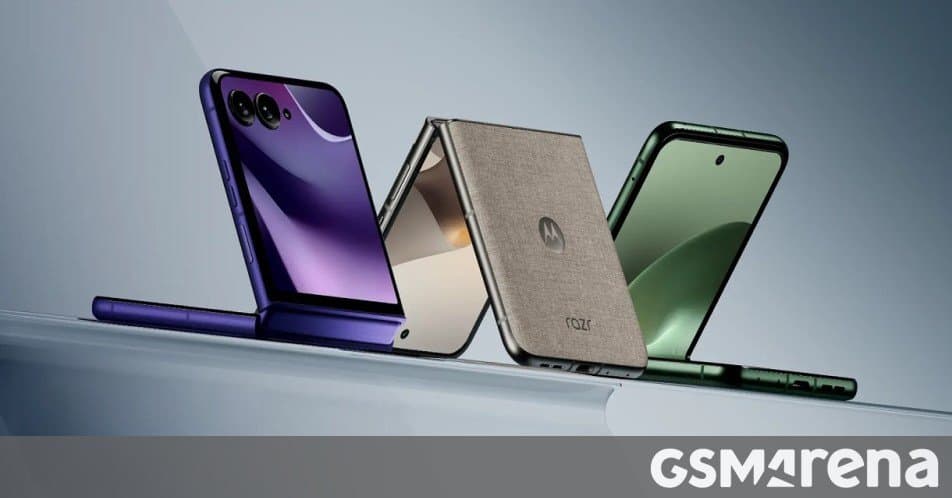
Motorola has launched three new flip phones in its Razr lineup: the Razr 70, Razr 70+, and Razr 70 Ultra. While each model offers modest improvements over its predecessor, the devices come with significant price increases, raising questions about their value proposition in an increasingly competitive foldable market.
Motorola has expanded its Razr lineup for 2026 with three new flip phones that continue the company's tradition of iterative updates. The Razr 70 series includes the base Razr 70, the Razr 70+, and the premium Razr 70 Ultra, which will be marketed as the Razr 2026, Razr+ 2026, and Razr Ultra 2026 in the US market. Despite carrying premium price tags, the phones offer relatively modest upgrades compared to their 2025 predecessors, leaving potential buyers to weigh whether the improvements justify the increased costs.
Razr 70 Ultra: The Premium Model with Familiar Specs
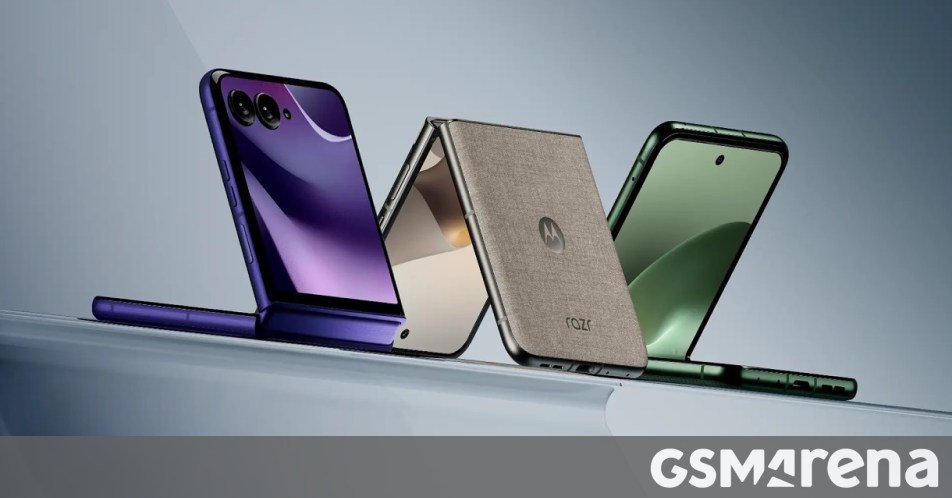
The Razr 70 Ultra (Razr Ultra 2026 in the US) represents the top tier of Motorola's flip phone lineup. While it features the same Snapdragon 8 Elite chipset as its predecessor, it does include an overclocked version with a CPU speed of 4.47GHz compared to the 4.32GHz in the previous model. However, this places the device a generation behind other flagship phones expected in 2026.
The display specifications remain largely unchanged, with the main display continuing to use a 7-inch 165Hz LTPO panel. Motorola has improved brightness slightly, with the new panel peaking at 5,000 nits (up from 4,500 nits). The 4-inch cover display maintains the same 165Hz LTPO refresh rate.
Battery capacity sees a modest increase, growing to 5,000mAh (+300mAh compared to the 2025 model). Charging capabilities remain consistent with the previous generation at 68W wired and 30W wireless, which Motorola highlights as being faster than Samsung's competing Z Flip series.
Camera specifications appear identical on paper, featuring a 50MP main sensor (1/1.56"), a 50MP ultra-wide, and a 50MP selfie camera. However, the main camera module now incorporates a LOFIC sensor, though the real-world impact of this improvement remains to be tested.
The Razr 70 Ultra carries a premium price tag of $1,500 in the US, representing a $200 increase from the launch price of the Ultra 2025. European pricing is set at £1,200 / €1,400, making it one of the more expensive flip phones on the market.
Razr 70+: The Middle Ground with Minimal Changes
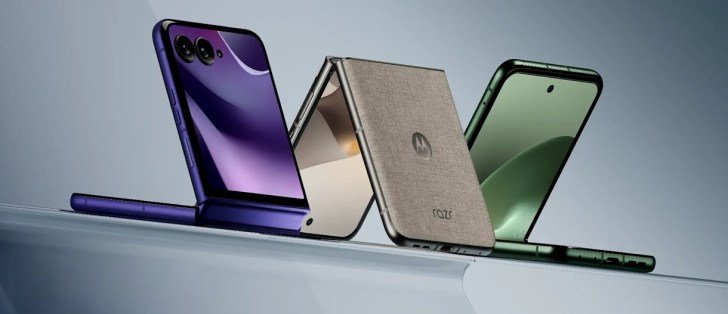
The Razr 70+ (Razr+ 2026 in the US) fills the middle position in the lineup but offers the least significant upgrades. It essentially carries forward the same hardware as the previous year's model with only minor adjustments.
The most notable improvement is the battery capacity, which has been increased to 4,500mAh (up from 4,000mAh). Charging capabilities remain unchanged at 45W wired and 15W wireless. The phone continues to use the Snapdragon 8s Gen 3 chipset.
Camera specifications remain largely the same, with the main camera still utilizing a 50MP sensor (1/1.95"). The secondary module has been switched to a 50MP ultra-wide camera, replacing the 2x/47mm telephoto lens found in the 2025 model.
The Razr 70+ is priced at $1,100 in the US, which is $100 more than the 2025 Plus model. European pricing stands at £1,000 / €1,150. Given the limited changes and the fact that most regions didn't receive the 2025 Plus model, the value proposition for this middle-tier device appears questionable.
Razr 70: The Base Model with One Notable Upgrade
The Razr 70 (Razr 2026 in the US) is the only model in the trio to introduce a new chipset, though the upgrade is modest. It uses the Dimensity 7450X, which is a mild refresh of the 7400X found in the 2025 model. Battery capacity sees a small increase to 4,800mAh (+300mAh), while charging capabilities remain the same at 30W wired and 15W wireless.
The most significant upgrade for this base model is the new 50MP ultra-wide camera sensor, replacing the 13MP sensor from the previous generation. While this represents a substantial improvement in camera quality for the entry-level model, it's still a relatively minor change compared to the competition.
Motorola has priced the Razr 70 at $800 in the US, which is $100 more than the 2025 model. European pricing is set at £800 / €870. While this makes it the most affordable option in the trio, it's still a significant price increase for a phone with minimal upgrades.
Market Context and Value Proposition
Motorola's Razr 70 series arrives at a time when the flip phone market is becoming increasingly competitive. Samsung continues to dominate with its Z Flip series, which generally offers more substantial annual updates. Additionally, Chinese manufacturers like Oppo and Xiaomi are introducing more aggressive pricing and innovative features in their foldable devices.
The incremental nature of the Razr 70 series updates, combined with significant price increases across all models, raises questions about Motorola's strategy in this segment. While the company maintains its focus on design and user experience, the hardware improvements fail to match the price hikes, potentially making these devices less attractive to value-conscious consumers.
Conclusion:
Motorola's Razr 70 series represents a conservative approach to updating its flip phone lineup. While each model offers minor improvements in areas like battery capacity and camera sensors, the changes fail to justify the significant price increases across the board. As consumers consider their options in the growing foldable phone market, they'll need to weigh whether Motorola's design language and software experience are worth the premium compared to more aggressively updated or competitively priced alternatives from other manufacturers.
The decision to purchase any of these Razr 70 models will likely come down to individual priorities: those deeply invested in the Motorola ecosystem may find the incremental updates worth the price, while more pragmatic buyers might look to last year's models or competing devices that offer better value for money.
Comments
Please log in or register to join the discussion