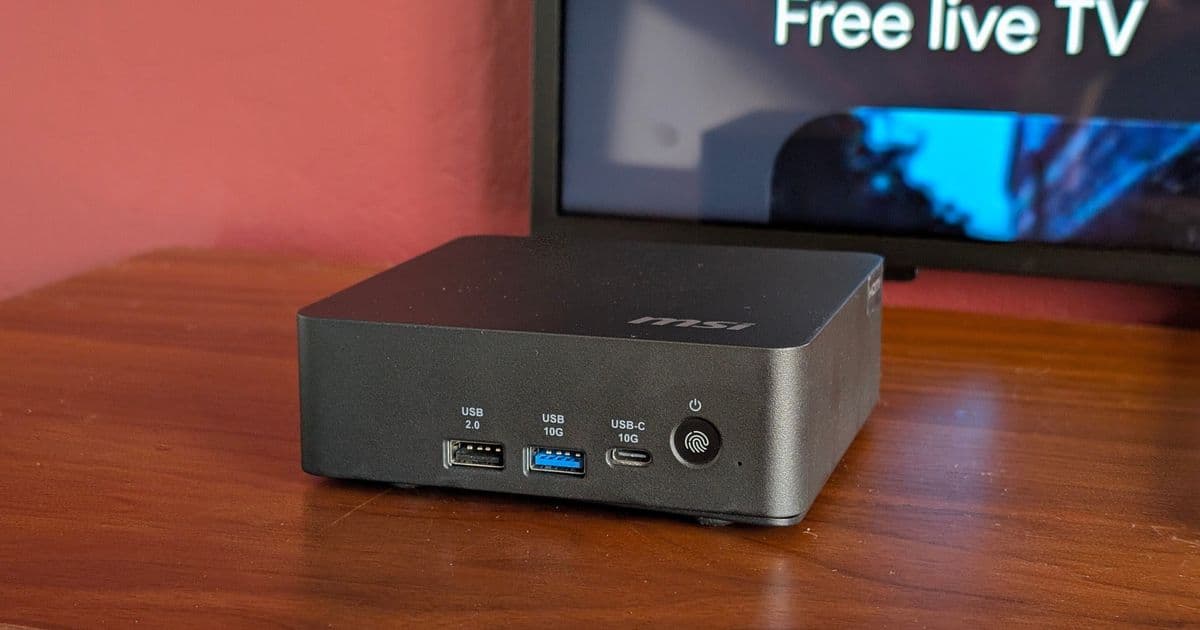
MSI's latest Cubi NUC AI+ 3MG delivers a significant performance upgrade with Intel's new Panther Lake CPU, but thermal constraints in the compact form factor prevent it from reaching the full potential of the hardware.
MSI Cubi AI+ 3MG Review: 60% Performance Boost with Thermal Trade-offs in Mini PC Form
MSI has unveiled its latest 2026 Cubi NUC AI+ 3MG, featuring Intel's new H-series Panther Lake processor that brings substantial performance improvements over the previous generation Lunar Lake CPU. While the mini PC delivers impressive gains, thermal limitations in the compact form factor prevent it from achieving the full potential of the Core Ultra 9 386H chip found in larger devices like gaming laptops.
What's New: Panther Lake Power in a Mini Package
The most significant upgrade in the 2026 Cubi NUC AI+ 3MG is the adoption of Intel's Core Ultra 9 386H H-series processor, replacing the Core Ultra 7 258V Lunar Lake CPU found in last year's model. This represents a generational leap in processing power, with the new CPU delivering over 60% better multi-threaded performance according to benchmark tests.
The Core Ultra 9 386H is the same processor found in high-performance gaming laptops like the Razer Blade 16, which allows for direct comparison between the same CPU in different form factors. The MSI Cubi maintains the signature mini PC design, making it suitable for space-constrained environments while offering desktop-level performance.
In terms of specifications, the new model supports up to 128 GB of removable RAM, a substantial increase that positions it as a viable option for memory-intensive applications. The system also features Intel's latest Graphics 4 Xe3 PTL integrated graphics, though as we'll see in testing, thermal constraints limit sustained performance.
How It Compares: Performance vs. Potential
Benchmark results reveal a clear performance hierarchy between devices equipped with the same Core Ultra 9 386H processor. The MSI Cubi AI+ 3MG delivers solid performance, but falls short of what the same CPU can achieve in larger form factors with better cooling solutions.
According to Cinebench R15 multi-core testing, the new Cubi NUC AI+ 3MG achieves an average score of 2,385, compared to just 1,475 for its predecessor (the Cubi NUC AI+ 2MG with Core Ultra 7 258V). This represents a 61.6% improvement in multi-threaded performance, a substantial gain that translates to better productivity and multitasking capabilities.
However, when compared to the Razer Blade 16 equipped with the same Core Ultra 9 386H processor, the MSI Cubi shows a notable performance deficit. The Razer Blade 16 achieves an average Cinebench R15 score of 2,941, outperforming the MSI Cubi by approximately 20-25%. This difference highlights the impact of thermal constraints in the mini PC form factor.
The performance gap becomes even more apparent during sustained workloads. The MSI Cubi can only maintain Turbo Boost clock speeds for approximately 20 seconds before thermal throttling kicks in, as evidenced by the initial spikes in Cinebench R15 xT scores and power consumption during Prime95 stress testing. In contrast, larger laptops with more robust cooling solutions can maintain higher clock speeds for longer periods.
Power consumption tells an interesting story. The MSI Cubi AI+ 3MG draws an average of 56.3 watts under Prime95 stress testing, compared to 49.7 watts for the previous model. This represents just an 8% increase in power consumption for a 61.6% performance improvement, resulting in superior performance-per-watt despite the thermal limitations.
When tested with GPU-intensive workloads like FurMark, the new Cubi draws an average of 51.1 watts, compared to 34 watts for the previous model. Gaming performance in Cyberpunk 2077 at FHD ultra settings (without FSR) averages 47.6 fps, a modest improvement over the 41.1 fps achieved by the previous model.
Who It's For: The Right Use Cases
The MSI Cubi AI+ 3MG targets users who need desktop-level performance in a compact form factor. Its strengths make it particularly suitable for:
Space-Constrained Environments: The mini PC design makes it ideal for users with limited desk space, such as home office workers, students, or media center setups.
Productivity Users: The 60% performance improvement over the previous model makes it well-suited for office productivity, content creation, and light development work.
Business Deployments: The compact size, quiet operation, and manageable power consumption make it suitable for office environments where space and noise are concerns.
Home Theater PCs: With its small footprint and capable integrated graphics, it can serve as a media center for 4K video playback and light gaming.
However, the thermal limitations make it less suitable for:
Heavy Workloads: Users requiring sustained high performance for tasks like video rendering, 3D modeling, or scientific computing may find the thermal throttling limiting.
Environments with Poor Ventilation: The mini PC's cooling system relies on adequate airflow, making it less suitable for enclosed spaces or areas with restricted ventilation.
Maximum Gaming Performance: While capable of handling light gaming, the thermal constraints prevent it from achieving the full gaming potential of the Core Ultra 9 386H.
The Verdict: Impressive but Constrained
The MSI Cubi AI+ 3MG represents a significant step forward for mini PCs, delivering a 60%+ performance improvement over its predecessor while maintaining the compact form factor that defines the product line. The Core Ultra 9 386H processor provides substantial processing power for a device of its size, and the improved performance-per-watt ratio is commendable.
However, the performance comparison with larger laptops equipped with the same CPU reveals the fundamental trade-off of the mini PC form factor: thermal constraints prevent the hardware from reaching its full potential. The 20-25% performance gap compared to devices with better cooling solutions is significant and should be a consideration for potential buyers.
For users prioritizing space savings over maximum performance, the MSI Cubi AI+ 3MG offers an excellent balance of capability and compactness. The ability to support up to 128 GB of RAM further extends its versatility for memory-intensive applications. While it could have been faster with better thermal management, the performance it delivers in its class is impressive and makes it a compelling option for its target audience.
For those who need the absolute best performance without size constraints, a larger laptop or desktop would be more appropriate. But for users who value the mini PC form factor, the 2026 Cubi NUC AI+ 3MG delivers substantial improvements that make it a worthy upgrade over previous generations.
Comments
Please log in or register to join the discussion