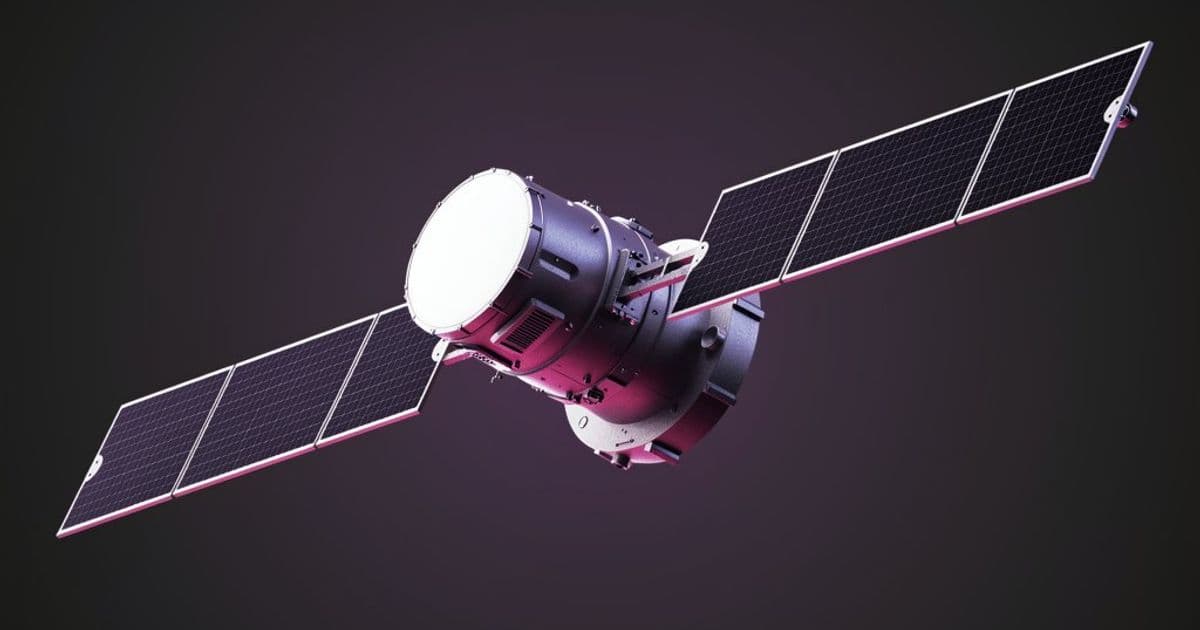
The Transiting Exoplanet Survey Satellite recovered from a low-power condition caused by a pointing error, highlighting the ongoing challenges of maintaining aging space assets and the critical role of ground control in mission recovery.
NASA's Transiting Exoplanet Survey Satellite (TESS) has resumed full science operations after a brief but concerning incident that left the planet-hunting spacecraft in safe mode. The recovery, announced on January 23, 2026, follows a week-long troubleshooting effort after the spacecraft entered a protective state on January 15 due to an unexpected power drain.
The problem began during a routine observation of comet 3I/ATLAS. TESS was slewed to point at its target, but its solar panels failed to rotate to maintain optimal orientation toward the Sun. This pointing error meant the spacecraft's solar arrays weren't gathering sufficient sunlight, leading to a slow discharge of its batteries. When the onboard systems detected the low-power condition, TESS automatically entered safe mode—a protective state where non-essential systems are shut down to preserve power and await instructions from ground controllers.
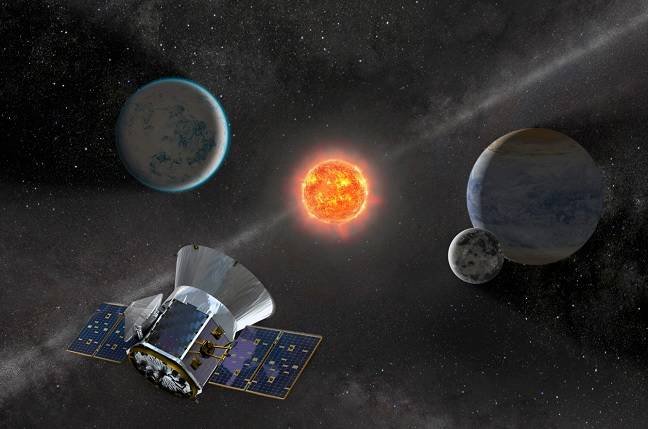
"The spacecraft entered safe mode after being slewed to point at a target," NASA explained in its update. "The spacecraft's solar panels did not rotate to remain pointed at the Sun, resulting in a slow discharge of TESS's batteries." Ground controllers successfully addressed the issue, and normal operations were restored by the end of last week.
A History of Resilience
This incident marks TESS's second notable safe mode event in nearly two years. In 2024, the spacecraft entered safe mode following a reaction wheel problem, demonstrating the mission's ability to recover from technical difficulties. Launched in April 2018 atop a SpaceX Falcon 9 rocket, TESS was originally designed for a two-year mission to search for exoplanets using the transit method—detecting planets as they pass in front of their parent stars.
The mission has far exceeded its initial timeline. TESS's orbit around Earth allows it to observe the entire sky over time, and current plans extend operations into the latter half of this decade, with the spacecraft expected to remain operational through at least 2028. This longevity is a testament to the robust engineering of the spacecraft and the diligent maintenance by NASA's Goddard Space Flight Center team.
The Broader Context of Space Asset Management
The TESS recovery comes at a time when NASA is managing multiple aging spacecraft and facing budget uncertainties. The incident highlights the critical role of ground control in maintaining space assets. Unlike the recent challenges with NASA's MAVEN orbiter at Mars, which has been unresponsive since early December 2025, TESS's issue was relatively straightforward to diagnose and resolve.
MAVEN's situation remains concerning. The Mars Atmosphere and Volatile EvolutioN (MAVEN) orbiter failed to make expected contact during a Mars orbit, with tracking data from December 6 showing the spacecraft "rotating in an unexpected manner." Its altered trajectory suggests it attempted to enter safe mode behind Mars or fired thrusters for another reason, but the operation failed. Communication attempts were suspended during the solar conjunction period when Earth and Mars are on opposite sides of the Sun, but were expected to resume after January 16. An update on MAVEN's status is expected soon.
Budget Uncertainties and Mission Longevity
The TESS recovery also occurs against a backdrop of potential budget cuts to NASA's science programs. Earlier proposals to significantly reduce NASA's science budget could have directly impacted TESS operations. Had those cuts been implemented, TESS operations "stood a good chance of being severely cut back or terminated altogether," according to the original reporting. While Congress ultimately provided a lifeline to NASA, the Mars sample return mission was left to "die in the dust," illustrating the difficult choices facing space agencies in constrained budget environments.
Technical Details and Recovery Process
The specific cause of TESS's pointing error remains under investigation. "It's unclear how TESS ended up in a position where its solar arrays weren't gathering sufficient sunlight," the report notes. NASA has been asked for more information about the root cause of the incident. The recovery process likely involved ground controllers sending commands to reboot systems, recalibrate the pointing mechanism, and verify that the solar panels were correctly oriented before resuming science operations.
TESS's mission architecture includes four reaction wheels for attitude control, which allow it to point precisely at specific stars for extended periods. The solar panels are designed to rotate independently to track the Sun as the spacecraft orbits Earth. The failure of this system during the comet observation suggests either a software glitch, a mechanical issue with the panel drive mechanism, or an error in the commanding sequence.
Impact on Scientific Operations
While in safe mode, TESS was unable to collect new science data. The week-long interruption means a small gap in the continuous monitoring of thousands of stars across the sky. However, given TESS's survey strategy—observing each sector of the sky for approximately 27 days before moving to the next—the impact on the overall mission timeline is minimal. The spacecraft's extended mission has already discovered thousands of exoplanet candidates, including many that are prime targets for follow-up observation by ground-based telescopes and the James Webb Space Telescope.
The Importance of Redundancy and Ground Support
This incident underscores the importance of redundancy in spacecraft design and the critical role of ground control teams. TESS's ability to enter safe mode automatically when power levels drop below a threshold prevented a potentially catastrophic battery discharge. The recovery also demonstrates the expertise of NASA's engineering teams, who can diagnose and resolve complex issues remotely.
For space agencies managing multiple missions simultaneously, incidents like this require careful prioritization of resources. The TESS recovery likely involved diverting attention from other ongoing projects, including the MAVEN troubleshooting effort at Mars. This balancing act is a constant challenge for mission operations centers.
Looking Ahead
With TESS back online, the mission can continue its primary goal of discovering exoplanets around bright, nearby stars. The spacecraft's extended mission through 2028 will provide a rich dataset for astronomers studying planetary formation, habitability, and the diversity of planetary systems. Each recovery from safe mode adds to our understanding of spacecraft reliability and informs the design of future missions.
The incident also serves as a reminder of the fragility of space assets. While TESS has proven resilient, each technical anomaly represents a risk to the mission's longevity. The ongoing challenge for NASA will be to maintain TESS and other aging spacecraft while planning for future missions that will build on their discoveries.
For now, planet hunters can breathe a sigh of relief. TESS is back in the hunt, scanning the skies for distant worlds, and the ground controllers who saved it have once again demonstrated their crucial role in space exploration.
Comments
Please log in or register to join the discussion