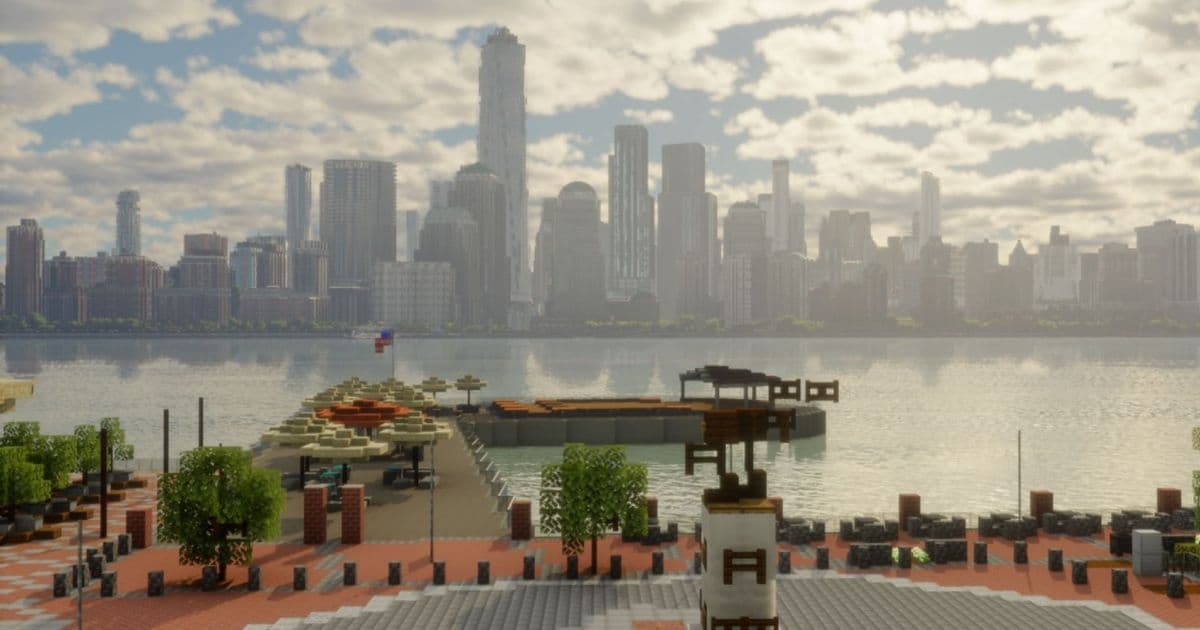
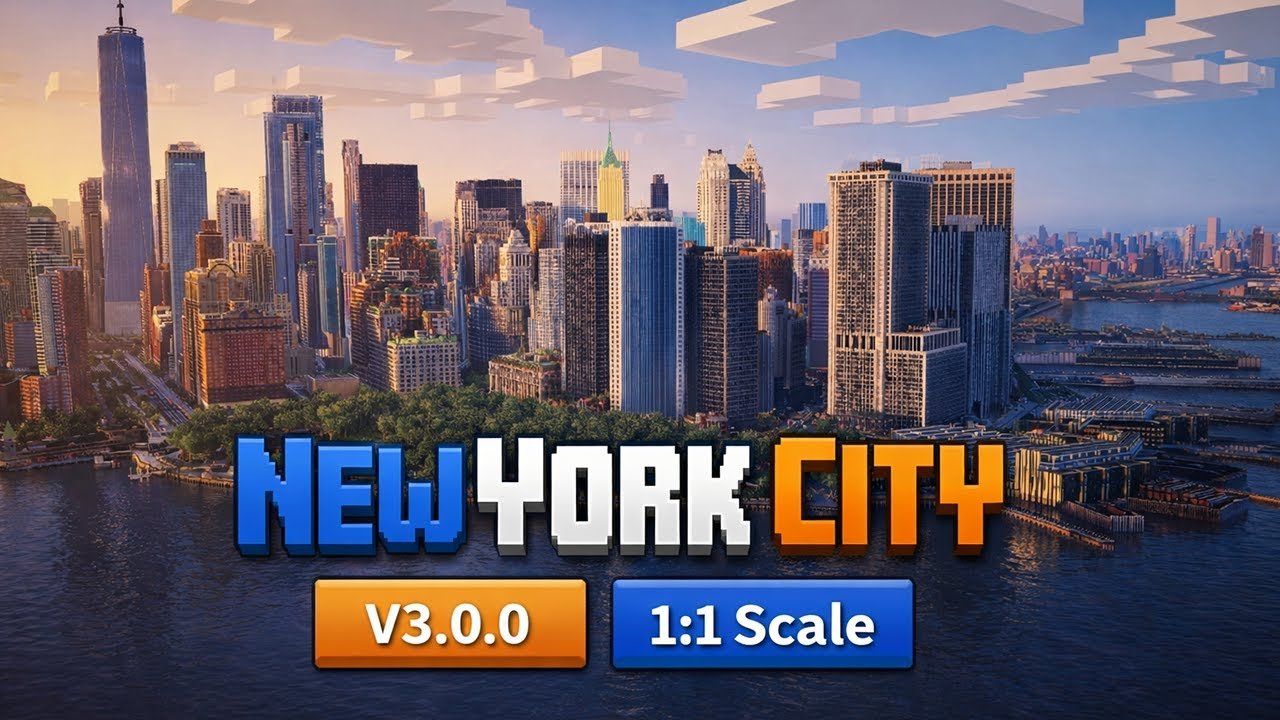
The Build The Earth project's New York City team has spent five years meticulously recreating Manhattan and surrounding boroughs at a 1:1 scale in Minecraft, constructing over 50,000 buildings with obsessive attention to real-world detail. This massive collaborative effort, involving thousands of volunteers, represents one of the largest digital reconstruction projects ever attempted in the game.
The Minecraft community has achieved a staggering feat of digital urban planning: a 1:1 scale recreation of New York City that has been under construction for five years, now containing over 50,000 buildings. This isn't a simplified approximation of the city's skyline, but a block-by-block reconstruction covering nearly 700 square kilometers (270 square miles) of real-world geography. The project, led by YouTuber and Build The Earth project lead MineFact, demonstrates what's possible when thousands of volunteers coordinate their efforts in a shared digital space.
The Scale of the Digital Manhattan
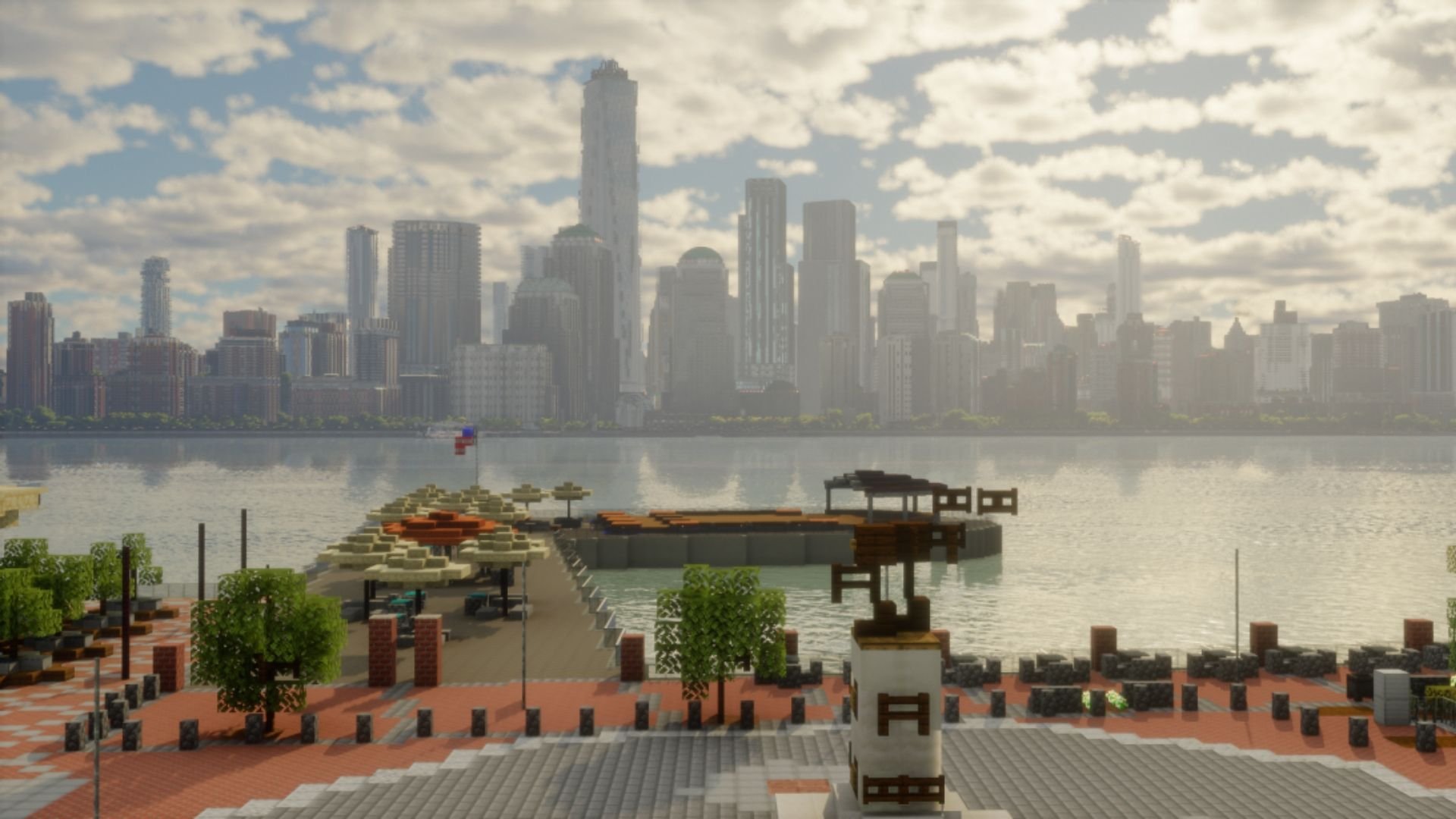
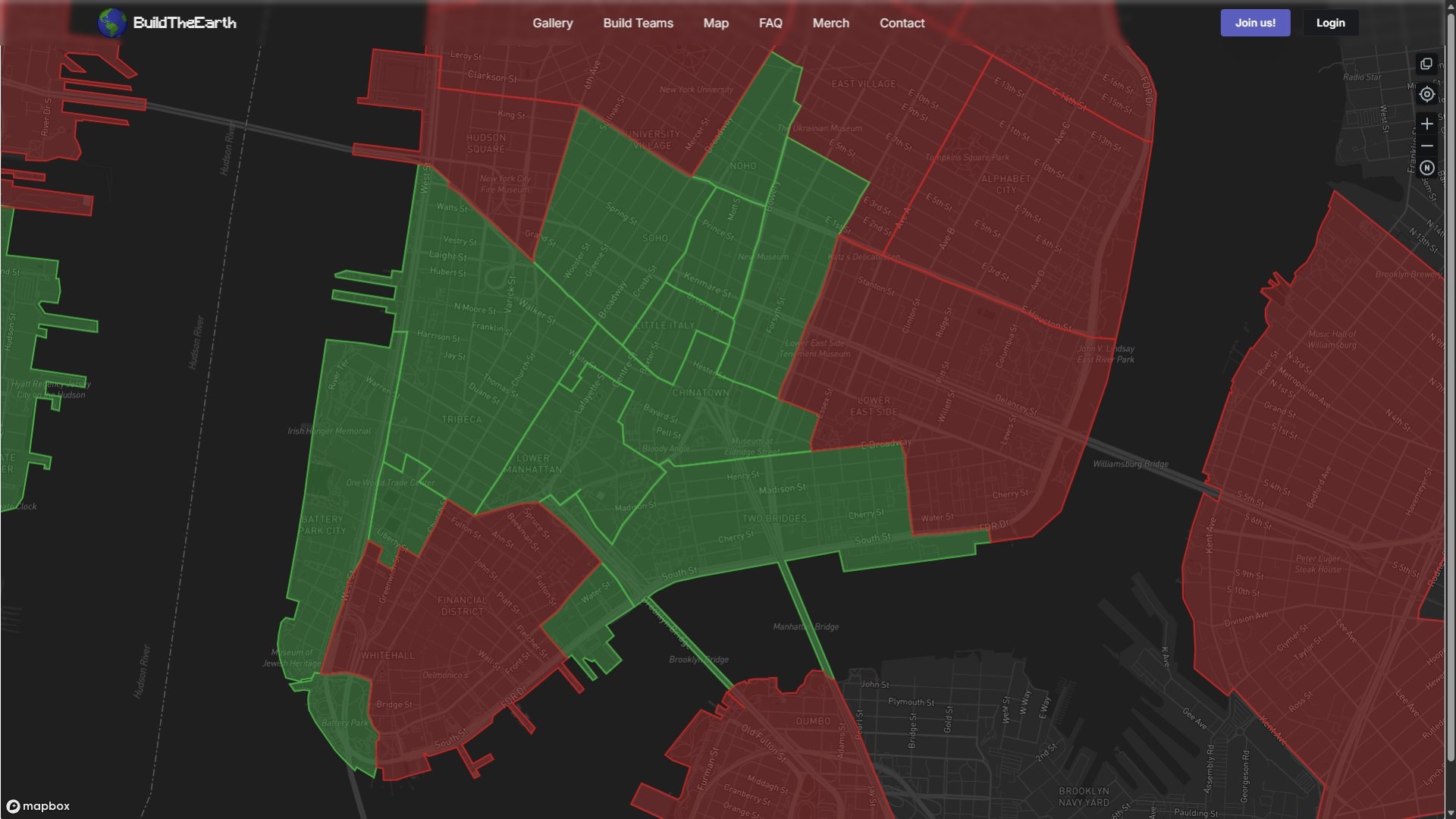
The BTE New York City project operates on a 1:1 scale, meaning every block in Minecraft represents one meter of real-world space. This translates to a map that's approximately 270 square miles in area. The team has completed most of Lower Manhattan, including Liberty Island with its Statue of Liberty, NoHo, SoHo, Nolita, Bowery, Little Italy, Chinatown, Two Bridges, and every district neighborhood south of Canal Street—except for the Financial District. Progress extends into the rest of Manhattan, with some development in Queens and a portion of Brooklyn, while The Bronx and Staten Island remain untouched.
The project began with a team of 50 to 80 players working simultaneously, but has grown to become the largest BTE team with over 3,719 members. This represents a massive coordination challenge: managing thousands of builders, ensuring architectural accuracy, and maintaining consistent quality across a map that spans hundreds of virtual miles.
Technical Implementation and Accuracy Standards
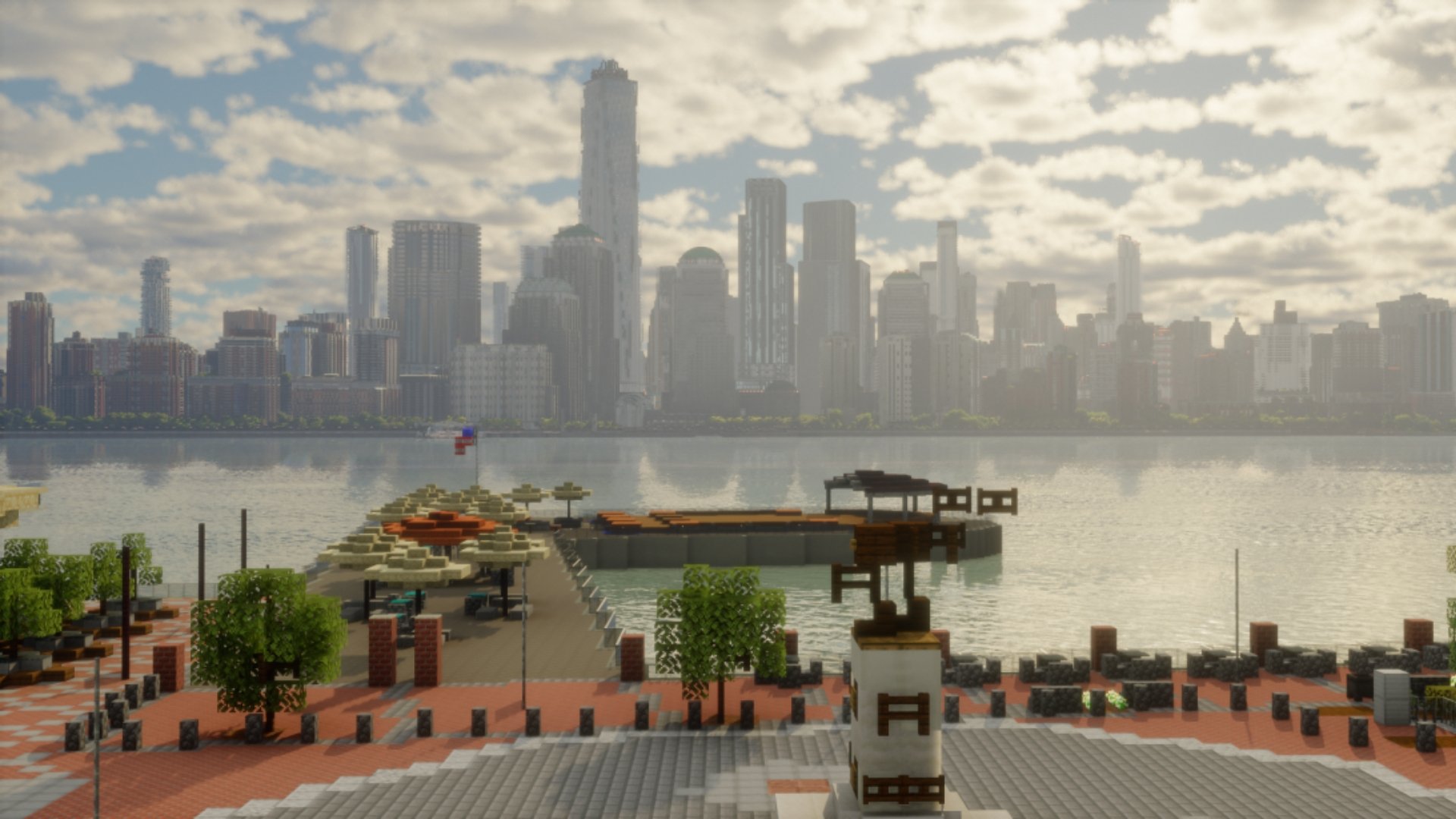
The Build The Earth project, started by YouTube creator PippenFTS, aims to recreate the entire planet on a 1:1 scale in Minecraft. The New York City team is one of 45 such teams worldwide, ranging from small groups to thousands of members. What sets this project apart is its commitment to architectural accuracy. The team has rebuilt several sections multiple times to ensure their Minecraft version matches real-world structures precisely.
"Over the years, we realized how much details matter," MineFact explained in a video showcasing the progress. "Like when a random guy from New York City logs in and finds his flowerpot on his balcony exactly where it is in real life, that’s when you know it’s perfect. Their reactions are always priceless."
This level of detail requires sophisticated planning. Builders use real-world blueprints, satellite imagery, and street-view references to recreate structures. The team has established guidelines for different building types, from skyscrapers to brownstones, ensuring consistency across the map. For the Statue of Liberty alone, this meant capturing not just the overall shape, but the intricate details of the torch, crown, and pedestal.
The Collaborative Framework
The project operates through a structured volunteer system. Unlike many Minecraft builds that are created by individuals or small groups, BTE NYC requires coordination across thousands of participants. The team uses a Discord server (BTE NYC Discord) as its central hub for communication, planning, and recruitment. New volunteers receive guidance and basic building templates, lowering the barrier to entry for those unfamiliar with Minecraft's building mechanics.
The Build The Earth NYC website provides additional resources, including tutorials, reference materials, and progress tracking. This infrastructure is crucial for maintaining quality control across a project that could take decades to complete. Each district has designated leaders who oversee construction, review submissions, and ensure adherence to the project's accuracy standards.

The Broader Context of Digital Reconstruction
This project exists within a larger movement of using Minecraft as a platform for large-scale digital reconstruction. The game's block-based building system, while limited compared to professional 3D modeling software, offers advantages: it's accessible to millions of players, supports massive multiplayer collaboration, and creates a consistent visual language. The 1:1 scale requirement means that distances and proportions remain true to reality, allowing for educational applications and historical preservation.
The BTE project has already recreated other landmarks, including the Roman Colosseum, the Great Wall of China, and entire cities like Paris and Tokyo. Each project faces similar challenges: sourcing accurate reference data, managing volunteer labor, and maintaining momentum over years of work. The New York City project is particularly ambitious due to the city's density and architectural diversity.
Current Status and Future Plans
Despite five years of work and 50,000 buildings, the team acknowledges they're "just scratching the surface." Lower Manhattan represents only a fraction of the total area that needs to be built. The Financial District, with its dense concentration of skyscrapers, presents a particular challenge. Each tower requires hundreds of hours of work, and the team must balance speed with accuracy.
The project's long-term timeline reflects the reality of volunteer-driven efforts. Unlike commercial projects with fixed deadlines and paid staff, BTE NYC progresses based on volunteer availability and enthusiasm. The team continues to recruit, emphasizing that no prior Minecraft experience is necessary. This inclusive approach has been key to sustaining the project over five years.
Technical and Community Impact
Beyond its impressive scale, the project demonstrates Minecraft's potential as a collaborative platform for large-scale creative work. The technical challenges include managing server performance for thousands of concurrent builders, distributing work across different time zones, and maintaining version control for a map that's constantly changing. The team has developed custom tools and plugins to streamline the building process and ensure data integrity.
For the broader Minecraft community, BTE NYC serves as both inspiration and blueprint. It shows how the game's simple building mechanics can be leveraged for complex, realistic reconstructions. For educators, it offers a tangible example of collaborative project management and spatial reasoning. For New Yorkers, it provides a unique way to explore their city's geography and architecture.
The project also highlights the evolving relationship between digital and physical spaces. As virtual reconstructions become more detailed and accurate, they serve as archives of cultural heritage and tools for urban planning. While BTE NYC is primarily a creative endeavor, its methodology could inform real-world applications in disaster recovery, historical preservation, or urban development.
How to Participate
Those interested in contributing to the BTE NYC project can join through multiple channels. The primary entry point is the BTE NYC Discord server, where new volunteers receive orientation and are assigned to specific districts or building types. The project's website offers tutorials on Minecraft building techniques, reference materials for New York City architecture, and progress maps showing completed areas.
No specialized skills are required to contribute. The team provides basic building templates for common structures, and experienced builders offer guidance to newcomers. Volunteers can choose to work on specific buildings, entire blocks, or even entire neighborhoods depending on their interest and availability. The project also needs organizers, planners, and people with architectural knowledge to help maintain quality standards.
As the project enters its sixth year, the team remains focused on the long-term vision: a complete, accurate digital twin of New York City that preserves its architectural heritage in an accessible, interactive format. With 50,000 buildings already completed, they've demonstrated that even the most ambitious digital reconstructions are achievable through coordinated, passionate collaboration.
The Build The Earth project continues to expand, with teams working on cities worldwide. Each new project builds on the lessons learned from previous efforts, refining the techniques and tools that make large-scale Minecraft reconstruction possible. For now, New York City stands as the most ambitious example of what's possible when thousands of volunteers unite behind a shared digital vision.
Comments
Please log in or register to join the discussion