Nvidia CEO Jensen Huang has officially confirmed that China hasn't yet approved H200 imports, with no new orders placed while Beijing decides on the matter.
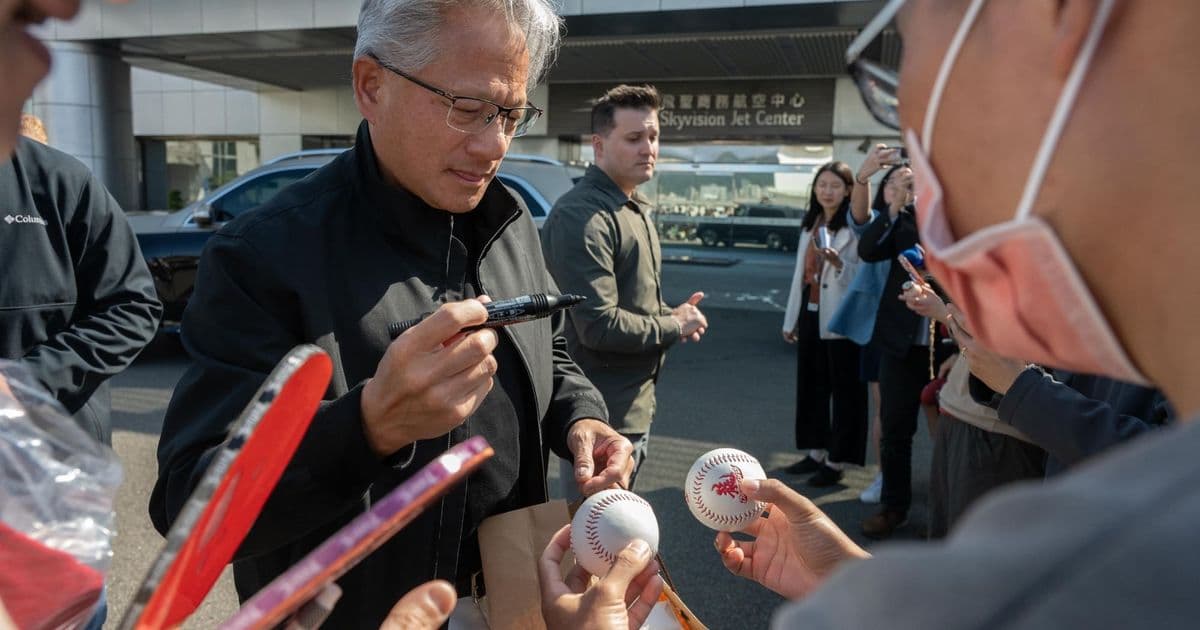
Nvidia CEO Jensen Huang has provided the first official update on the company's H200 chip situation in China, confirming that Beijing hasn't yet decided whether to allow imports of the advanced AI accelerator into the country. Speaking to the press during a visit to Taiwan on Thursday, Huang revealed that the company has received no new orders for the H200 while China's stance remains unclear.
"I'm hoping that the Chinese government would allow Nvidia to sell the H200," Huang reportedly said. "It's up to the Chinese government now but they are still deciding, and we are waiting patiently."
The H200 represents Nvidia's latest high-performance AI chip, designed to compete in the rapidly expanding artificial intelligence market. The chip's potential approval for sale in China has been a subject of intense speculation, with conflicting reports emerging about Beijing's position.
Regulatory Uncertainty Creates Business Challenges
Huang confirmed that he had met with both customers and government officials during a recent trip to China, but emphasized that "no new orders for the H200 chips were placed." This lack of orders reflects the broader uncertainty surrounding the regulatory environment for advanced AI chips in China.
The situation has created a complex business environment for Nvidia. While Chinese officials had reportedly told firms like Alibaba that they could prepare to order the chips, suggesting an imminent decision to allow at least some imports, other reports indicated that Beijing has limited H200 purchases and instructed customs officers to block imports.
Market Impact and Black Market Activity
Despite the regulatory uncertainty, Huang remained optimistic about the H200's potential in the Chinese market, describing the chip as "very good" and noting customer demand. This demand has reportedly led some Chinese companies to consider acquiring H200 chips through unofficial channels due to the holdups in official approvals.
The regulatory limbo surrounding the H200 comes at a critical time for Nvidia's business in China. The company's market share in the country is predicted to fall drastically from 66% to just 8% as China prioritizes homegrown silicon solutions and Nvidia faces restrictions on shipping its most advanced chips to the nation.
Strategic Importance of H200 Approval
While Nvidia isn't facing immediate financial distress, H200 imports to China would provide significant benefits beyond immediate revenue. The approval would help maintain Nvidia's relevance in the Chinese market, particularly regarding its CUDA software ecosystem, as China explores alternative solutions.
The situation highlights the broader challenges facing Western technology companies operating in China, where geopolitical tensions and national security concerns increasingly influence technology trade. For Nvidia, the H200 represents not just a product but a strategic foothold in one of the world's largest AI markets.
As the regulatory decision continues to be pending, Nvidia finds itself in a holding pattern, unable to fulfill potential orders or plan future business strategies with certainty. The outcome will have significant implications not only for Nvidia's business but also for the broader AI chip market in China and the global technology supply chain.
The H200 saga underscores the complex interplay between technology, business, and geopolitics in today's global market, where even the world's leading semiconductor companies must navigate uncertain regulatory waters in key markets like China.
Comments
Please log in or register to join the discussion