
Blackview's Tabwee T50 tablet has been caught with significant memory discrepancies, advertising 24GB RAM and 128GB storage while actually containing only 4GB RAM and 64GB storage, following similar cases of component fraud in the industry.
Following recent revelations about Chuwi falsely advertising AMD processors in their notebooks, another case of component deception has come to light. The Japanese tech blog Garumax has uncovered that Blackview's Tabwee T50 tablet, priced at $125.99 on Amazon, contains significantly less memory than advertised, raising serious questions about manufacturer transparency in the budget tablet market.
The Tabwee T50's marketing immediately presents red flags, with Blackview advertising 24GB of RAM while the technical specifications clarify this as 6GB physical RAM plus 18GB of "virtual" RAM—essentially using flash memory as swap space. However, even this clarification appears to be misleading, as Garumax's testing revealed the tablet actually contains only 4GB of physical RAM.
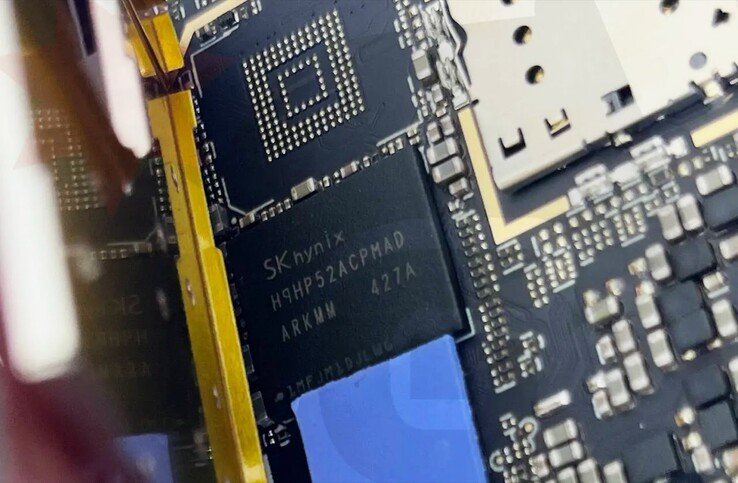
When examining the system settings, the Tabwee T50 displays 6GB of RAM as advertised, but hardware monitoring tool HWInfo shows only 4GB of actual RAM. To confirm these findings weren't a software error, Garumax conducted a physical teardown of the tablet, discovering a single 4GB SK Hynix H9PH52ACPMAD RAM chip rather than the expected 6GB configuration.
The deception extends beyond RAM to the tablet's storage capacity. Blackview advertises 128GB of internal storage, but users found only 64GB was actually available. When Garumax inquired about this discrepancy, the manufacturer promised a software update to address the issue. While the subsequent update now shows 128GB in system settings, the actual usable storage remains at 64GB, as confirmed by the teardown revealing a 64GB SK Hynix chip that houses both RAM and NAND flash memory.

This case follows similar component fraud in the industry, including our recent reporting on Chuwi notebooks being equipped with AMD Ryzen 5 5500U processors while advertising Ryzen 5 7430U chips. Such practices mislead consumers and create an uneven playing field where manufacturers compete on paper specifications rather than actual performance and value.
For potential buyers, the Tabwee T50 represents a cautionary tale about budget tablets. While the $125.99 price point seems attractive, the actual hardware falls significantly short of advertised capabilities. The 4GB of RAM is adequate for basic tasks but far from the 6GB or 24GB claimed, and the 64GB storage is substantially less than the marketed 128GB. These limitations impact real-world performance, particularly when multitasking or storing media files.
The software update that merely changes displayed values without addressing the underlying hardware shortage is particularly concerning. This suggests intentional deception rather than an honest mistake, as the manufacturer chose to create the illusion of correcting the problem rather than actually fixing it.
Consumers should approach budget tablets with skepticism toward inflated specifications and consider independent reviews that verify actual hardware components. For the Tabwee T50 specifically, those interested should be aware they're getting a tablet with 4GB RAM and 64GB storage, despite marketing materials suggesting otherwise.
This case also highlights the need for stronger consumer protection in the tech industry, particularly for budget devices where specifications are often difficult to verify without specialized tools or teardowns. As component costs continue to rise, the temptation to misrepresent specifications may increase, making transparency more important than ever.
For more information on the Tabwee T50 specifications and verification, you can refer to Garumax's original report and the product listing on Amazon. Those interested in independent hardware verification tools might also consider exploring HWInfo, which helped uncover the RAM discrepancy in this case.
The broader tech industry would benefit from standardized verification processes and clearer labeling of virtual versus physical memory, helping consumers make more informed purchasing decisions based on actual hardware capabilities rather than marketing claims.
Comments
Please log in or register to join the discussion