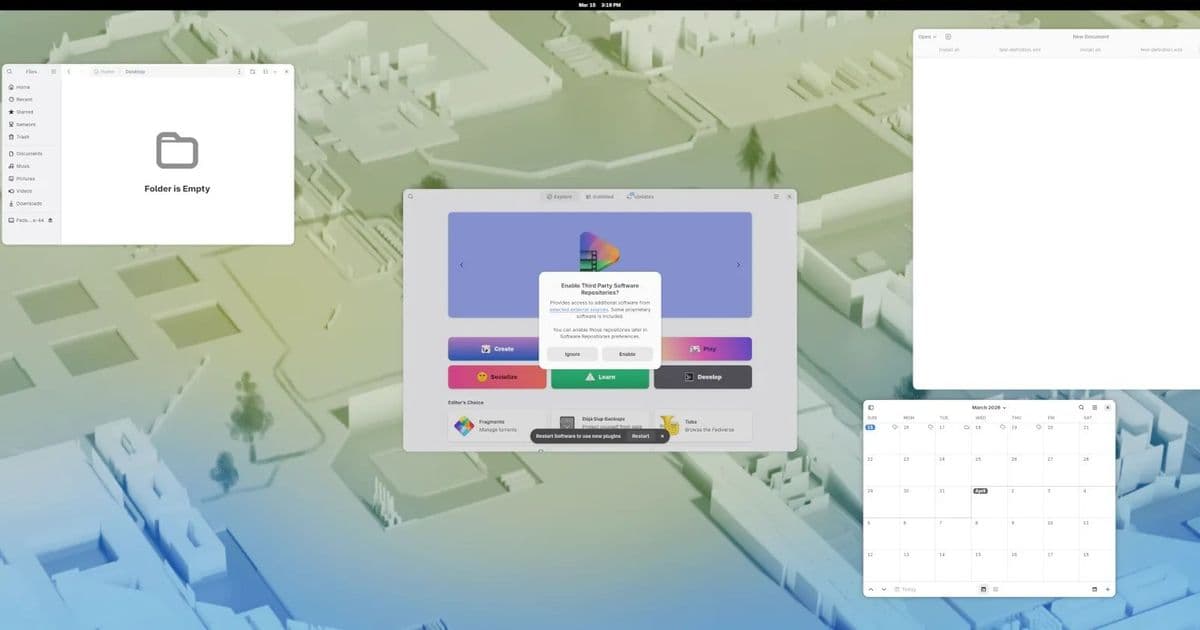
Fedora 44 Beta shows mixed performance results on AMD Ryzen AI Max+ 395 hardware, with compiler changes and kernel updates creating interesting trade-offs compared to Fedora 43.
Fedora Workstation 44 Beta has arrived with its first round of performance benchmarks on the powerful AMD Ryzen AI Max+ 395 "Strix Halo" Framework Desktop, revealing a nuanced picture of what users can expect from this upcoming release.
Testing Methodology and Hardware Platform
The testing was conducted on a Framework Desktop powered by the AMD Ryzen AI Max+ 395 processor, providing a consistent hardware platform across all benchmark runs. The methodology involved clean installations of Fedora Workstation 43 (both stock and with all stable updates as of the past weekend) and Fedora Workstation 44 Beta, ensuring that software differences were the only variables between test runs.
This approach eliminates potential contamination from system cruft or configuration drift that can plague upgrade testing, giving us a clear view of how the base operating system versions compare.
Kernel Parity Reduces Performance Leaps
One notable aspect of this Fedora release cycle is the kernel situation. Unlike Ubuntu and many other distributions that maintain the same kernel version throughout their lifecycle, Fedora continues rolling out new stable kernel releases. This means Fedora 43 has already advanced to the v6.19 kernel base, matching Fedora 44 Beta.
This kernel parity diminishes some of the performance benefits typically associated with upgrading to newer Fedora releases. In previous cycles, jumping to a newer kernel often provided significant performance improvements, but that advantage is largely absent in this comparison.
GCC 16 Compiler Shift
The most significant compiler change in Fedora 44 is the transition from GCC 15 to GCC 16. Fedora continues its tradition of shipping cutting-edge compilers in H1 releases, typically beating other major Linux distributions to new compiler versions. It's worth noting that GCC 16.1 hasn't seen its official stable release yet, so Fedora 44 Beta is shipping with a pre-release compiler.
This compiler shift could have substantial implications for application performance, particularly for CPU-intensive workloads and software compiled from source. The newer compiler may offer better optimization for modern AMD processors, but pre-release compilers can also introduce unexpected regressions.
Performance Findings
While the full benchmark results span multiple pages and cover various workloads, the initial findings suggest that Fedora 44 Beta shows mixed performance characteristics compared to Fedora 43. In some instances, users may observe lower performance than the current stable release, though the overall stability and polish of the Beta release remain commendable.
The performance changes discovered when moving from Fedora 43 to Fedora 44 Beta appear to be nuanced rather than uniformly positive or negative. This is typical for major distribution updates where different workloads can be affected differently by compiler changes, library updates, and other system modifications.
What This Means for Users
For users considering upgrading to Fedora 44, the benchmark results suggest a measured approach. While the Beta release is stable and polished, the performance characteristics differ from Fedora 43 in ways that may impact specific workloads. Users heavily reliant on CPU performance for particular applications should monitor the final release benchmarks before upgrading.
However, Fedora 44 Beta represents the future direction of the distribution, with newer compilers and updated system components that will eventually become the standard. Early adopters and developers may want to engage with the Beta to help identify and resolve any remaining issues before the final release.
The Framework Desktop with AMD Ryzen AI Max+ 395 continues to prove itself as an excellent platform for Linux development and testing, showcasing how modern hardware can push the boundaries of what's possible with open-source operating systems.
Comments
Please log in or register to join the discussion