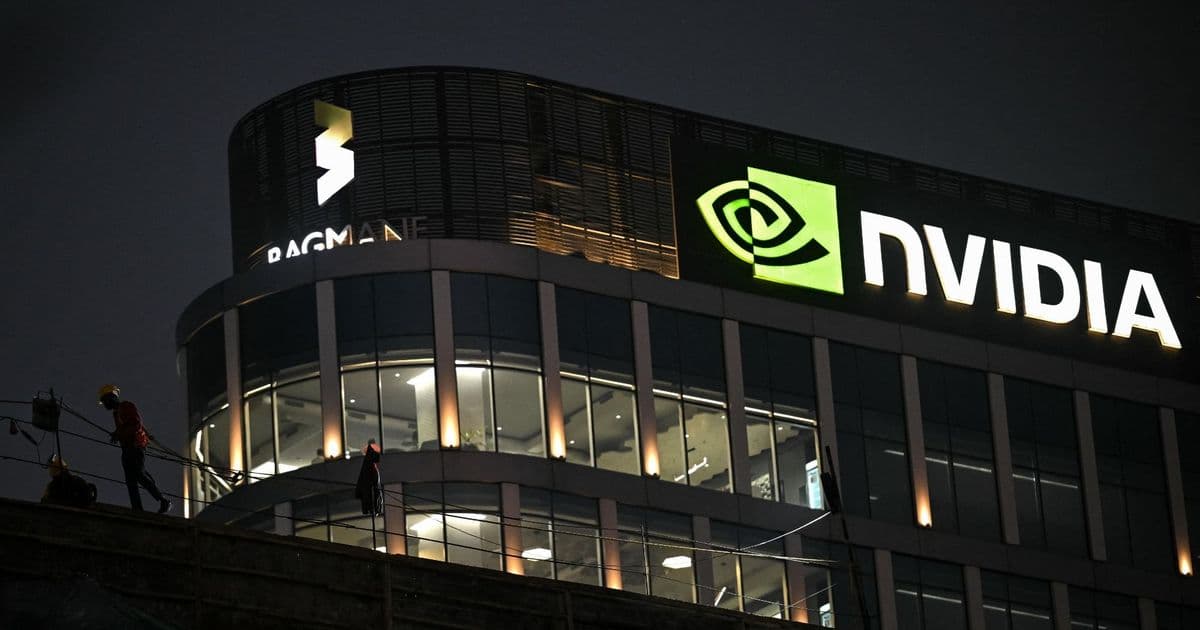
Export restrictions and rapid advancement of Chinese AI accelerators are set to drastically reduce Nvidia's dominance in China's AI processor market, with analysts forecasting a drop from 66% to just 8% as domestic suppliers like Huawei and Moore Threads capture 80% of local demand.
Nvidia's commanding position in China's AI accelerator market is facing an unprecedented contraction. According to analysis from Bernstein cited by Chinese media, the company's market share is projected to plummet from 66% in 2024 to approximately 8% in the coming years. This dramatic shift is driven by a combination of U.S. export restrictions, aggressive development of domestic alternatives, and substantial improvements in China's hardware and software ecosystems.
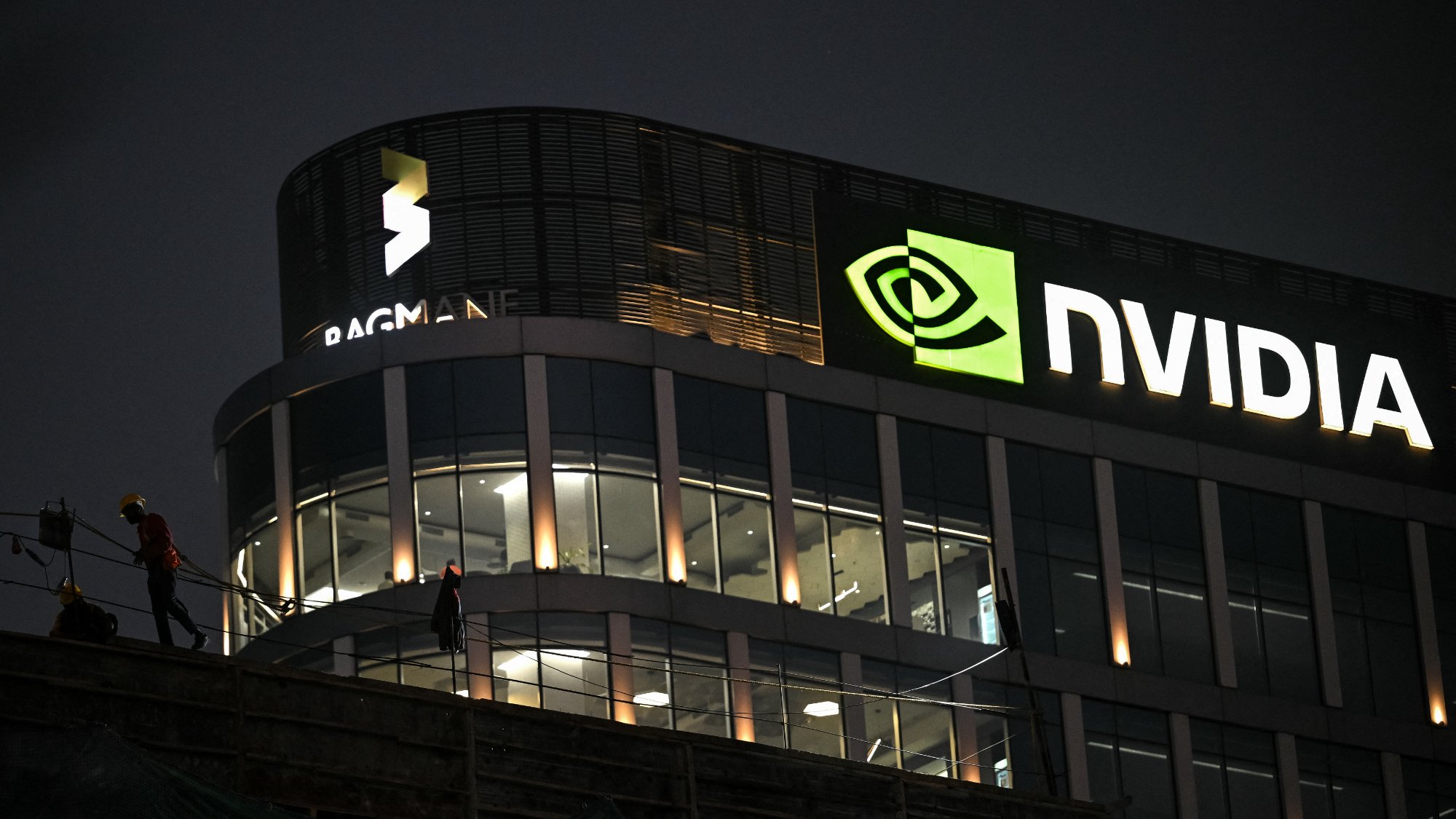
The catalyst for this transition began with U.S. export controls targeting Nvidia's most advanced AI processors. While the company was permitted to export its previous-generation Hopper H100 and H200 accelerators to China, these products come with significant performance limitations compared to the Blackwell B200 and B300 GPUs that are now barred from the Chinese market. This created a strategic opening for domestic competitors to fill the gap with locally developed solutions.
The Rise of Domestic AI Accelerators
Chinese hardware vendors have made remarkable progress in developing competitive AI accelerators. Moore Threads, one of China's "four little dragons" of GPU development, recently announced its Huashan product, a GPU dedicated solely for AI workloads. According to Zhang Jianzhong, CEO of Moore Threads, "The new products meet the needs of domestic developers. There will be no more need to wait for advanced products from overseas."
The Huashan GPU is positioned to compete against Nvidia's Hopper H100 and H200 products, though it remains considerably slower than the Blackwell B200 and B300 GPUs. However, the performance gap is narrowing, and Chinese developers are prioritizing ecosystem integration over raw performance metrics.
Huawei's AI CloudMatrix 384 system demonstrates this progress clearly. While it consumes four times more power than comparable Nvidia systems, it can surpass both the GB200 NVL72 and GB300 NVL72 systems in BF16 FLOPS—a popular format for AI training. This trade-off between performance and power efficiency reflects the current state of Chinese AI hardware development.
Next-Generation Performance Targets
Looking ahead, Huawei's Atlas 950 SuperCluster represents a significant leap in ambition. Based on 524,288 Ascend 950DT AI accelerators, the system is projected to deliver up to 524 FP8 ExaFLOPS for AI training and 1 FP4 ZettaFLOPS for inference by 2026-2027, with a target of 4 ZettaFLOPS by 2028. While this still trails Oracle's OCI Supercluster with 131,072 B200 GPUs offering 2.4 FP4 ZettaFLOPS for inference, the trajectory shows Chinese developers are rapidly closing the performance gap.

The Software Challenge
The primary obstacle to complete domestic adoption isn't hardware performance alone, but the transition from Nvidia's CUDA ecosystem to Chinese alternatives. Most existing AI deployments rely on Nvidia hardware and the CUDA software stack, making porting to Chinese hardware both technically difficult and expensive. This software moat represents Nvidia's most durable competitive advantage, even as hardware specifications converge.
Chinese companies are investing heavily in software stack development. Cambricon, Biren Technology, and Suiyuan Technology (Enflame) are all building comprehensive software ecosystems to support their hardware. Hyperscalers are also developing custom silicon programs—Baidu's Kunlunxin unit plans five AI processors by 2030, while Alibaba continues its silicon efforts despite previous setbacks.
Manufacturing Constraints and National Strategy
China's AI hardware ambitions face a fundamental constraint: manufacturing capacity. Semiconductor Manufacturing International Corporation (SMIC) currently produces chips on 7nm-class process technologies, but scale remains limited. If SMIC cannot substantially increase output in the coming years, China's AI sector risks falling dramatically behind global competitors or will be forced to seek alternative sources for high-performance GPUs.
This challenge is framed within China's broader national strategy for semiconductor self-reliance. A draft five-year plan circulated by the Communist Party in October calls for a "new national system" directing state bodies, private companies, and financial institutions toward domestic chip development. The "four little dragons" of Chinese GPUs—Moore Threads, MetaX, Biren Technology, and Suiyuan Technology—are at the heart of this effort.
Market Implications
The projected 8% market share for Nvidia in China represents more than a numerical shift—it signals a fundamental restructuring of the AI hardware supply chain. Domestic suppliers are positioned to capture approximately 80% of local demand, creating a largely self-contained ecosystem for AI development within China.
This transition has implications beyond China's borders. As Chinese AI hardware matures, it may create parallel development paths for AI models and applications, potentially reducing global reliance on Nvidia's ecosystem. The performance trade-offs currently accepted by Chinese developers—higher power consumption for competitive compute—may influence hardware design priorities globally.
The Bernstein analysis suggests this market transformation will accelerate in 2025, with domestic suppliers rapidly scaling production to meet demand. While Nvidia's technology remains superior in raw performance, the combination of export restrictions and improving domestic alternatives creates a sustainable market for Chinese AI accelerators.
For Nvidia, this represents a significant revenue challenge. China has historically been a major market for the company's AI accelerators, and losing 58 percentage points of market share will impact financial performance. However, the company retains leadership in global markets and continues to innovate with its Blackwell architecture and future GPU designs.
The broader semiconductor industry should watch this transition closely. If China successfully develops a complete domestic AI hardware and software stack, it could reshape global supply chains, create new competitive dynamics, and potentially accelerate innovation through increased competition. The next few years will determine whether this transition proceeds smoothly or encounters significant technical and manufacturing hurdles that could delay China's AI ambitions.
Comments
Please log in or register to join the discussion