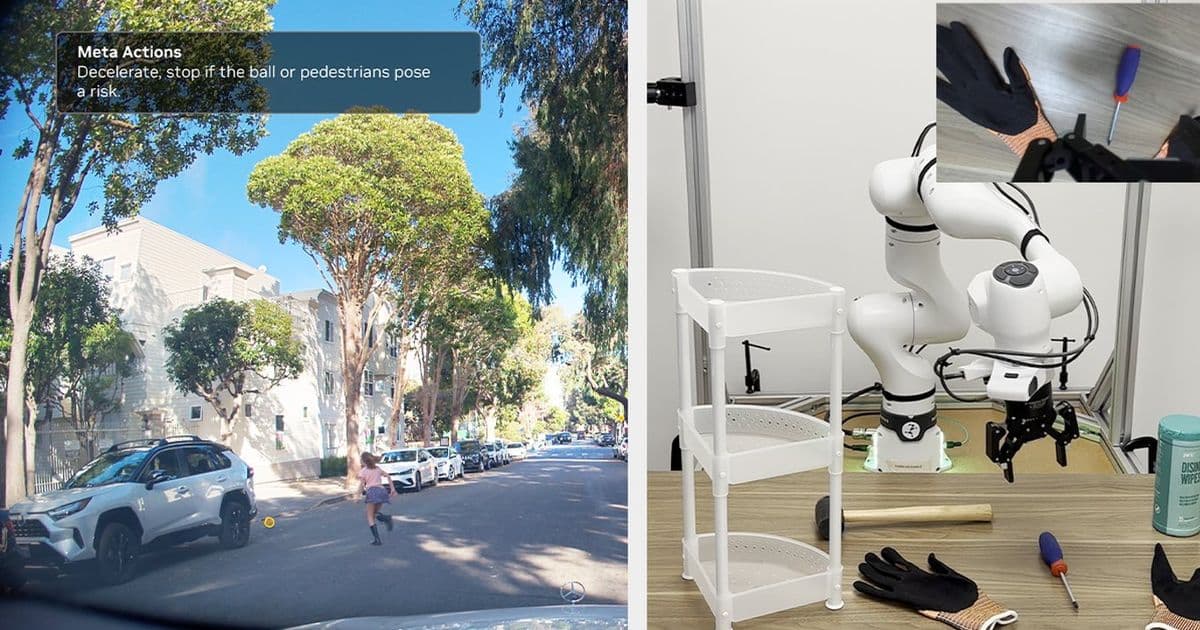
Nvidia unveiled Cosmos 3, a large‑scale, multimodal world model that can generate realistic simulations for robots and self‑driving cars, promising faster development cycles and lower data‑collection costs.
Nvidia announced the next iteration of its Cosmos series, Cosmos 3, a foundation model that learns a unified representation of three‑dimensional space, language and visual perception. The company positions the model as a shared “open AI world” that can be queried by robots, autonomous‑vehicle stacks and simulation platforms to generate high‑fidelity predictions of how a scene will evolve.
Business news
- Launch details: Cosmos 3 is built on Nvidia’s DGX‑H100 infrastructure and is offered through the Nvidia AI Enterprise suite. Early access partners include Boston Dynamics, Waymo and several European automotive OEMs.
- Pricing: Nvidia will license the model on a usage‑based model, charging $0.12 per thousand inference tokens for robotics workloads and $0.09 per thousand tokens for vehicle simulations. A perpetual enterprise license starts at $2 million per year, with volume discounts for cloud‑scale users.
- Funding: The rollout coincides with a $2 billion expansion of Nvidia’s AI compute capacity, funded partly by a $500 million bond issuance that matures in 2032.
Market context
The robotics and autonomous‑vehicle markets have struggled with data scarcity. According to a recent ABI Research report, the global autonomous‑driving simulation market is projected to reach $7.4 billion by 2029, growing at a compound annual growth rate (CAGR) of 38%. Simultaneously, the industrial‑robot market is expected to hit $84 billion in 2028, driven by demand for flexible automation in logistics and manufacturing.
Traditional simulation pipelines rely on handcrafted physics engines and manually curated scene libraries, which can take weeks to build and often fail to capture edge‑case scenarios. Cosmos 3 addresses this gap by ingesting billions of real‑world sensor streams—LiDAR point clouds, camera frames and vehicle telemetry—to learn a probabilistic model of how environments change over time.
What it means
- Accelerated development cycles – Companies can query Cosmos 3 to generate synthetic sensor data for rare events (e.g., a pedestrian darting into traffic at night). Early tests show a 30‑40% reduction in the time required to validate perception stacks, according to internal benchmarks shared by Waymo.
- Cost savings on data collection – Field testing autonomous fleets can cost upwards of $150 million per year for a mid‑size operator. By supplementing real‑world drives with AI‑generated scenarios, firms can trim that spend by an estimated 15‑20%.
- Cross‑domain reuse – Because the model is multimodal, a robotics team can reuse the same world representation that a vehicle team employs, simplifying the software stack and reducing duplication of effort.
- Competitive pressure on rivals – Companies such as OpenAI, DeepMind and Meta are also exploring foundation models for embodied AI. Nvidia’s hardware advantage—particularly the H100 GPU’s tensor cores—gives it a performance edge, potentially setting a new benchmark for real‑time inference in edge devices.
- Regulatory implications – Regulators are increasingly demanding evidence that autonomous systems have been tested against a broad set of scenarios. Synthetic data generated by Cosmos 3 could become part of compliance dossiers, provided the model’s outputs are auditable.
Strategic outlook
Nvidia’s move reinforces its strategy of turning AI hardware into a platform business. By bundling a high‑value model with its DGX and Nvidia AI Enterprise offerings, the company creates sticky revenue streams that extend beyond the traditional GPU sales cycle. If adoption follows the projected growth rates of the simulation market, Cosmos 3 could generate $350 million in recurring revenue by 2028.
The success of the model will hinge on two factors: the fidelity of its generated data and the openness of its API. Nvidia has pledged to publish a public benchmark suite by Q4 2024, allowing developers to compare synthetic outputs against real‑world datasets. Transparent metrics will be crucial for gaining trust among safety‑critical users.
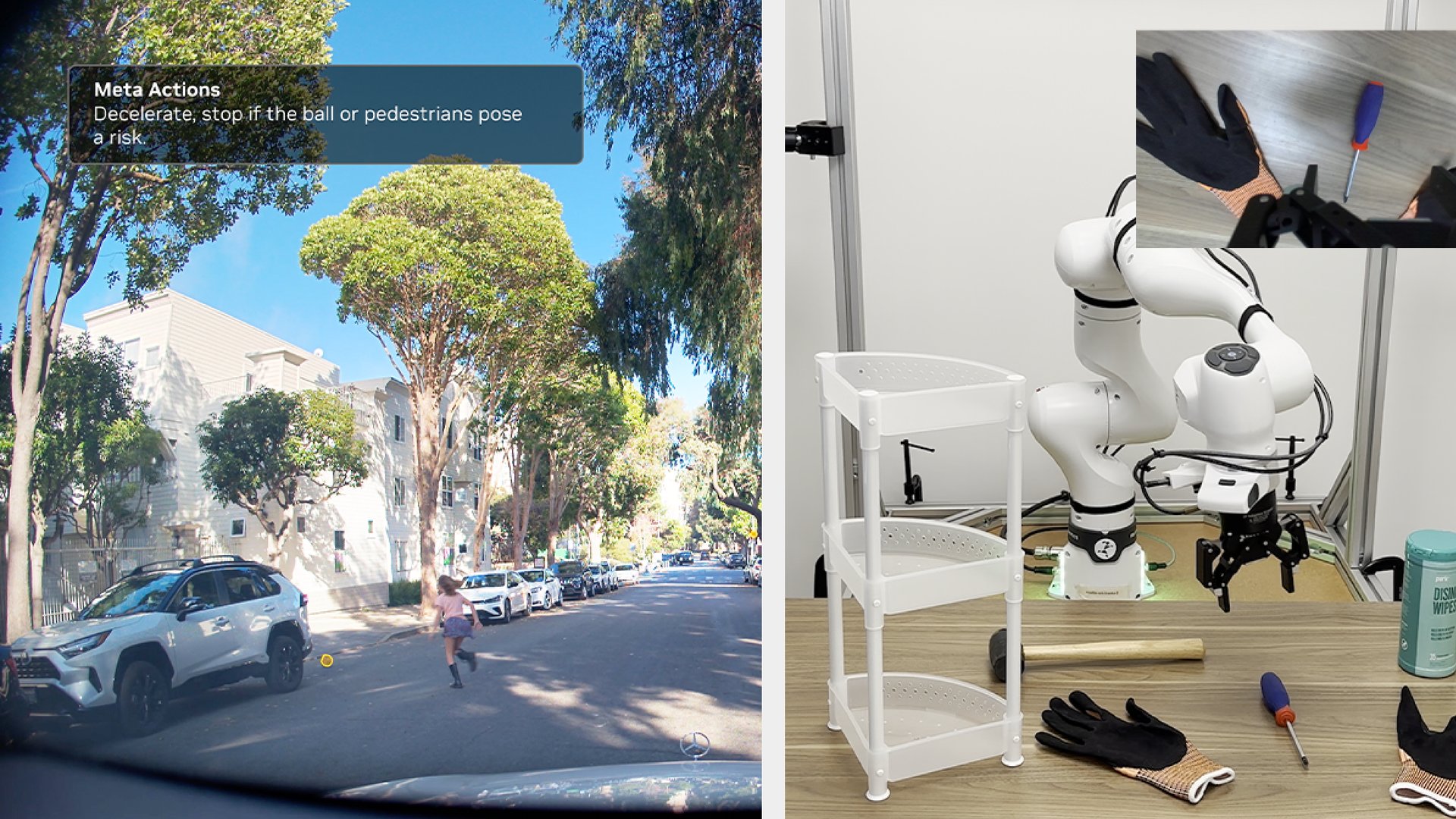
Cosmos 3 visualizes a simulated urban street, overlaying predicted vehicle trajectories and pedestrian movements.
In summary, Nvidia’s Cosmos 3 world model could reshape how robots and autonomous vehicles are trained, tested and certified. By offering a scalable, multimodal simulation engine, Nvidia not only strengthens its AI ecosystem but also sets a new standard for data‑centric development in the embodied‑AI sector.
Comments
Please log in or register to join the discussion