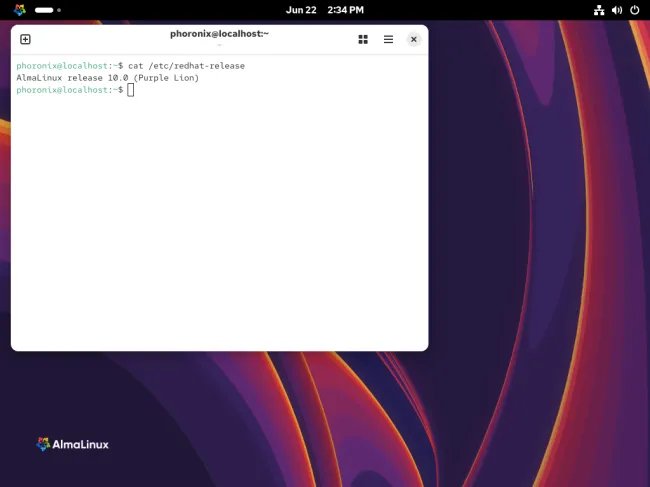
NVIDIA has expanded official support to include RHEL-compatible distributions like AlmaLinux with CUDA 13.2, enabling direct package distribution from OS repositories and eliminating version mismatches for enterprise users.
In a significant development for enterprise Linux users, NVIDIA has officially added support for Red Hat Enterprise Linux compatible distributions with the release of CUDA 13.2. This change means distributions like AlmaLinux, Rocky Linux, and CentOS Stream will now receive first-class support for NVIDIA's GPU computing platform, with packages distributed directly through the OS repositories rather than requiring separate installation.
What Changed and Why It Matters
Previously, users of RHEL-compatible distributions faced a common frustration: when NVIDIA released new drivers, there would be a delay before these updates appeared in third-party repositories. This often resulted in version mismatches between the kernel and NVIDIA drivers, potentially causing instability or requiring manual intervention.
As explained by AlmaLinux in their announcement: "Right now, when NVIDIA releases a new driver, there is a very slight delay in our release of the updates, which can result in brief version mismatches for users of NVIDIA hardware and AlmaLinux. Shipping the open source drivers along with the userspace and CUDA components ourselves means that all the packages are updated in tandem. There won't be any delay between the release of the two package sets, ensuring the versions are always in sync."
This partnership between NVIDIA and distributions like AlmaLinux represents a maturation of the Linux ecosystem, particularly for enterprise deployments where stability and predictability are paramount. For homelab builders and small businesses running RHEL-compatible distributions, this means easier maintenance and fewer compatibility headaches.
Technical Implications
The technical implementation of this support has several important implications:
Unified Package Management: Users can now install and update NVIDIA drivers and CUDA components through their distribution's standard package management tools (dnf/yum).
Version Synchronization: The kernel modules, userspace drivers, and CUDA libraries will all be updated together, eliminating the common issue of having a newer kernel with older drivers or vice versa.
Official Support Channels: Enterprise users will now have access to NVIDIA's official support channels when using these distributions, which wasn't previously guaranteed.
CUDA 13.2 Features and Improvements
Beyond the expanded distribution support, CUDA 13.2 introduces several noteworthy technical improvements:
- Spin-Wait Dispatch Mode: A new host task dispatch mode designed to reduce execution latency for certain workloads
- New PTX Features: Parallel Thread Execution (PTX) enhancements for improved GPU programming capabilities
- Updated Host Compiler Support: Better integration with newer host compiler versions
- Improved C++20 Standards Conformance: Enhanced compatibility with modern C++ standards in the NVCC compiler
For homelab builders focused on machine learning or GPU-accelerated computing, these improvements translate to better performance and more robust development environments.
Build Recommendations
For users planning to build systems with RHEL-compatible distributions and NVIDIA hardware:
Enterprise/Homelab Server Builds
- Distribution Choice: Consider AlmaLinux or Rocky Linux for their enterprise stability and now first-class NVIDIA support
- Driver Management: You can now rely on distribution repositories for driver updates, but monitor the CUDA version closely for your specific workloads
- Compatibility Matrix: Always verify the CUDA version compatibility with your specific NVIDIA GPU architecture
Development Workstations
- Toolchain Alignment: With improved C++20 support, CUDA 13.2 is particularly attractive for modern C++ development
- Performance Tuning: Experiment with the new spin-wait dispatch mode for latency-sensitive applications
- Container Considerations: If using containers, ensure your CUDA toolkit version matches the runtime requirements
For more information on the technical details of this support expansion, you can refer to the AlmaLinux blog post and the official CUDA 13.2 release notes.
This development represents NVIDIA's recognition of the growing importance of RHEL-compatible distributions in enterprise and homelab environments, and it should significantly improve the user experience for those running GPU-accelerated workloads on these platforms.
Comments
Please log in or register to join the discussion