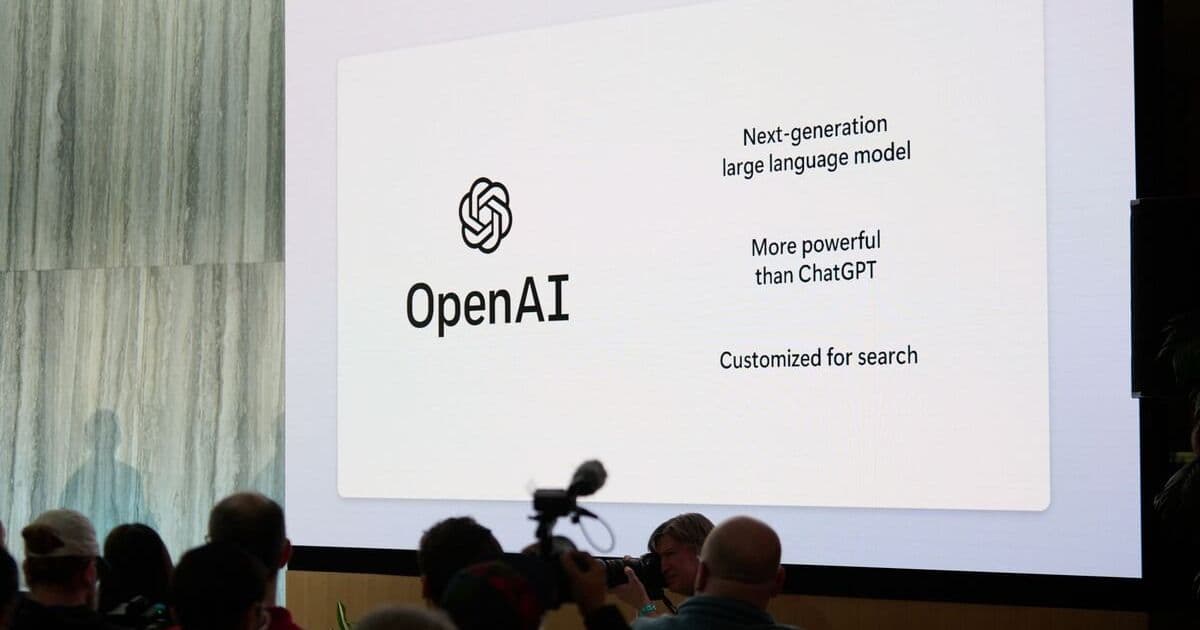
OpenAI is forecasting explosive revenue growth to $280B by 2030 while planning massive infrastructure investments, as the AI company navigates both technical challenges and regulatory scrutiny.
OpenAI is projecting its revenue will exceed $280 billion by 2030, according to sources familiar with the matter, marking an ambitious growth trajectory for the AI company that currently generates over $20 billion in annualized revenue. This forecast comes as OpenAI simultaneously tells investors it's targeting roughly $600 billion in total compute spending by the same year, months after CEO Sam Altman touted $1.4 trillion in infrastructure commitments.
Revenue Projections Signal Massive Market Opportunity
The revenue projection represents a staggering increase from OpenAI's current financial performance. Just last month, the company announced its annualized revenue had grown to more than $20 billion in 2025, demonstrating the explosive growth potential of AI technologies. The $280 billion target for 2030 suggests OpenAI expects to capture a significant portion of the enterprise and consumer AI market over the next five years.
This growth projection comes as OpenAI faces increasing competition from rivals like Anthropic, Google DeepMind, and emerging open-source alternatives. The company's ability to maintain its market position while scaling operations to meet projected demand will be crucial to achieving these ambitious financial targets.
Massive Infrastructure Investments Required
OpenAI's $600 billion compute spending target underscores the enormous capital requirements for scaling AI systems. The figure represents total infrastructure investment rather than annual spending, but still highlights the massive capital expenditures required to support projected growth.
The infrastructure commitment follows Altman's previous statements about $1.4 trillion in infrastructure investments, suggesting OpenAI is recalibrating its expectations while still planning for substantial expansion. This spending will likely cover data center construction, specialized AI chip procurement, and the development of proprietary hardware solutions.
Technical Challenges and Safety Concerns
OpenAI's rapid growth and ambitious infrastructure plans come amid ongoing technical challenges and safety concerns. The company has faced scrutiny over its AI safety practices, with reports indicating that staff raised concerns about a Canadian mass shooting suspect months before the incident occurred. OpenAI stated that the suspect's activity didn't meet the threshold for reporting to police.
Additionally, Microsoft's AI safety team has proposed technical standards for detecting AI-generated content, but Microsoft's Chief Security Officer declined to commit to implementing these standards across all platforms. This highlights the broader industry challenge of balancing innovation with safety considerations.
Competitive Landscape and Market Dynamics
The AI market is becoming increasingly competitive, with companies like Anthropic launching new security features such as Claude Code Security, which scans codebases for vulnerabilities and suggests targeted patches. This has led to declines in cybersecurity stocks as investors reassess the market landscape.
OpenAI is also expanding its device ecosystem, with reports indicating the company has more than 200 people working on AI-powered devices including a smart speaker with camera costing $200 to $300, possibly smart glasses and a smart lamp. This diversification strategy could help OpenAI capture additional revenue streams beyond its core AI services.
Regulatory Scrutiny Intensifies
OpenAI faces growing regulatory pressure as it scales its operations. West Virginia's Attorney General has sued Apple for allegedly violating consumer protection law by not implementing tools like PhotoDNA to detect CSAM stored on iCloud, highlighting the broader regulatory environment that AI companies must navigate.
Two former Google engineers and one of their husbands have been indicted by a US grand jury for allegedly stealing trade secrets relating to the Tensor chip for Pixel phones, demonstrating the intense competition and legal risks in the AI hardware space that OpenAI must consider as it plans its infrastructure investments.
Market Response and Investor Sentiment
Despite the ambitious projections, OpenAI must deliver on its promises to maintain investor confidence. The company's ability to execute on its infrastructure plans while maintaining product quality and safety standards will be critical to achieving its revenue targets.
The AI industry as a whole is seeing significant investment, with companies like Google considering investments in external partners to expand the potential market for its TPU chips. This suggests a broader industry trend toward massive infrastructure investments to support AI growth.
Conclusion: Execution Will Determine Success
OpenAI's $280 billion revenue projection for 2030 represents an extraordinary growth opportunity, but the company faces significant challenges in execution. The $600 billion infrastructure commitment underscores the massive capital requirements, while technical, safety, and regulatory hurdles present ongoing challenges.
The next five years will be critical for OpenAI as it attempts to scale from $20 billion in annualized revenue to over $280 billion while managing the technical and operational complexities of such rapid growth. The company's success will depend not just on its technology, but on its ability to execute on infrastructure plans, maintain safety standards, and navigate an increasingly complex regulatory landscape.
As the AI industry continues to evolve, OpenAI's projections provide a glimpse into the potential scale of the market, even as questions remain about the company's ability to achieve such ambitious targets in a competitive and rapidly changing technological landscape.
Comments
Please log in or register to join the discussion