
Sam Altman is reportedly courting Middle Eastern sovereign wealth funds for a massive new investment round that would value OpenAI at nearly a trillion dollars, even as the company's enterprise business faces questions and its ad rollout begins.
Sam Altman has been meeting with top investors in the Middle East to secure at least $50 billion in new funding for OpenAI, according to Bloomberg sources. The round would value the company between $750 billion and $830 billion, a staggering figure that would make OpenAI one of the most valuable private companies in history.
This fundraising push comes as OpenAI's revenue run rate reportedly hit $9 billion at the end of 2025, up from $4 billion in July. The company is simultaneously beginning to offer its chatbot advertising platform to dozens of advertisers, initially charging based on ad views rather than clicks, with commitments under $1 million.
The Valuation Question
A $750 billion to $830 billion valuation represents a massive leap from OpenAI's previous round. At these levels, investors are betting on future growth that far exceeds current revenue. For context, Microsoft—the company's largest investor and partner—has a market capitalization of roughly $3 trillion. OpenAI's valuation would approach 30% of Microsoft's size despite having a fraction of the revenue and a much narrower product portfolio.
The Middle Eastern investor pool is significant. Sovereign wealth funds from the UAE, Saudi Arabia, and Qatar have been increasingly active in AI investments. The Abu Dhabi Investment Authority and Mubadala Investment Company have both made substantial tech investments, while Saudi Arabia's Public Investment Fund has been building its AI portfolio through companies like Humain.
Enterprise Push and Internal Reorganization
Coinciding with the fundraising news, OpenAI is restructuring its enterprise business. Barret Zoph, the Thinking Machines Lab cofounder who rejoined OpenAI last week, will lead the company's enterprise push. Zoph's return has been controversial—Thinking Machines Lab claims it fired him only after learning he was leaving, and at no time did the company cite performance or unethical conduct.
The enterprise focus makes strategic sense. While consumer ChatGPT usage grows, enterprise contracts provide more predictable revenue and higher margins. OpenAI's enterprise offerings include ChatGPT Enterprise, API access, and custom model development. However, the enterprise market is increasingly competitive, with Microsoft's Copilot, Google's Vertex AI, and Anthropic's Claude for Enterprise all vying for corporate budgets.
Advertising Rollout Begins
OpenAI has started offering chatbot ads to dozens of advertisers, according to sources familiar with the matter. The company is charging based on ad views rather than clicks, a model that could be more predictable for advertisers but may face challenges in demonstrating direct ROI.
The initial commitments are under $1 million, suggesting OpenAI is testing the waters carefully. The ad experience will likely be integrated into ChatGPT responses, similar to how Google displays sponsored results in search. However, the challenge for OpenAI is maintaining user trust while introducing commercial elements into what many users perceive as an objective AI assistant.
Competitive Landscape
OpenAI's fundraising push occurs as competitors also seek massive funding. Anthropic is reportedly raising at a $350 billion valuation, with revenue run rate hitting $9 billion at the end of 2025. The company has attracted investors including Iconiq, Lightspeed, and Menlo Ventures.
Meanwhile, Elon Musk is reportedly pushing for a SpaceX IPO by July, viewing it as a way to help xAI catch its rivals. SpaceX has resisted going public for years, but the prospect of a public offering could provide capital for xAI's competitive efforts.
Infrastructure and Energy Costs
OpenAI has stated it will pay for the costs of developing energy-related infrastructure used by its Stargate data centers so they don't raise consumers' utility bills. This commitment addresses growing concerns about AI's energy consumption and its impact on local power grids.
The Stargate project, a partnership with Microsoft, involves building massive data centers specifically for AI workloads. These facilities require enormous amounts of electricity, water for cooling, and specialized infrastructure. By committing to cover these costs, OpenAI is attempting to preempt regulatory and public backlash over AI's environmental impact.
Market Context and Skepticism
The reported fundraising numbers raise questions about sustainability. Jensen Huang recently noted that "the AI bubble comes about because the investments are large," calling for higher investments to spread the technology across economies. While AI is bringing economic benefits, the scale of investment required to build and operate these systems is unprecedented.
OpenAI's path to profitability remains unclear. The company reportedly lost billions in 2024, and while revenue is growing, so are costs. Training frontier models requires hundreds of millions of dollars in compute, and inference costs for serving millions of users are substantial. Advertising could help, but the user experience must be carefully managed to avoid alienating the user base.
What This Means for the Industry
If OpenAI successfully raises at these valuations, it will set a new benchmark for AI company valuations and likely trigger a wave of fundraising activity. However, it also raises the stakes significantly. Investors at these levels will expect not just growth but clear paths to profitability and market dominance.
The Middle Eastern investor angle is particularly noteworthy. These funds have different return expectations and time horizons than traditional venture capital, potentially giving OpenAI more flexibility. However, they also bring geopolitical considerations and different governance expectations.
For enterprise customers, the fundraising success could mean more investment in product development and support. However, it could also mean pricing pressure as OpenAI seeks to demonstrate revenue growth to justify the valuation.
The advertising rollout will be watched closely by the industry. If successful, it could provide a template for other AI companies. If it fails or alienates users, it could set back AI advertising efforts industry-wide.
Limitations and Unknowns
Several factors could derail this fundraising effort:
- Regulatory scrutiny: Antitrust regulators in the US and EU are increasingly focused on AI company concentration and data practices.
- Technical progress: If competing models from Google, Anthropic, or open-source projects catch up to GPT-4's capabilities, OpenAI's differentiation could erode.
- Execution risk: Scaling enterprise sales, managing advertising integration, and maintaining model quality while growing rapidly are significant challenges.
- Market conditions: A broader market downturn or AI-specific concerns could dampen investor appetite.
The reported $50 billion raise would be unprecedented in private company fundraising. For context, the largest VC rounds in history include ByteDance's $4 billion round in 2018 and SpaceX's $1.7 billion round in 2020. A $50 billion round would be an order of magnitude larger.
Looking Ahead
OpenAI's success in this fundraising round will likely determine the company's trajectory for the next several years. With this capital, it could:
- Build out its own data center infrastructure rather than relying entirely on Microsoft
- Acquire companies to accelerate product development
- Invest heavily in research to maintain its technical lead
- Expand globally with local data centers and compliance
However, the pressure to deliver returns at a $750 billion+ valuation will be immense. Every product decision, research direction, and business model choice will be scrutinized through the lens of justifying that valuation.
The Middle Eastern investor meetings are ongoing, and the final terms of the round remain uncertain. But one thing is clear: the AI funding landscape has reached a scale that few could have predicted just a few years ago, and OpenAI is at the center of it.
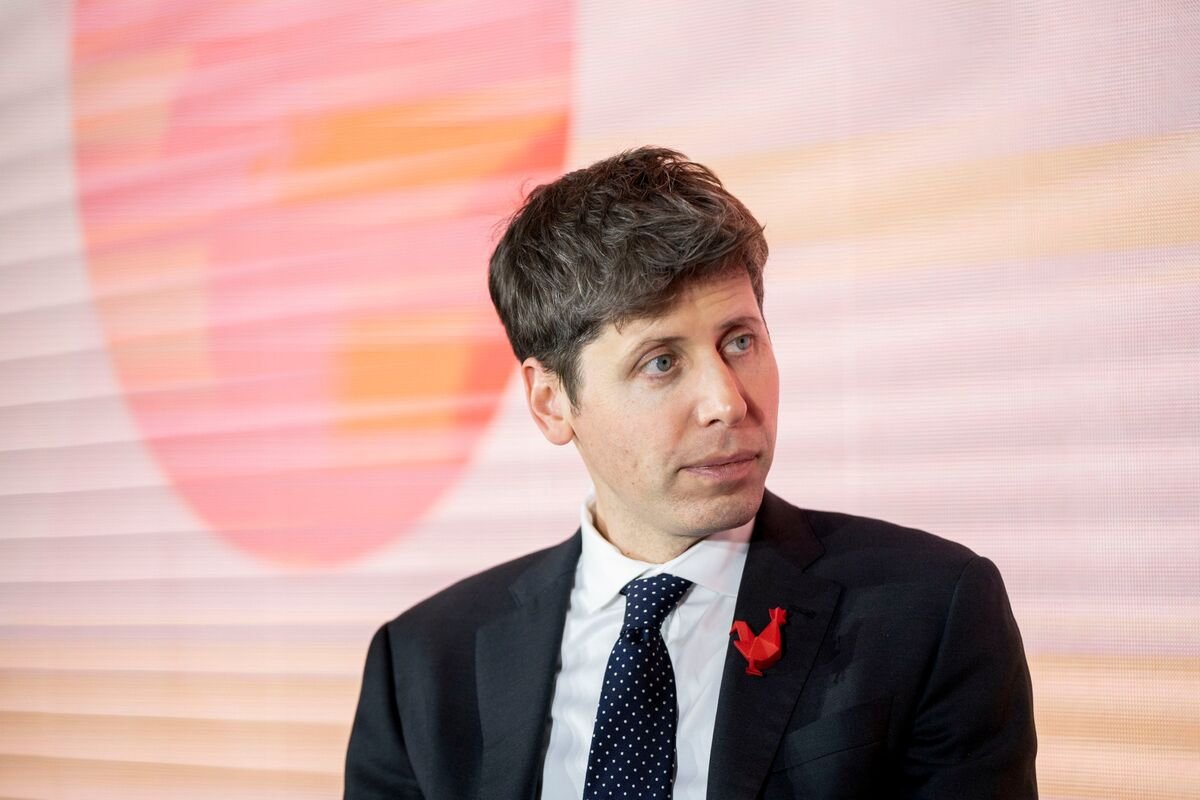
Image: Featured image for the article
Related Developments
The fundraising news comes alongside several other significant OpenAI developments:
Apple Siri Revamp: Apple is reportedly turning Siri into an AI chatbot in iOS 27 and macOS 27, potentially creating a more direct competitor to ChatGPT on Apple devices.
Anthropic's Constitution Overhaul: Anthropic is changing how Claude behaves, moving from specific rules to broad principles, which could make the model more flexible but also less predictable.
Meta's AI Progress: Meta's Superintelligence Labs reportedly delivered its first high-profile AI models internally in January, just six months after launch, suggesting the company is making rapid progress.
YouTube AI Tools: YouTube is introducing AI tools for creating Shorts using AI likenesses and for making games and music, while also trying to reduce "AI slop" on the platform.
These developments show that the AI landscape is evolving rapidly, with major tech companies all investing heavily in AI capabilities. OpenAI's fundraising success will be a key indicator of whether the market believes the company can maintain its lead in this increasingly crowded field.
Conclusion
OpenAI's reported $50 billion fundraising push at a $750 billion to $830 billion valuation represents both an opportunity and a challenge. The capital could accelerate the company's growth and solidify its position as the leader in AI. However, the valuation expectations create immense pressure to deliver both technical innovation and financial returns.
The Middle Eastern investor pool offers significant capital and potentially different strategic perspectives. However, it also brings new considerations around governance, data sovereignty, and geopolitical alignment.
As the AI industry matures, the stakes are getting higher. The companies that can successfully navigate the technical, business, and regulatory challenges will define the next era of computing. OpenAI's fundraising effort is a critical test of whether the market believes the company can be one of those winners.
The coming months will reveal whether this round closes, at what terms, and with what investor participation. But regardless of the outcome, the sheer scale of the numbers involved shows just how much the AI industry has grown—and how much is at stake.
Comments
Please log in or register to join the discussion