
OpenAI is reportedly closing a $100 billion funding round led by major tech players, targeting an $850 billion valuation as the company races to meet $1.4 trillion in infrastructure commitments while reducing dependency on single chip suppliers.
OpenAI is reportedly on the verge of securing a monumental $100 billion funding round, with the artificial intelligence giant targeting a valuation of approximately $850 billion, according to sources familiar with the matter. This latest financial injection comes as OpenAI faces significant infrastructure demands and seeks to diversify its chip supply chain beyond its current primary supplier.
The funding round represents a significant escalation in the AI arms race, with OpenAI committing to $1.4 trillion in expenditures over the next eight years to build out the computational infrastructure necessary to train and deploy increasingly sophisticated AI models. OpenAI's GPT 5.3 Codex release, which marks a strategic shift away from complete reliance on Nvidia chips, underscores the company's need for diversified computing resources.
Major Investors and Strategic Implications
Key players in this funding round include Amazon, Nvidia, Microsoft, and SoftBank, each bringing substantial capital and strategic considerations to the table:
- Amazon: Reportedly investing up to $50 billion with the condition that OpenAI increases its usage of AWS services and Amazon's custom AI chips
- SoftBank: Considering a $30 billion investment, continuing its pattern of significant bets on transformative technologies
- Nvidia: Contributing $20 billion, representing approximately one-fifth of the $100 billion alliance established between the companies in September 2025
- Microsoft: Participating in the round, though the specific investment amount remains undisclosed
These investments exemplify the circular nature of AI ecosystem development, where chip manufacturers invest in AI companies that subsequently purchase their chips, while cloud providers invest in AI developers who then become customers of their cloud services. This creates a self-reinforcing cycle of investment and dependency that characterizes the current AI landscape.

Technical Architecture and Supply Chain Strategy
The timing of this funding round coincides with OpenAI's technical pivot toward a more diversified computing architecture. The release of GPT 5.3 Codex represents a significant development, as it incorporates optimizations for multiple chip architectures rather than being exclusively optimized for Nvidia's GPUs.
This strategic shift addresses several critical challenges:
- Supply Chain Diversification: Reducing dependency on a single supplier mitigates risks associated with chip shortages, manufacturing delays, and geopolitical factors
- Cost Optimization: Competition among chip suppliers can potentially reduce OpenAI's infrastructure costs
- Performance Specialization: Different chip architectures may offer advantages for specific AI workloads
The funding will enable OpenAI to build out data centers with heterogeneous computing architectures, potentially incorporating:
- Nvidia GPUs for general AI training and inference
- AMD GPUs for cost-effective alternatives
- Custom ASICs from Amazon and potentially other cloud providers
- Emerging AI accelerators from specialized startups
Market Implications for Semiconductor Industry
This funding round sends ripples throughout the semiconductor industry, with several notable implications:
- Increased Demand for AI Chips: The $100 billion investment translates directly into orders for advanced AI chips, benefiting not only Nvidia but potentially other suppliers as OpenAI diversifies
- Accelerated Chip Development: The scale of OpenAI's commitments creates strong incentives for chip manufacturers to develop next-generation AI accelerators
- Manufacturing Capacity Pressure: The massive scale of planned expenditures highlights the growing challenge of securing sufficient advanced manufacturing capacity
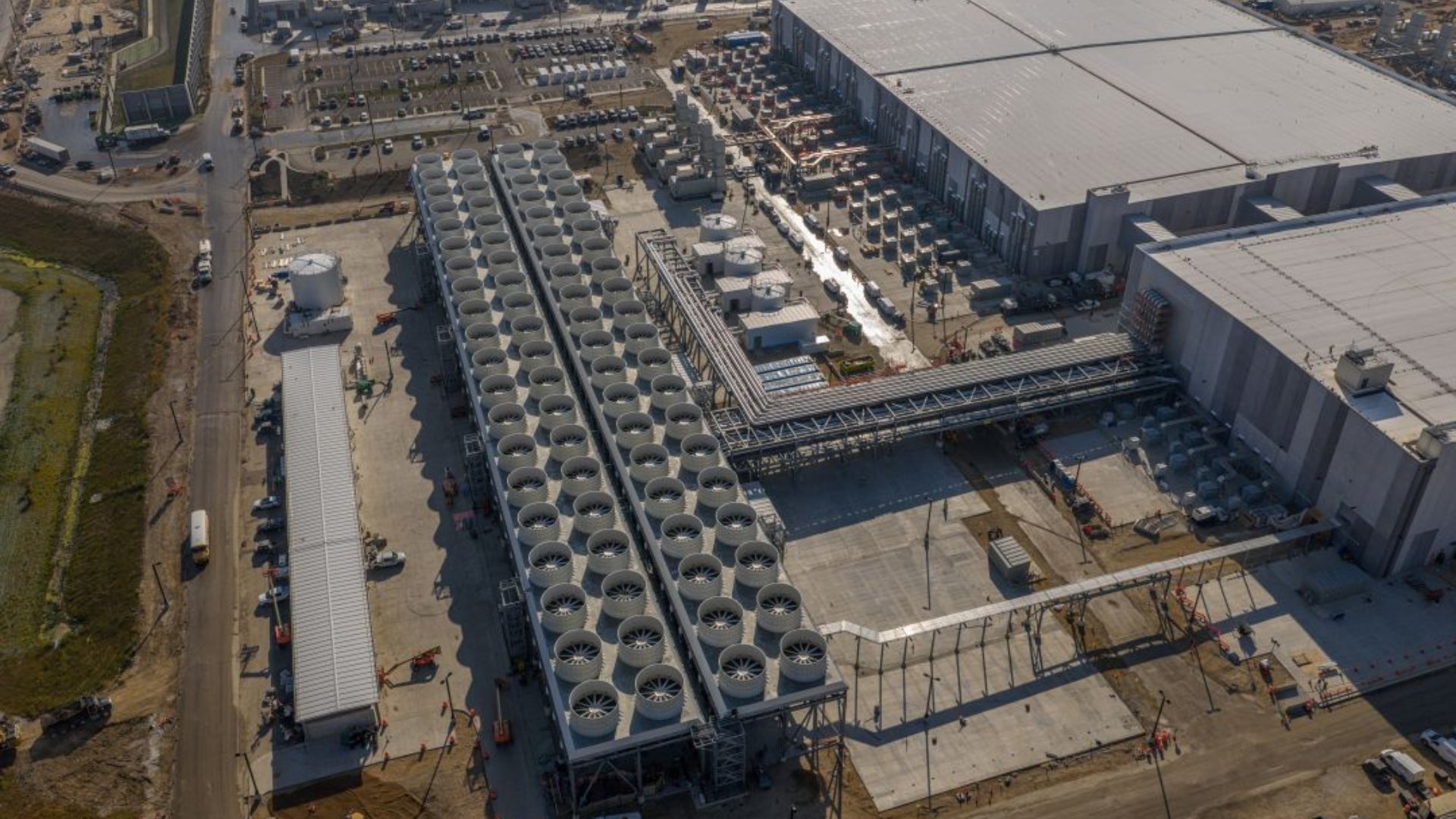
- Energy Infrastructure Strain: AI data centers are power-intensive, and this expansion will place additional demands on energy infrastructure and cooling technologies
Financial Projections and Sustainability Concerns
Despite the massive funding round, OpenAI faces significant financial challenges. The company is projected to run out of cash entirely by 2027 without additional funding, highlighting the extraordinary burn rate associated with cutting-edge AI development and deployment.
The circular investment strategy, while providing short-term capital, raises questions about long-term sustainability:
- Revenue Models: OpenAI continues to struggle with establishing clear paths to profitability that justify its valuation
- Infrastructure ROI: The massive investments in compute infrastructure must translate into commercially valuable AI capabilities
- Market Saturation: As more companies enter the AI space, differentiation becomes increasingly challenging
Competitive Landscape and Future Outlook
This funding round positions OpenAI to accelerate its development of increasingly sophisticated AI models while simultaneously expanding its infrastructure footprint. However, the company faces intensifying competition from:
- Anthropic, which is also making significant strides in AI development
- Google's DeepMind, with substantial backing from Alphabet
- Various open-source AI initiatives that challenge the proprietary model
The investments from major tech companies also create complex competitive dynamics. While these companies are providing capital to OpenAI, they simultaneously develop their own AI capabilities and infrastructure, potentially creating future conflicts of interest.

Conclusion
OpenAI's $100 billion funding round represents both a significant milestone and a critical juncture for the company and the broader AI industry. The substantial financial backing enables continued development of advanced AI systems and infrastructure, but also underscores the extraordinary economics of the current AI ecosystem.
As the company moves toward an anticipated IPO later in 2025, it will need to demonstrate not only technical advancement but also a clear path to sustainable profitability. The diversification of its chip supply chain, signaled by the GPT 5.3 Codex release, represents a prudent strategic move in an increasingly complex technological landscape.
The semiconductor industry, in particular, will be watching closely as this funding translates into actual orders and shapes the future of AI compute architecture. The scale of these investments suggests that AI infrastructure will remain a primary driver of semiconductor market growth for the foreseeable future.
Comments
Please log in or register to join the discussion