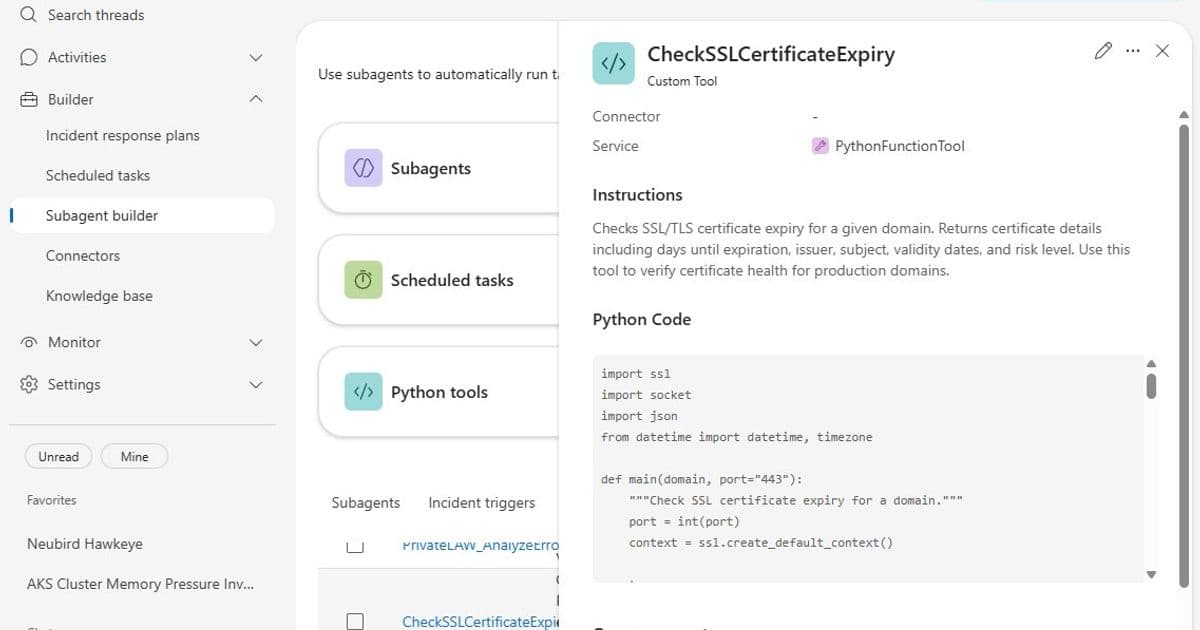
Microsoft's Azure SRE Agent now enables organizations to build custom SSL certificate monitoring solutions using Python tools and skills. This new capability allows IT teams to proactively identify expiring certificates before they cause outages, addressing a common and costly problem that affects enterprises weekly.
Expired SSL certificates remain one of the most preventable yet recurring causes of service outages in modern IT environments. With organizations increasingly adopting multi-cloud strategies and managing complex certificate landscapes across numerous domains, Microsoft has introduced a new capability within Azure SRE Agent that allows teams to build custom SSL certificate monitoring solutions using Python tools and skills.
The Persistent Challenge of Certificate Management
Every IT operations team faces the scenario: a critical service fails, alerts light up dashboards, and after frantic investigation, the root cause reveals itself to be an expired SSL certificate. According to industry data, certificate-related outages cost an average of $300,000 per incident in downtime and remediation. These incidents are entirely preventable yet continue to disrupt businesses weekly.
Traditional approaches to certificate management have significant limitations:
- Spreadsheets: Become outdated quickly, with failures to update after renewals
- Calendar reminders: Often fire too late, with 7-day notices insufficient for compliance review
- Standalone SaaS tools: Lack integration with existing incident workflows
- Manual checks: Don't scale effectively across multi-domain environments
What Changed: Azure SRE Agent's New Capabilities
Microsoft has enhanced Azure SRE Agent with the ability to create custom Python tools and compose them into reusable skills. This evolution allows organizations to build specialized monitoring capabilities tailored to their specific needs without developing standalone microservices or complex integrations.
The new functionality enables:
- Custom Python Tool Creation: Developers can write Python functions that connect to domains, retrieve SSL certificate details, and return structured data
- Skill Composition: These tools can be wrapped into skills that provide complete workflows and methodologies
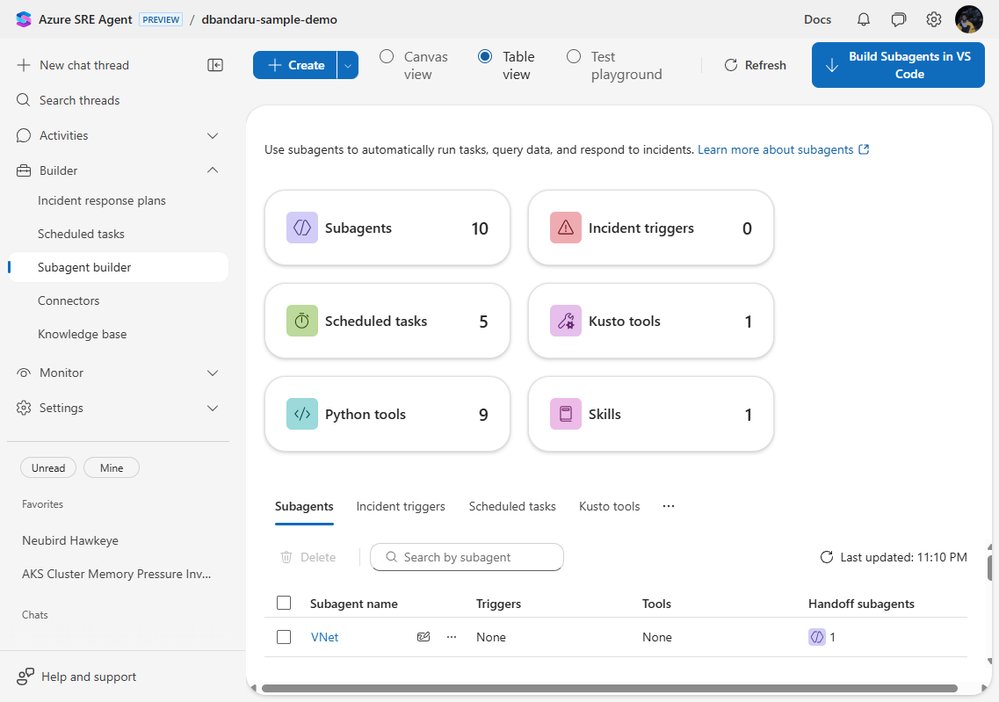
- Agent Specialization: Dedicated agents can be configured with specific tools and skills for focused monitoring tasks
Provider Comparison: Azure SRE Agent vs. Traditional Approaches
| Approach | Integration | Customization | Cost | Implementation Time |
|---|---|---|---|---|
| Azure SRE Agent | Native to Azure ecosystem | High (custom Python tools) | Moderate (SRE Agent licensing) | Minutes to hours |
| Spreadsheet Tracking | None | Low | Free | Days to weeks (setup) |
| Calendar Reminders | Basic | Low | Free | Hours |
| Standalone SaaS Tools | Varies | Moderate | High (per user/per domain) | Weeks |
| Custom Scripting | Varies | High | Development cost | Weeks to months |
Azure SRE Agent's approach offers several advantages over traditional methods:
- Native Integration: Works seamlessly with existing Azure monitoring and incident management workflows
- Structured Output: Python tools return JSON objects with clearly labeled fields, enabling better analysis
- Risk Classification: Built-in risk levels (EXPIRED, CRITICAL, WARNING, ATTENTION, HEALTHY) provide clear thresholds
- Parallel Execution: Multiple certificate checks can run simultaneously, improving efficiency
- Zero Dependencies: Uses only Python standard library for fast cold starts and minimal supply chain risk
Technical Implementation: Building the Solution
The implementation consists of two main components: a Python tool and a skill that provides the methodology.
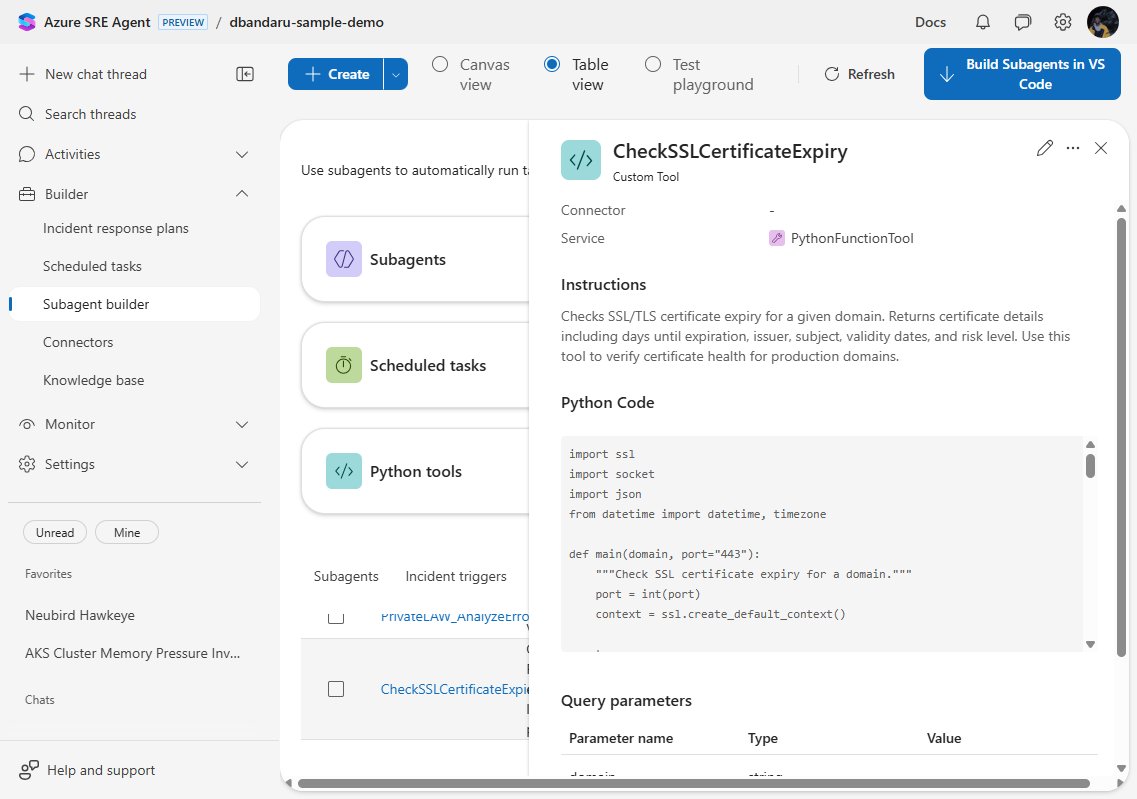
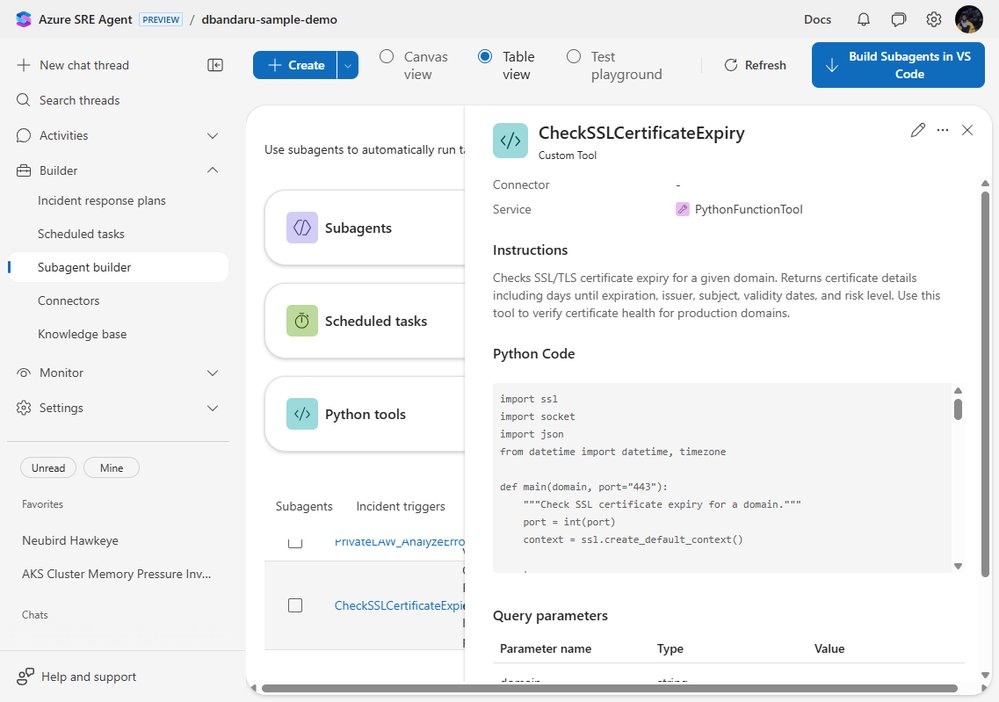
The CheckSSLCertificateExpiry Python Tool
This tool connects to any domain, retrieves SSL certificate details, and returns structured data about certificate validity, issuer, and days until expiry. The implementation uses Python's standard library (ssl, socket, datetime) to avoid external dependencies and ensure reliability.
Key features include:
- Risk classification with five levels (EXPIRED, CRITICAL, WARNING, ATTENTION, HEALTHY)
- Comprehensive error handling for various connection and verification scenarios
- Structured JSON output for easier analysis by the LLM
- Support for custom ports and Subject Alternative Name (SAN) domain extraction
The ssl_certificate_audit Skill
The skill transforms the simple certificate check into a comprehensive audit workflow. It provides:
- Domain collection methodology
- Parallel execution of certificate checks
- Risk classification and reporting standards
- Actionable recommendations based on findings
- Professional output formatting with markdown tables
Business Impact: Preventing Outages and Reducing Costs
Organizations implementing this solution can expect several operational and financial benefits:
Immediate Operational Improvements
- Proactive Monitoring: Identify certificates expiring in the next 30-60 days before they become critical
- Reduced Debug Time: Quickly eliminate certificate expiration as a potential cause during incident investigation
- Standardized Reporting: Consistent certificate health audits across all domains
- Automated Workflows: Integration with existing incident management processes
Financial Benefits
- Outage Prevention: Avoiding even a single certificate-related outage can save hundreds of thousands of dollars
- Resource Optimization: Reducing time spent on manual certificate checks and renewal tracking
- Scalability: Efficiently monitoring hundreds or thousands of domains without proportional staffing increases
Long-term Strategic Advantages
- Multi-cloud Consistency: Extending the same monitoring approach to certificates in non-Azure environments
- Skill Reuse: The methodology can be adapted for other monitoring scenarios
- Foundation for Automation: Building toward fully automated certificate renewal processes
Implementation Process
Creating and deploying the SSL certificate monitoring solution involves these steps:
- Tool Creation: In the Azure SRE Agent portal, create a new Python tool with the certificate checking logic
- Skill Development: Create a markdown document with YAML frontmatter that defines the audit methodology
- Agent Configuration: Deploy a specialized subagent with the tool and skill enabled
- Testing and Validation: Verify functionality against test domains before production deployment
The entire process can be completed in under 30 minutes, with immediate value upon deployment.
Real-world Applications
Organizations have already begun implementing this solution in several scenarios:
Morning Certificate Health Checks
Running automated audits across production domains each morning to identify any certificates requiring attention
Incident Investigation Integration
During connectivity incidents, automatically checking certificate status as part of the standard diagnostic workflow
Cross-Agent Collaboration
Sharing the certificate checking tool across multiple specialized agents for comprehensive system monitoring
Future Implications for Cloud Operations
This capability represents a broader trend toward more intelligent, specialized cloud operations tools:
Democratization of Custom Tool Development
Azure SRE Agent's approach lowers the barrier for creating custom monitoring solutions, allowing teams to address specific operational challenges without extensive development resources
Integration with Broader Automation
As organizations implement more sophisticated automation strategies, certificate monitoring becomes a foundational component of larger self-healing systems
Evolution of SRE Practices
The ability to compose specialized skills and tools reflects a maturation of Site Reliability Engineering practices, moving from generic monitoring to domain-specific expertise
Conclusion
Microsoft's enhancement to Azure SRE Agent provides organizations with a practical, efficient solution to one of the most persistent problems in cloud operations. By enabling custom Python tools and skills for SSL certificate monitoring, Azure SRE Agent helps prevent costly outages while providing a framework for extending similar approaches to other operational challenges.
For organizations managing complex certificate landscapes across multi-cloud environments, this solution offers immediate operational benefits and represents a step toward more intelligent, automated cloud operations. The combination of technical flexibility, integration capabilities, and rapid deployment makes it a valuable addition to any cloud operations toolkit.
Learn more about Azure SRE Agent extensibility through the official documentation and explore the YAML Schema Reference for advanced configuration options.
Comments
Please log in or register to join the discussion